
Making Space for Inclusiveness (Part 2)
Through the power of interdisciplinary collaboration and co-creation, we have reimagined urban spaces, fostered green initiatives, and championed inclusivity to transform the heart of Hong Kong into a vibrant, liveable and caring neighbourhood.
The Challenge
Placemaking should not be the sole purview of architects or designers. To create inclusive, sustainable, and appealing public spaces, we not only have to cater for diverse physical abilities and needs but also foster a sense of belonging and community through participatory design and community involvement.
The Outcome
Through participatory design, design thinking, or just taking small actions to show empathy, we work across different scales and disciplines to successfully transform urban spaces into inclusive, engaging, and sustainable community assets that enhance local well-being and foster a sense of belonging.
In the previous essay, we introduced two architectural projects. These spaces were not only attractive and comfortable but also designed to support different physical abilities, cater to changing needs, and plan for future wants. In this essay, we further delve into how we create inclusive public spaces, involving colleagues from other disciplines such as urban design, landscape architecture, and product design to create positive changes for our neighbourhood.
Our Neighbourhood, Our Playground for Innovation
At onebite, we are more than just a multi-disciplinary design practice. We pride ourselves for being interdisciplinary, not only working across different domains, but also actively looking for opportunities to apply our participatory design approach to make the urban city more liveable and appealing. Our tagline epitomises our mission: "Interconnecting People & Making Places". We have been co-creating solutions focused on users, using skills from architecture, urban planning, landscape design, and social design to make positive changes.
We often collaborate with 'kaifongs', or neighbours in Cantonese, right here on Cat Street. Being so familiar with the area helps us to build strong bonds with our neighbours and understand local issues and discover hidden spots that could benefit from our interventions. It also enables us to work closely with experts from other fields, such as those with expertise in active ageing and mental well-being, to come up with innovative social solutions to tackle social issues in our neighbourhood.
Cat Street Public Taster Programme: Harnessing Collective Creativity for Social Innovations
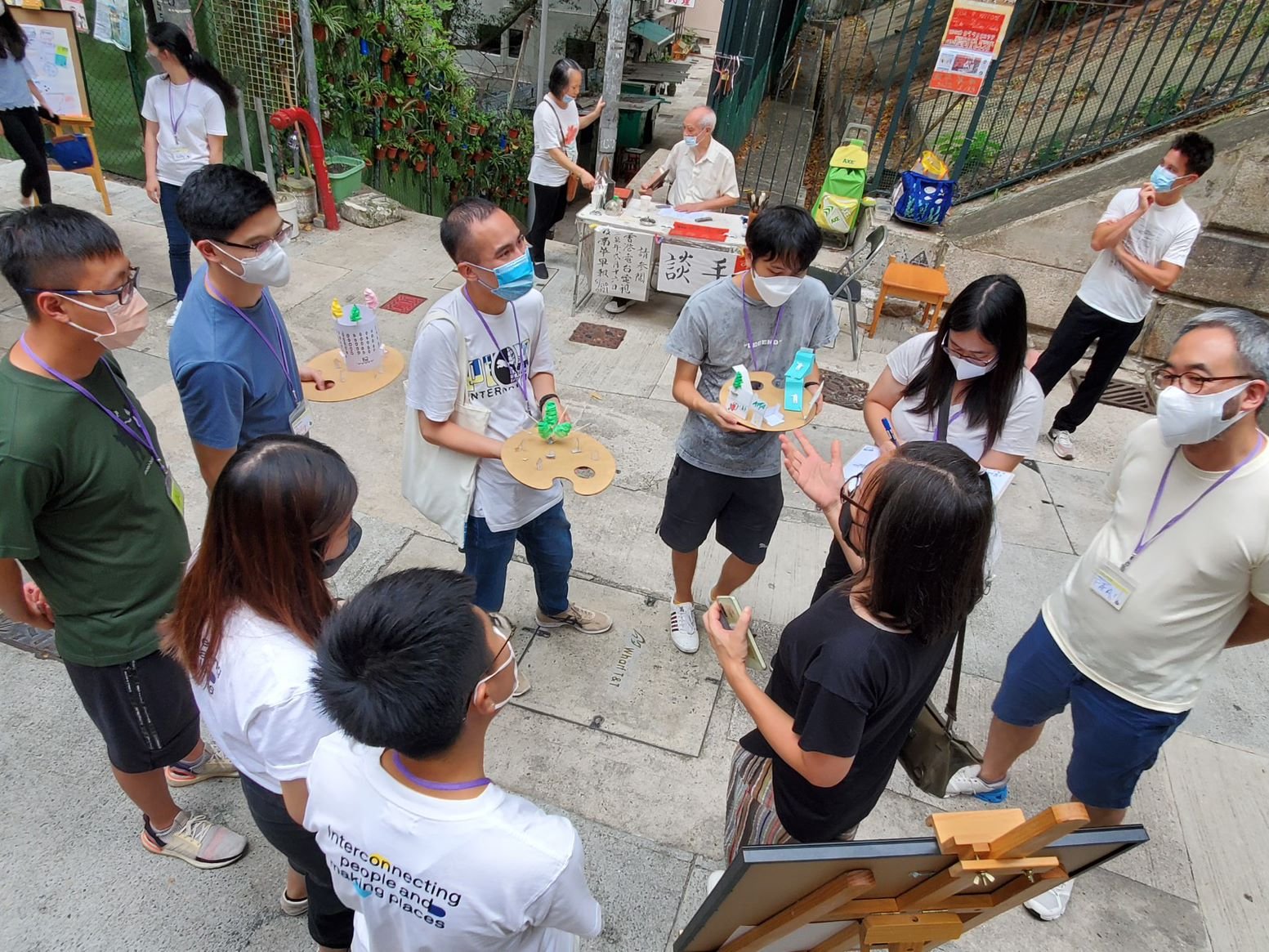
More than 15 participants came together for the Public Taster programme, learnt and applied the basics of urban design and landscape architecture to reimagine the potential of a vacant site.
When we learned that an unused plot just around our office was up for development, we could not resist taking a closer look. Despite being vacant for over twenty years, this neglected site bore the footprints of the past, echoing kaifongs’ (or local residents in Cantonese) memories of a once vibrant street market on Cat Street.
A spark lit our minds. What if we gathered a team of placemaking enthusiasts and brainstormed ways to transform this space into a community living room?
Thus, the seed for Cat Street Public Taster Programme was sown. We teamed up with partners from the University of Hong Kong's Division of Landscape Architecture and local landscape architecture firm, Land+Civilization Compositions to instruct and facilitate the workshop. For two weekend afternoons in September 2022, more than 15 participants and facilitators came together to learn about urban design and design thinking, and applied their skills to create a conceptual model of the designated site at the junction of Ladder Street and Circular Pathway. Activities for both days are balanced between lectures and hands-on practice, engaging the community through street interviews and idea-sharing with kaifongs.
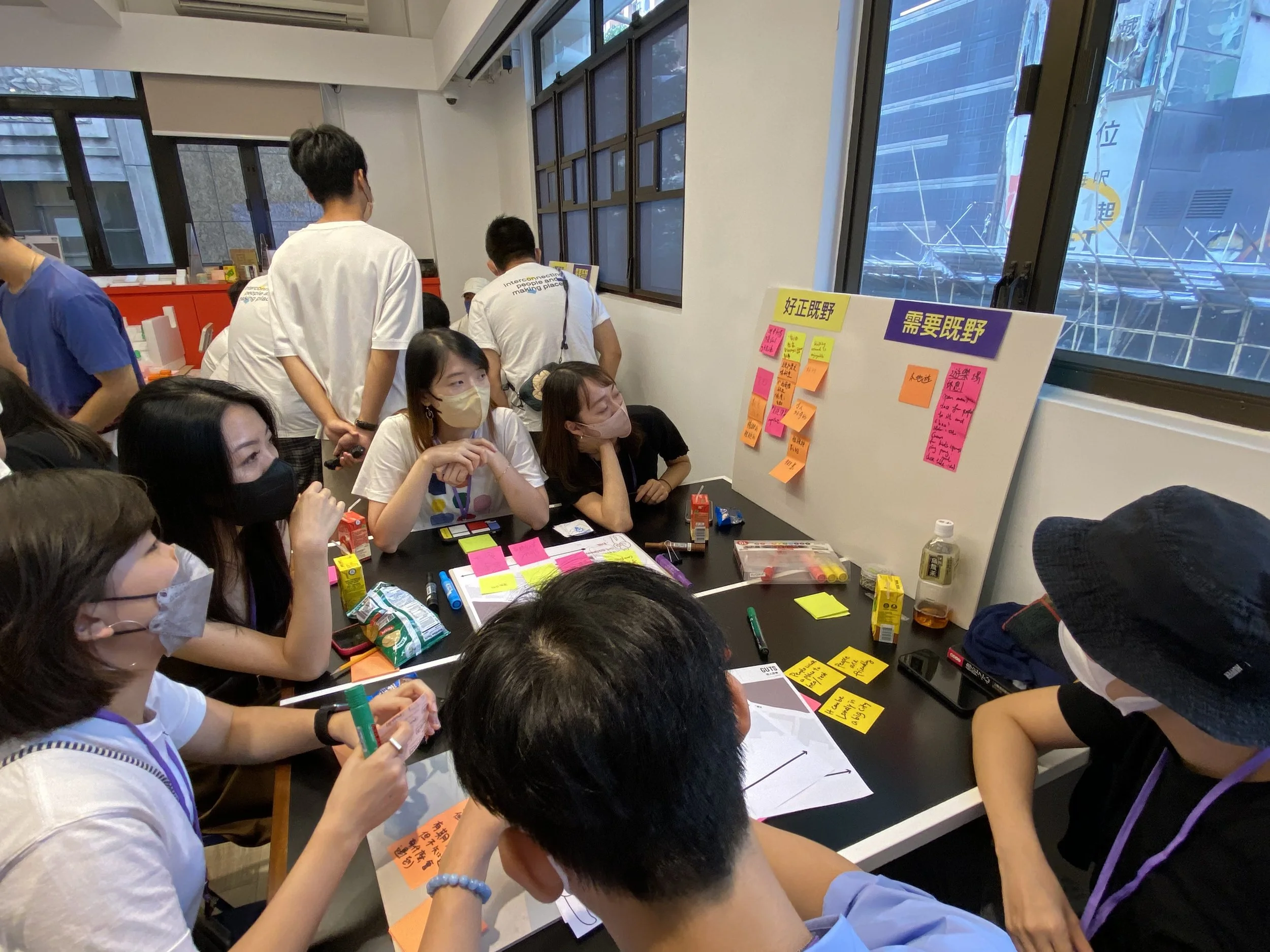
On the first day, participants and facilitators collected feedback from street users and shop owners before analysing the data on what makes Cat Street special.
The first day saw participants paired up to study the profile of users on Ladder Street, engaging interviewees to gather their likes, dislikes, and challenges climbing the long flight of stairs. They also collected suggestions on what shop keepers and street users would love to see in the vacant site. This is then translated into an attractive “Cover Story” where they used photographs, sketches, and catchy captions to paint a vivid picture of their perfect “community living room”. Their ideas were further developed the following day, turning ideas on paper into conceptual models. Armed with models and numerous design ideas, participants headed out to the streets and shared their vision with the community. A simple “hello” opened many a conversation with shop owners and street users, who were happy to share their thoughts on the proposals.
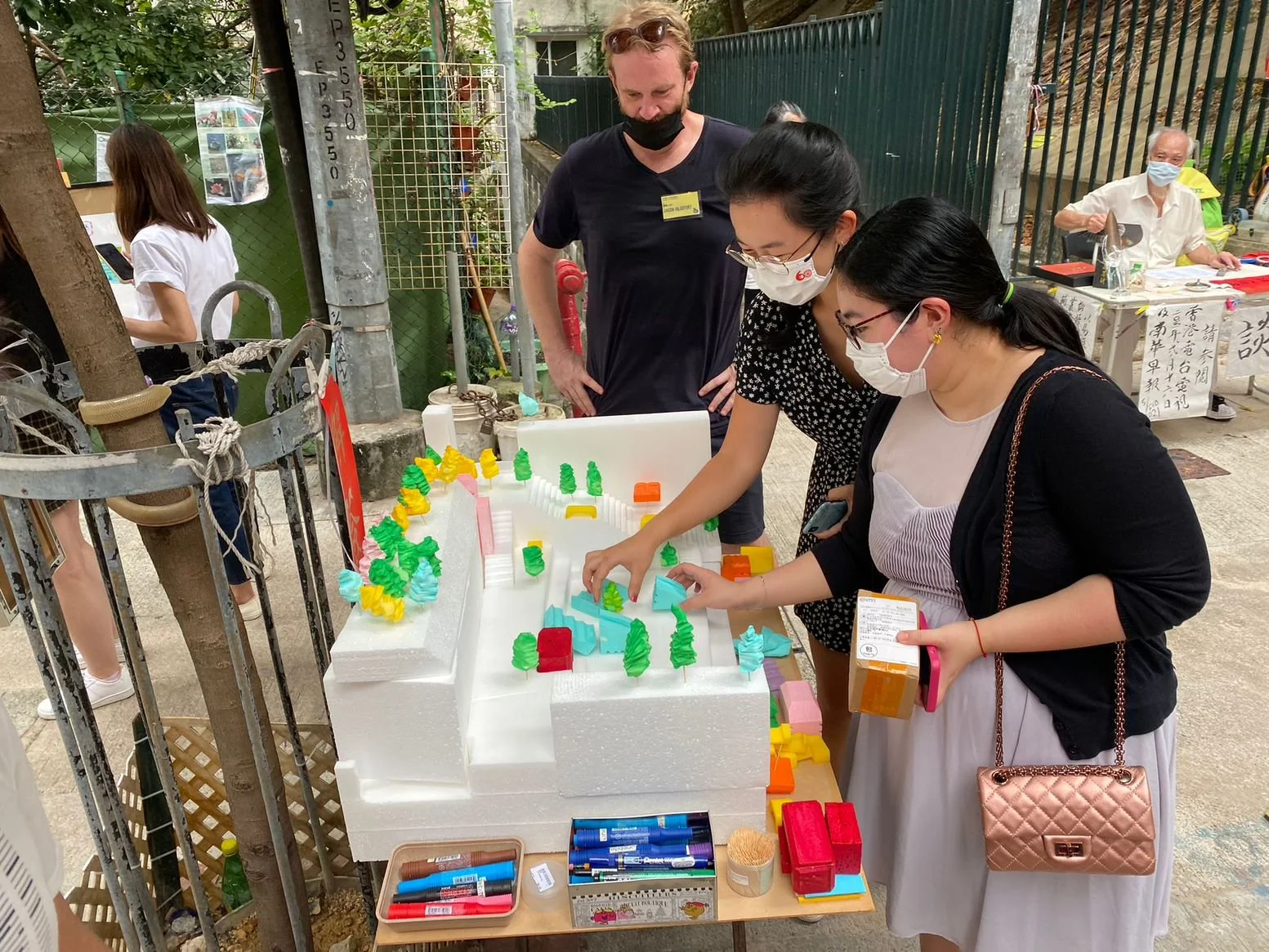
On Day 2, participants were proud to present their ideas to kaifongs and got them involved to make suggestions to improve the proposals.
Such interactions demonstrated how community stakeholders could play an active role in shaping their neighbourhood. While not every suggestion reached the planning department, empowering kaifongs with the tools to reimagine a vacant site can offer invaluable local perspectives overlooked by professionals. Our event demonstrated that with some guidance, everyone has the potential to play a part in making their neighbourhood a better place.
The Plantiful Week @Sheung Wan: Embracing Our Green Community Members
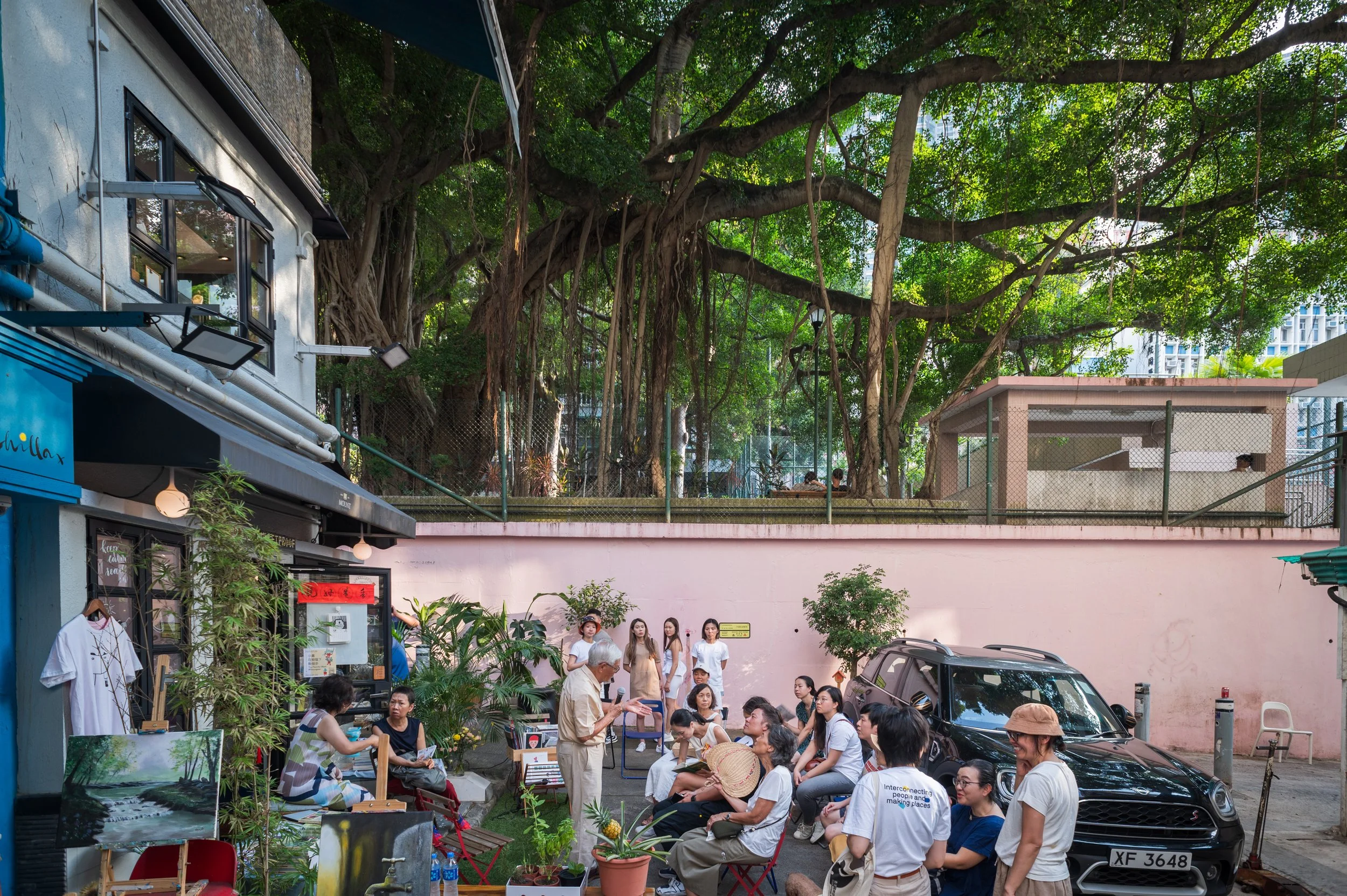
One of the highlight events for Plantiful Week @ Shueng Wan was a book sharing by Dr Arthur van Langenberg (梁雅達醫生), author of the book, From Scalpel to Spade.
Community Plant Library is one of onebite’s signature community programmes. It harnesses the universal appeal of plants to engage the public in discussions about sustainable and community development, and the arts. The initiative's key activities comprise a community scheme to train plant librarians, guided tours exploring local flora, and plant-inspired art workshops spearheaded by renowned artists, designers, and illustrators. Furthermore, we roped in professional plant therapists to operate a mobile plant clinic, solving the botanical dilemmas of local residents.
Two rounds of Community Plant Library were held in San Po Kong and Sheung Wan in 2021 and 2023 respectively. The enthusiasm and warm reception kaifongs in the two neighbourhoods showed towards the programme and the process of uncovering many hidden gardening talents prompted us to ask: what if we could organise an edition of Community Plant Library that not only showcased but also actively involved local shopkeepers and residents in spearheading the programme?
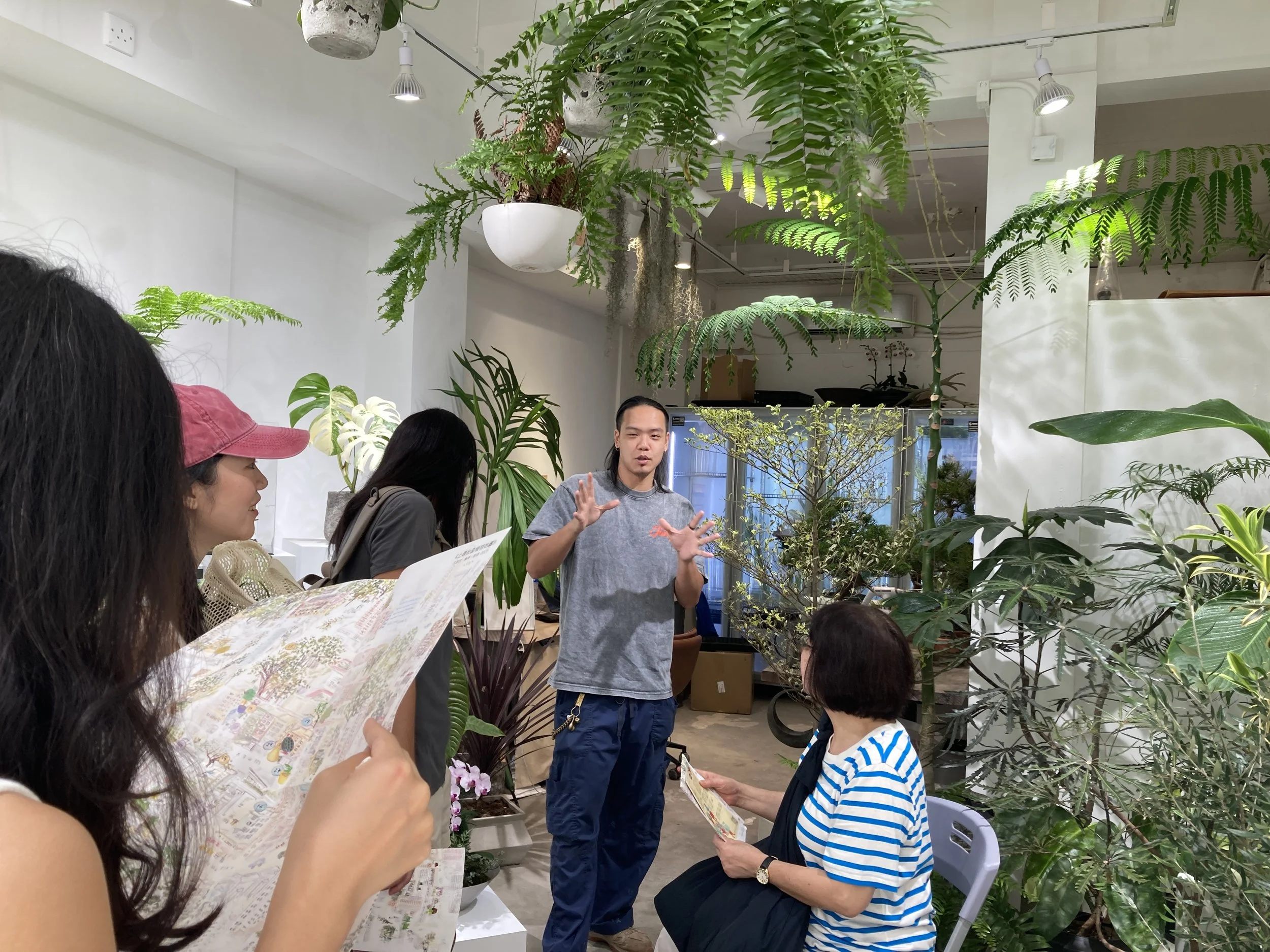
A plant workshop led by Simon from Te Fiti Nursery, where he introduced planting techniques and ways to improve plant growth at home.
Hence, the "Plantiful Week @Sheungwan" sprouted to life between 9 and 15 July 2023. This green event united onebite with partner shops to host a series of plant-themed programmes and one-off events across the week. Notably, Mount Zero Books organised a book sharing programme involving the neighbourhood. The local bookstore carefully handpicked ten books on community and plants and found temporary homes for them in neighbourhood cafes, offering thought-provoking reads for patrons sipping their favourite brews. Another highlight was a charming tale of four caterpillars setting up residence in a mandarin orange plant pot outside Soul Fresh café. These caterpillars, under the watchful eye of Priscilla, the café owner, blossomed into butterflies. She recalled and celebrated this metamorphosis by offering a limited-edition Palmier pastry, or the aptly named butterfly cookie or “wu dip sou” in Cantonese.
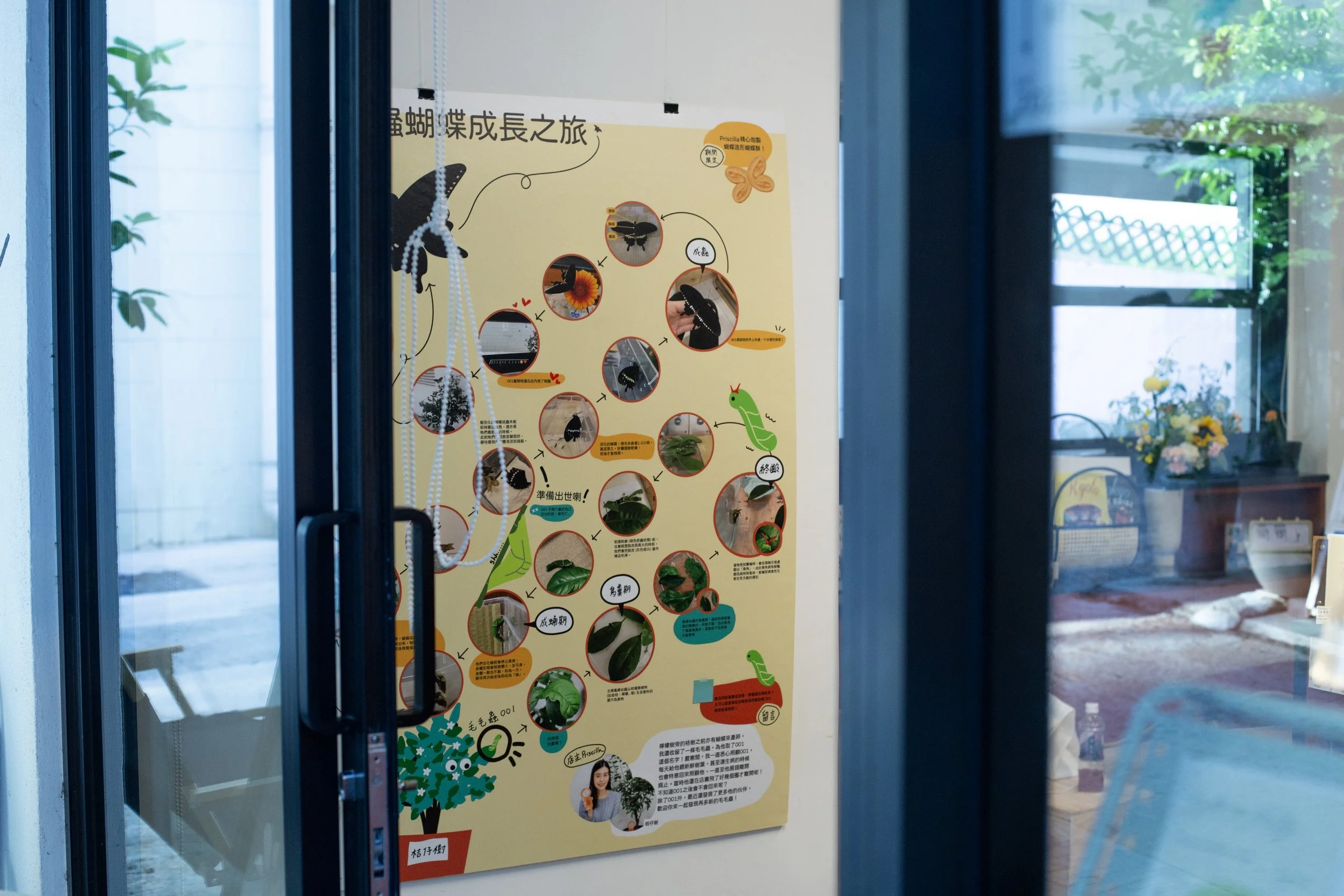
A display at Soul Fresh telling the story of how 4 caterpillars transformed into butterflies under the watchful care of Priscilla, the shop owner.
Rounding off the eventful week were repeats of the popular plant-themed guided tours and art workshops from the previous Community Plant Library. This time around, we also welcomed local specialty shops providing taster sessions, such as tea appreciation at Yuan Yuan Tang Tealife and botanical watercolour art jamming at art school, Chillax Place, which truly bought the spirit of a community-led effort.
Step Up Sit Down: Taking care of those who took care of our city
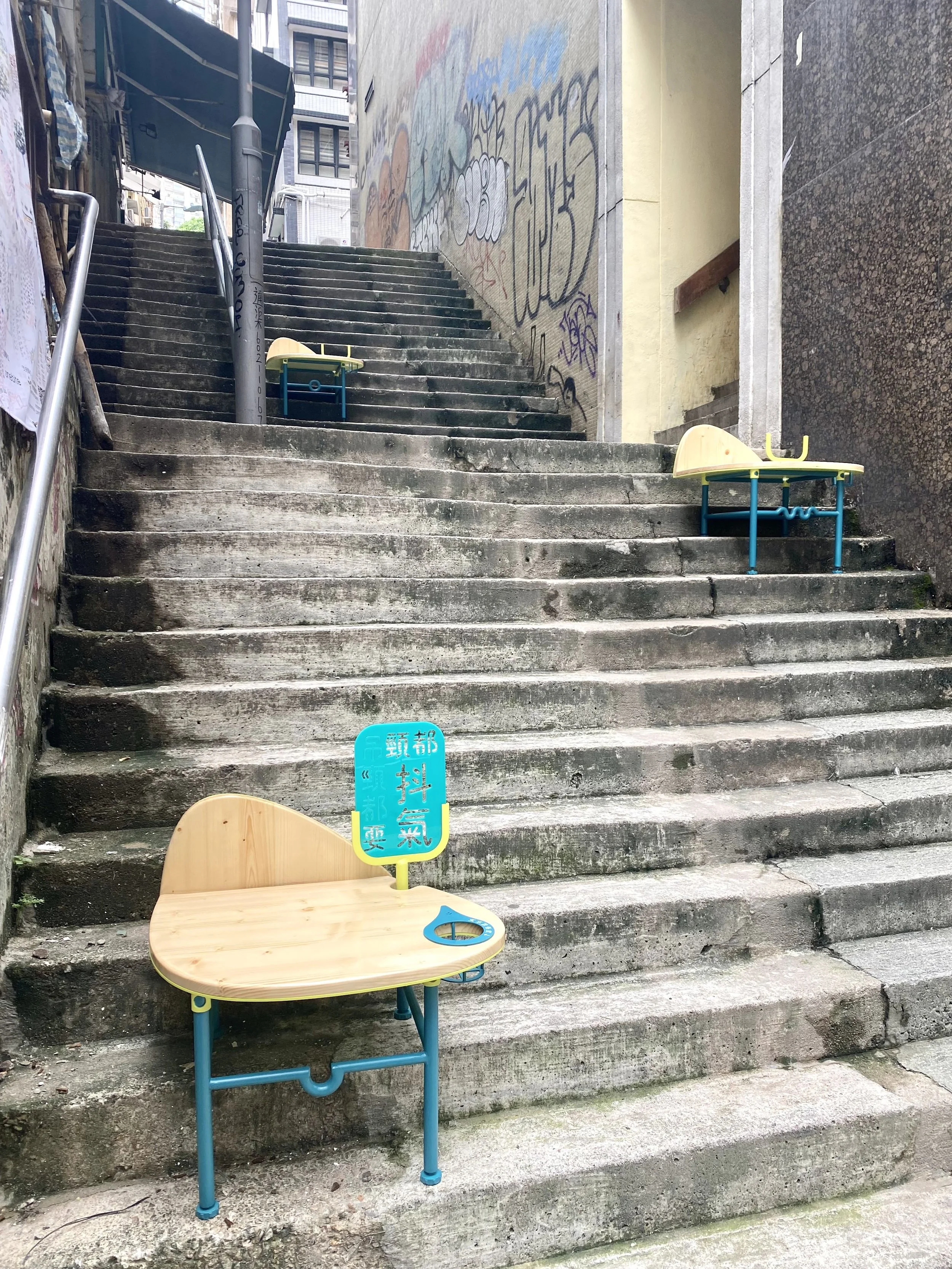
onebite created 3 prototype installations for “Step Up Sit Down”, which come with catchy slogans and features for outdoor workers to take a well-deserved rest.
The northern coast of Hong Kong Island is known for its mountainous terrain. It creates a striking and memorable scene of Victoria Harbour’s crowded skyline set against the hilly landscape of the Peak. As picturesque as it might be, it also means the island's commercial area is punctuatedwith winding staircases etched into the landscape and tiered terraces reinforced with massive retaining walls. onebite’s office is no exception. Nestled at the foothills of Taipingshan, our work home is housed in a tonglau beside a long flight of stairs.
Often, we would spot cleaners catching their breath as they cleared the litter scattered overnight on the staircase. Despite the blazing midday heat and the blinding sunlight bouncing off concrete surfaces, they made do with resting against the railings or perched uncomfortably on the narrow steps to sneak a sip of water or hurriedly gobble their meals.
Working closely with social workers from local NGO Caritas, we initiated conversations with our neighbourhood cleaners, many from minority communities. We came to understand the nature of their blue-collar job and how their hand-to-mouth existence had instilled a sense of unease and insecurity. The fear of a public complaint or an unsatisfactory work assessment threatened their livelihood. Most, if not all cleaners, avoided private spaces and tried to stay within their assigned work areas. Even when we extended an invitation to come into our office for a break, they politely declined. We wondered, how could we utilise our design skills to enhance their work environment and offer a space of rest, comfort, and dignity, free from negative perception?
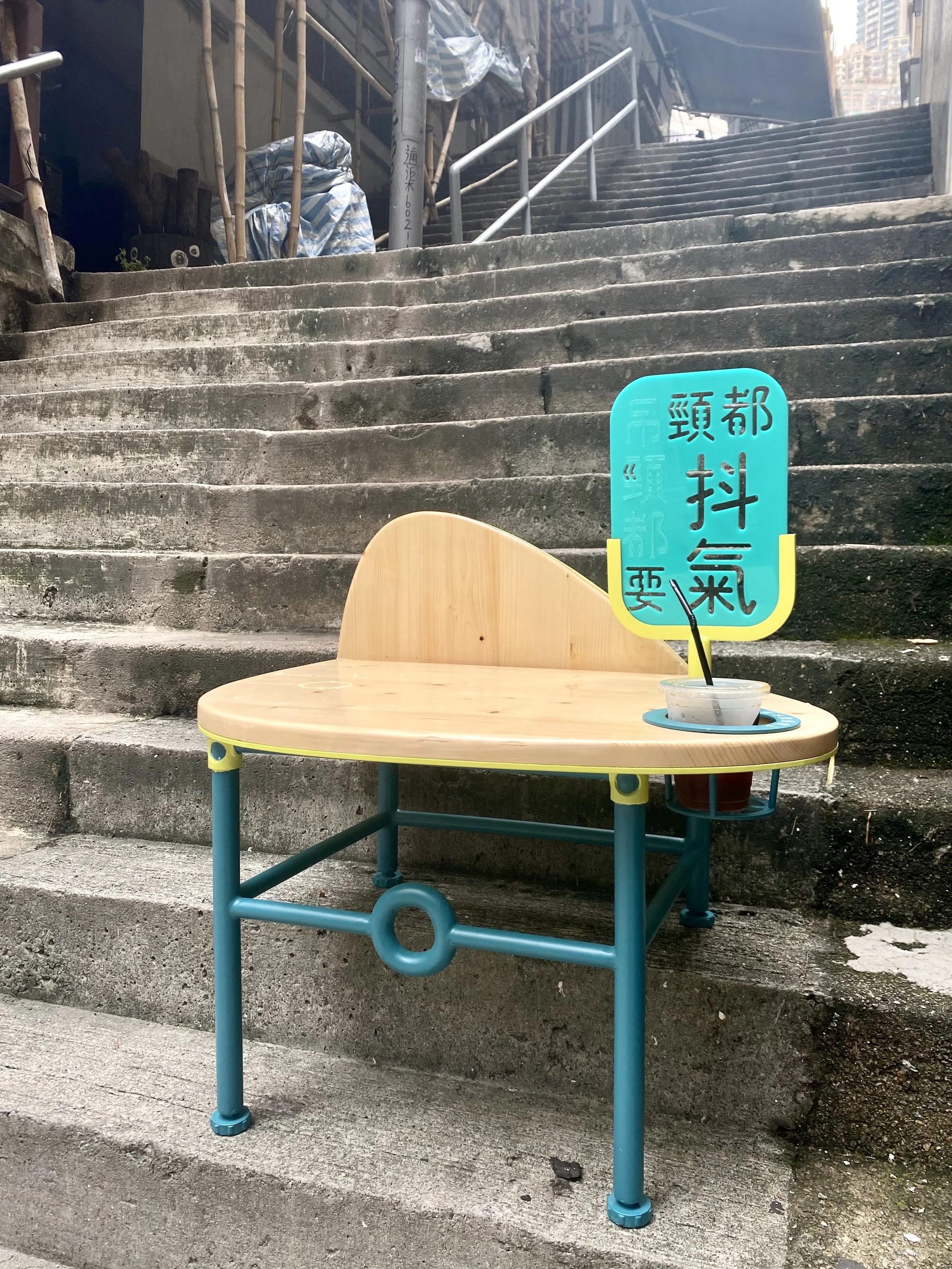
Each installation is customised to fit the height of staircase risers and comes with a drink receptacle and wide platform suitable as a seat or an ad-hoc dining table.
“Step Up Sit Down” was our emphatic response. More than a stool, this device was customised to fit our neighbouring staircase. It served as an interim solution, catering to the needs and preferences of outdoor workers. We hoped it would spark interest among community stakeholders to pay more attention to marginalised community members and use their capabilities to support and make incremental improvements for them too.
The construction for the stool is deliberately kept simple for accessibility and durability. It featured a broad timber seating platform, offering a cool, comfortable resting spot even in hot weather. The removable receptacle for a cup or bottle allows the installation to double up as a small table for meals and refreshments. We added an element of humour with witty colloquial messages, die-cut onto acrylic boards and displayed in built-in slots. These messages served to boost the spirits of our cleaners and other outdoor workers and remind them to hydrate and rest while toiling in the sweltering weather.
Creating Inclusivity: Our Journey Continues
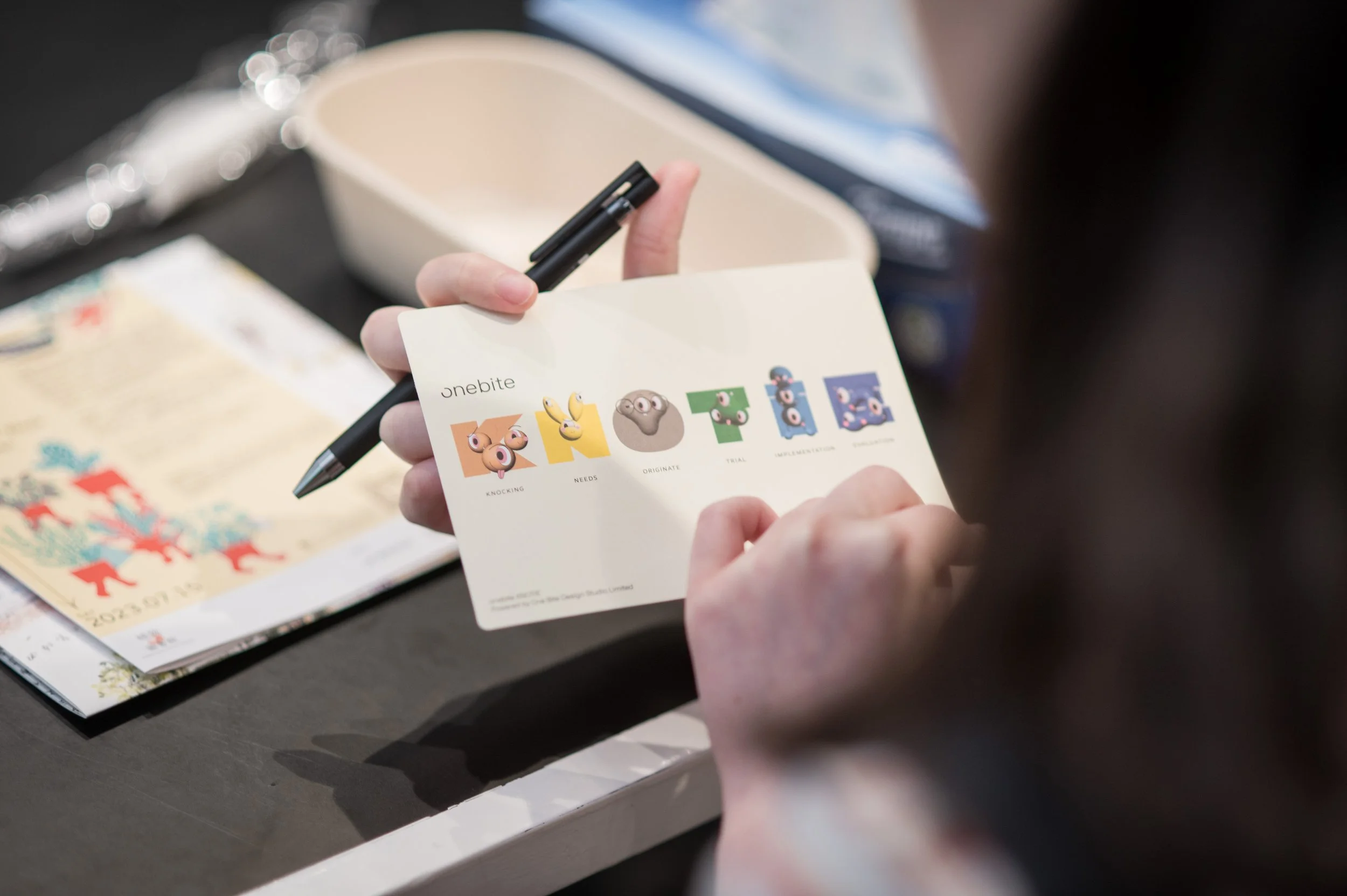
onebite’s projects uses our in-house KNOTIE design thinking methodology, namely KNOCKING, NEEDS, ORIGINATE, TRIAL, IMPLEMENTATION, and EVALUATION to embody human-centred spirit of placemaking.
Users should never be neglected or relegated to the sidelines during placemaking efforts. By applying our KNOTIE design methodology conscientiously, our initiatives sought to bring out the resilience of community-led efforts, demonstrate the essence of inclusive design, and spark positive changes within our local community in Taipingshan.
However, the journey towards creating an inclusive neighbourhood is a continuous process. It requires the stakeholders and experts from various disciplines to work together. Most importantly, kaifongs themselves should be involved. Participatory design not only develops a stronger sense of ownership but also instils community resilience. onebite will continue to call upon design enthusiasts, community members, and stakeholders to revitalise our cityscape, foster an environment that is liveable, and promotes health and happiness.
The combined power of creativity and compassion brings our city closer together, one place at a time.
The journey towards creating an inclusive neighbourhood is a continuous process. It requires the stakeholders and experts from various disciplines to work together. Most importantly, kaifongs themselves should be involved.