
Making Space for Inclusiveness (Part 1)
What’s the essence of co-creation? It is a prefect synthesis of listening to users’ needs, observing their use context, and iterating solutions together that makes them exclaim, “Why hasn’t this appeared earlier!
The Challenge
From items as small as a chair to design solutions as extensive as a home renovation, we rely on designers to fulfil our basic needs, fuel our motivations, and express our individualism. If so, are designers equipped to truly understand and draw useful insights from a user’s perspective?
The Outcome
Creating a great user experience is neither a catchphrase nor an unattainable goal. It only requires designers to engage users meaningfully to understand their needs and wants, and gain useful insights. For onebite, what separates our engagement process from causal interactions with users is the structured approach we take to gathering data, testing assumptions, and putting our solution to the test time and time again.
Design Is Not One-Size-Fits-All
Gone are the days when design took a backseat to efficiency, productivity, and standardisation. At onebite, we turned that thinking on its head. Our goal is to shape designs that are inclusive, intuitive, and attentive to the users and their multifaceted environments.
Consider 'ergonomics', for instance. When it emerged in the 1900s, its primary objective was to mitigate human error, elevate productivity, and enhance safety by making everyone conform to the same workflow with identical tools, symbolised by Ford’s efficient assembly lines. The focus of ergonomics shifted post-World War II to offices and homes due to more white-collar jobs and the baby boom. This, coupled with urbanisation and premium city land prices, forced us to inhabit smaller spaces. Standardised furniture sets became popular, dictating our working and living arrangements and imposing a uniformity that favoured equality over individuality.
Today, we see ergonomics differently. Instead of moulding users to fit the product or space, we design interactions with equipment and spaces to accommodate different needs and motivations. At onebite, we champion the diverse abilities and perspectives of users, particularly differently-abled individuals and marginalised communities. We believe this approach builds an equitable experience for all, both in public spaces and private settings.
Our preferred method? Direct co-creation with target users. We listen to what they say, observe how they behave, and use our designs to bring convenience and nudge improvements to their well-being. This is how we put people at the heart of co-creation.
so330: An Inclusive Café by Design
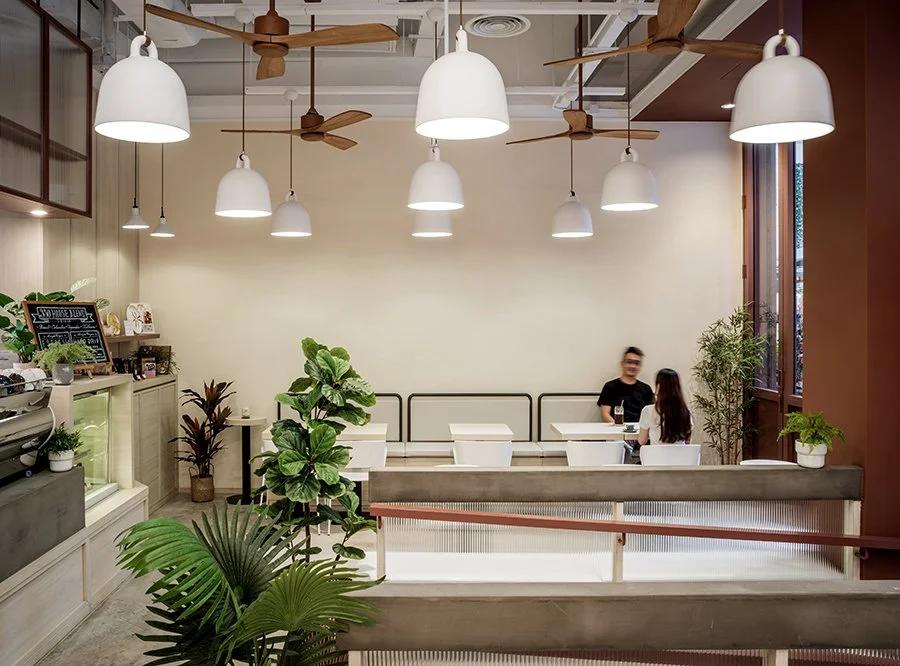
so330 is an inclusive cafe established by New Life Psychiatric Rehabilitation Association.
In the bustling heart of Wanchai, discreetly nestled behind a row of “paidongs” or street stalls in Cantonese, you will find so330, a café managed by New Life Psychiatric Rehabilitation Association (NLPRA), an organisation dedicated to fostering social enterprises that provide employment and training opportunities for those recovering from mental illnesses (PIR). The café's unusual moniker, so330, cleverly captures the essence of its mission: “Body”, “Mind”, and “Spirit” is encapsulated in the numbers 330, while “so” - a nod to 非常 or “very” in Chinese - emphasises NLPRA's commitment to go beyond standard NGO services.
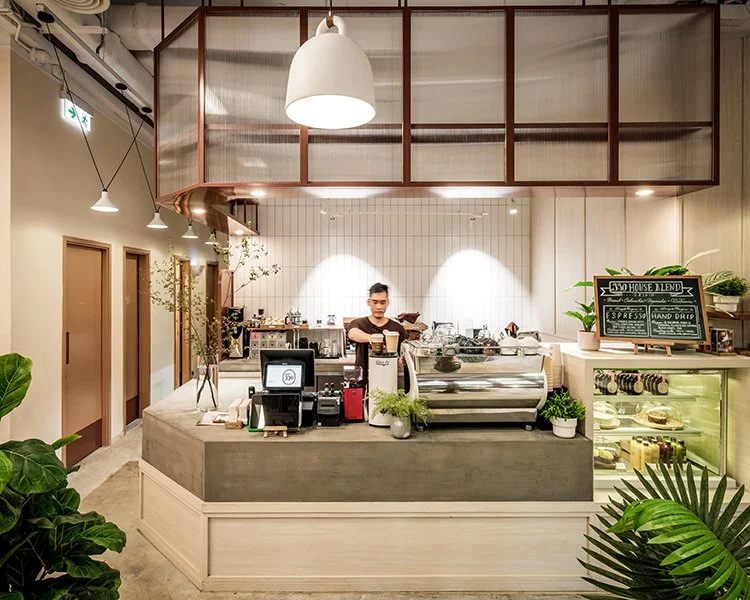
so330’s Inclusive Coffee Academy tailors to the unique learning needs of marginalised communities, individuals with disabilities, and those recovering from mental illnesses.
Opened in 2021, so330 pushes the boundaries of inclusivity, warmly welcoming a broad spectrum of differently-abled guests, from wheelchair users to the visually impaired. In keeping with this ethos, our team designed the interior to be barrier-free and easily navigable, drawing on our past collaborations with NLPRA for other cafe330 branches run by PIRs. We also spent a significant amount of time observing the challenges that people with disabilities (PWD) often encounter in public spaces, using these insights to shape a barrier-free and easily navigable environment suitable for PWDs.
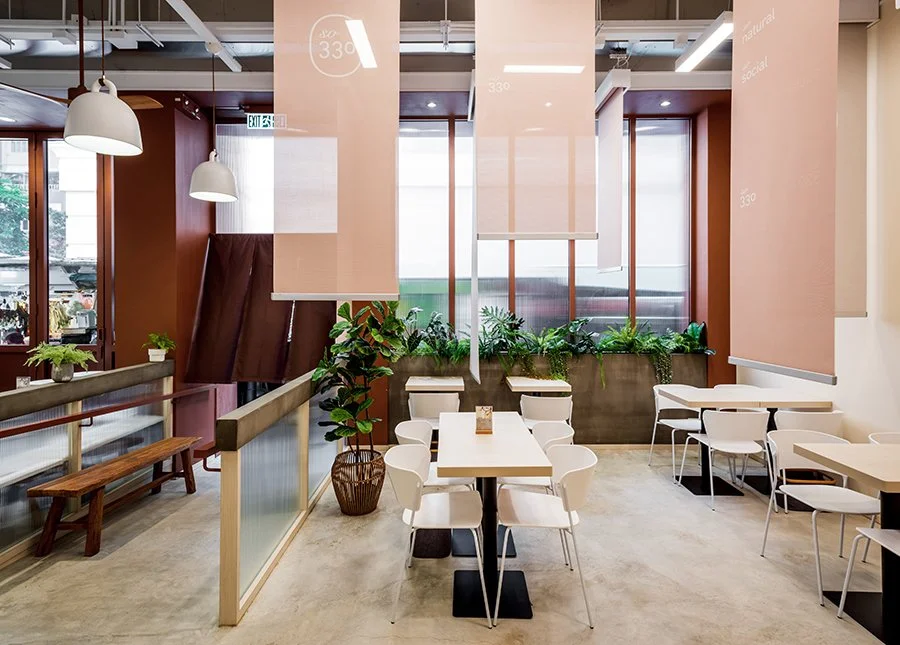
onebite adopted spatial flexibility in the design of so330 which not only benefited both able-bodied and PWD diners but also allowed for a variety of different uses.
For instance, we replaced the threshold kerb between the street and café with a gentle ramp and ensured that the majority of the furniture was movable. This spatial flexibility meant so330 could host not only diners but also talks, workshops, and art exhibitions showcasing works from PIRs and PWDs.
The commitment to inclusivity did not stop at the café’s doors. Inside, so330’s Inclusive Coffee Academy runs progressive barista training programmes, tailored to the unique learning needs and talents of marginalised communities, individuals with disabilities, and those recovering from mental illnesses. Our design reflected this diversity, with adjustable-height barista tables catering to both able-bodied to wheelchair users.
Showflat for the Elderly: Definining Independent Living on Their Terms
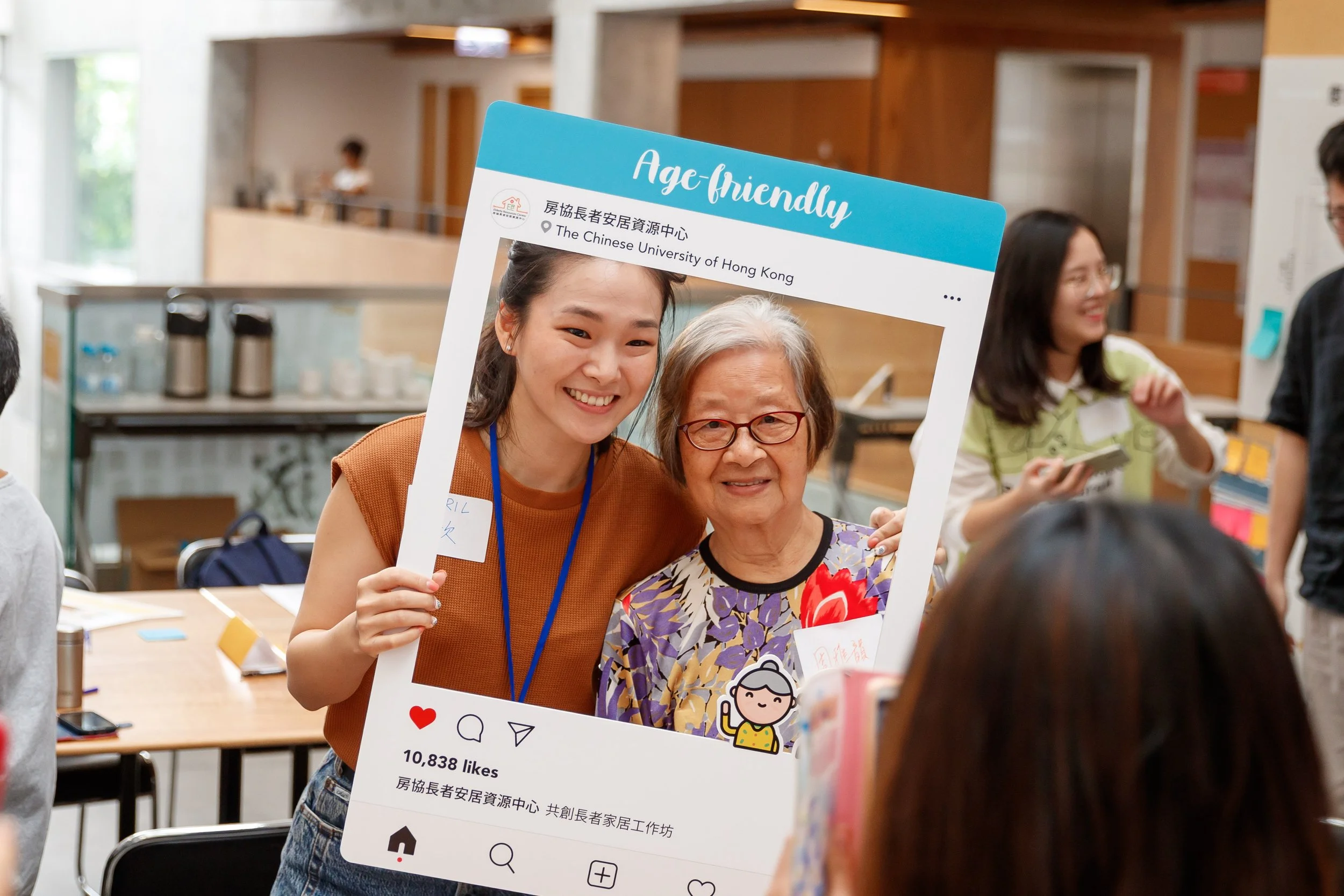
onebite reached out to a group of elderly residents to participate in the co-creation workshop for a showflat suited for senior independent living.
Discussing disabilities often leads us to assume they are lifelong conditions. However, we frequently overlook the challenges our older generation face as their physical and mental faculties begin to wane. The twilight years often see them rely on mobility aids and caregivers. Devices like wheelchairs offer some independence, yet many elderly individuals grapple with poor spatial design that could not accommodate their daily use of these aids.
Take our homes as an example. Numerous elderly individuals have resided and raised families in the same space for decades, only to find that it no longer meets their evolving needs as they age. In an increasingly ageing society like Hong Kong, the demand for home modifications catering to our elderly residents' requirements cannot be overlooked.
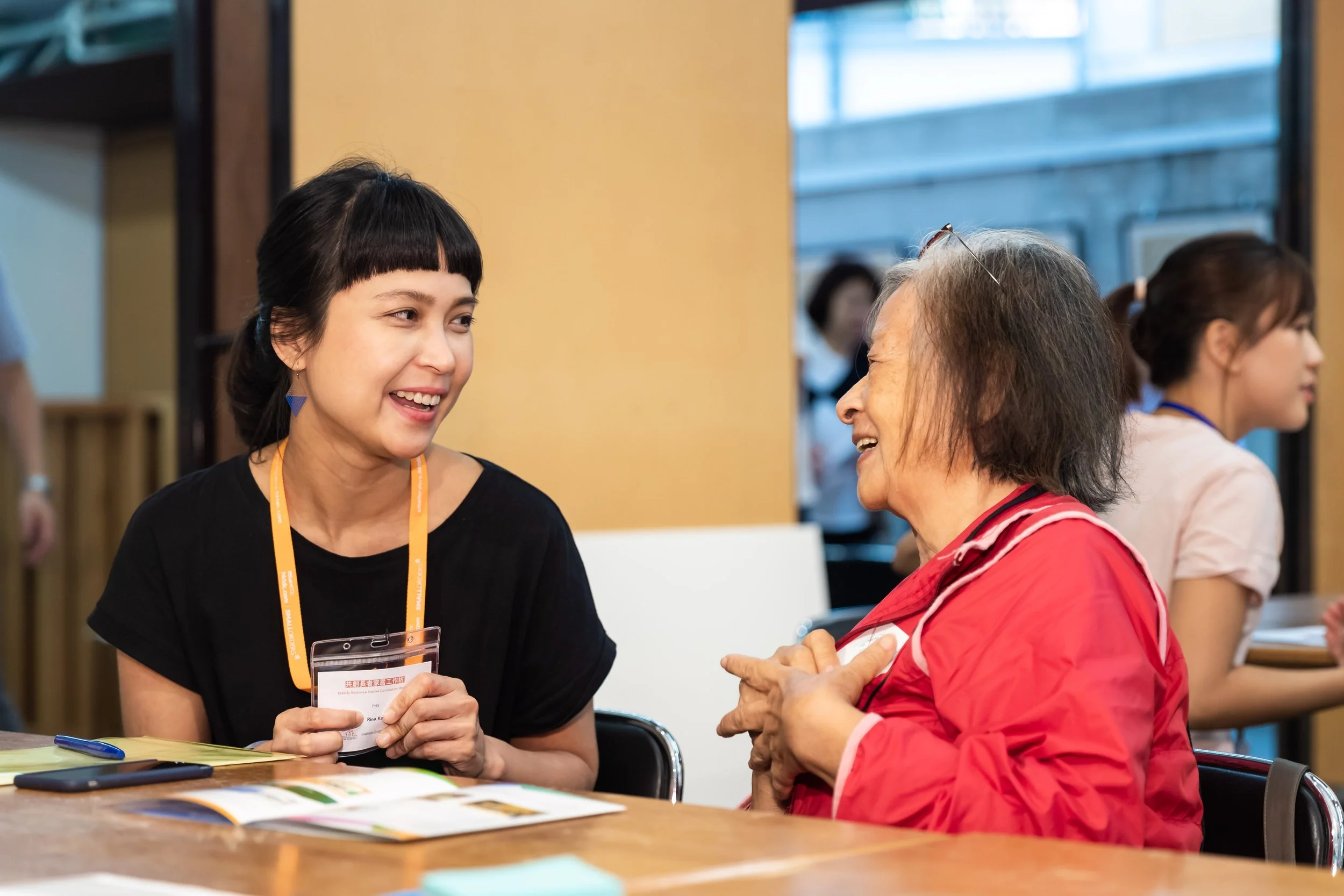
The first step involved identifying the concerns and opportunities in the elderly’s routine and what difficulties they face at home.
Recognising this urgency, the Hong Kong Housing Society (HKHS) pioneered the Elderly Resource Centre (ERC) in 2005, the first of such facility in Hong Kong. The ERC introduced the innovatives of an “age-friendly home” and in 2019, they entrusted us with the task of facilitating a “Design Thinking and Show Flat Co-design Workshop”. The aim was not merely to identify essential features in a well-equipped home for the elderly, but also to understand the intangible aspects elderly participants desire in an ideal home.
Our two-day co-creation workshop drew in over 60 participants, including elderly residents, occupational therapists, and designers. Using fun and engaging design thinking methods, we dissolved professional and age barriers to create a free-flowing brainstorming session.
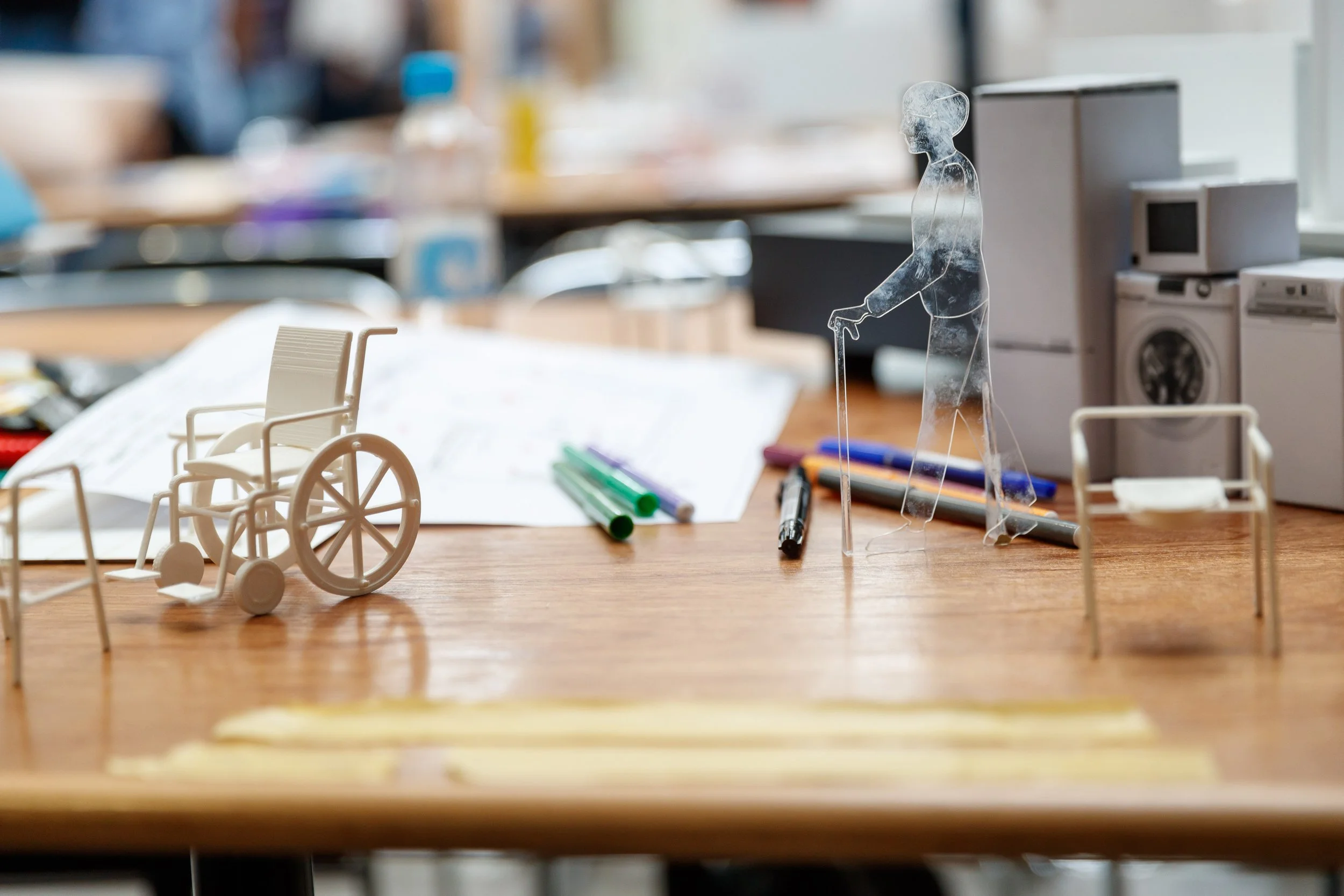
onebite used its in-house design methodology, KNOTIE to guide the ideation process.
We divided the workshop into two parts. The first focused on identifying concerns and opportunities in the elderly’s routine; and the second aimed at tailoring potential solutions to the context and constraints of Hong Kong's housing types. We utilised onebite's in-house design thinking method, KNOTIE, to guide our ideation.
The first phase of the workshop, led by our "Knock" and "Needs" processes, saw participants imagining their ideal homes. They discussed their preferences, from colour schemes to furniture choices. Facilitators then employed empathy mapping to interview participants and identify the pain points experienced by elderly residents in their homes. Young participants were even asked to don age-simulation suits to walk a mile in the shoes of their older counterparts, an immersive experience that awakened them to daily challenges the elderly face.
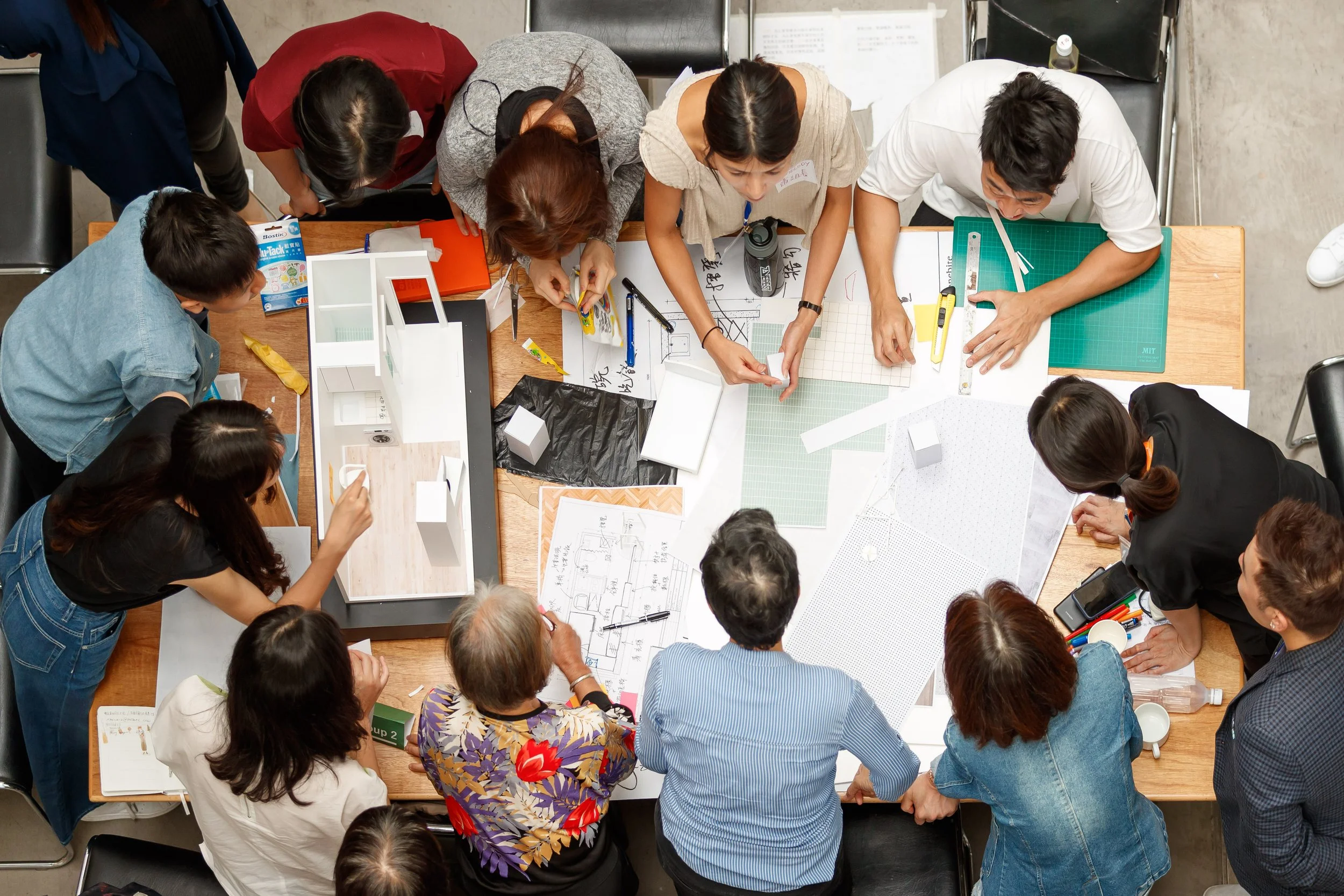
Over 60 participants, including elderly residents, occupational therapists, and designers, collaborated on the co-creation workshop.
The second part, driven by "Originate" and "Trial" processes, began the exciting process of turning these ideas into tangible designs. Using masking tape and chalk, we mapped out a simulated flat in an actual 1:1 scale, representing positions of walls, door swing angles, and placements of fixtures like beds and toilets that could potentially hinder movement or pose safety hazards. Experts from HKHS, the Occupational Therapist Association, Project Hap Sap, and Design Matter Ltd lent their expertise on materials, colours, and textures, to help teams bring their visions to life through physical scale models and mood boards.
onebite took to heart the suggestions and feedback received during the workshop and incorporated them into the revamped design of the showflat in HKHS's Elderly Resource Centre. For example, we realised the need for larger corridors that would allow wheelchair to turn. Another insight urged us to replace hinged doors with sliding doors, making them more user-friendly for those with weakened grips. The two-day workshop to co-design the showflat was a collaborative and insightful journey in co-creating design solutions with the very people we sought to assist.
Embracing User-Centric, Inclusive Design
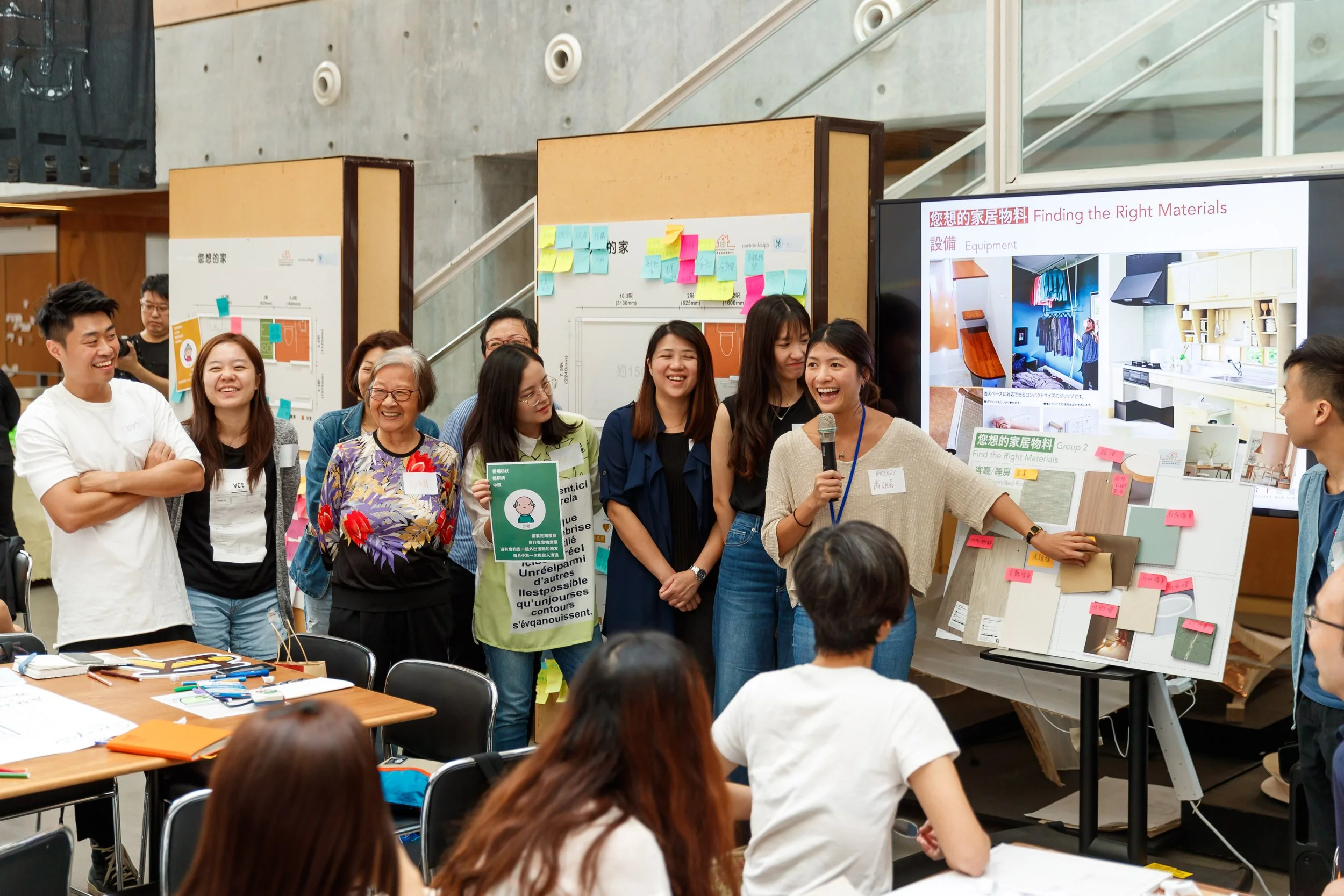
At onebite, we believe in the power of co-creation and user-centric design to solve real-world problems, including efforts to bring on board the inputs of end users.
Wrapping up Part One of our journey towards inclusive co-creation, it is clear that design should be inclusive, intuitive, and tailored to the most unexpected user, whether PWDs or the elderly, such that the improved design is equitable and benefits everyone.
From an inclusive café like so330 that welcomes people of all abilities, to co-designing an age-friendly home with the elderly, we've seen how a mindful, co-creative approach to design can make spaces more accessible and empathetic to all users. These cases underline the importance of understanding the challenges faced by different individuals before designing spaces that truly accommodate them.
In Part Two, we will delve into the realm of social and product designs. How can thoughtful designs of everyday items break down social stigma and offer dignity to users? How can we democratise the design process by teaching and empowering everyone to be changemakers in their own communities through co-design?
From an inclusive café like so330 that welcomes people of all abilities, to co-designing an age-friendly home with the elderly…these cases underline the importance of understanding challenges faced by different individuals before designing spaces that accommodate them.