空間考察:解碼香港商場的在地日常 | Spatial Observation: Decoding Everyday Local Life in Hong Kong Malls
前三篇文章,我們梳理了香港商場的歷史演變、借鏡了全球的空間轉型,探討了本地商場在業權與規管制度下的重重壁壘。作為日常必經之地,商場能否重新發掘其公共價值?在商場研究系列的最終回,我們選擇走向現場,希望能把這些日常生活中被忽略的對話翻譯出來,展現香港商場極具魅力的「多樣性生態」, 大眾的「野生智慧」,是否有機會轉化為未來空間設計的靈感備忘錄。
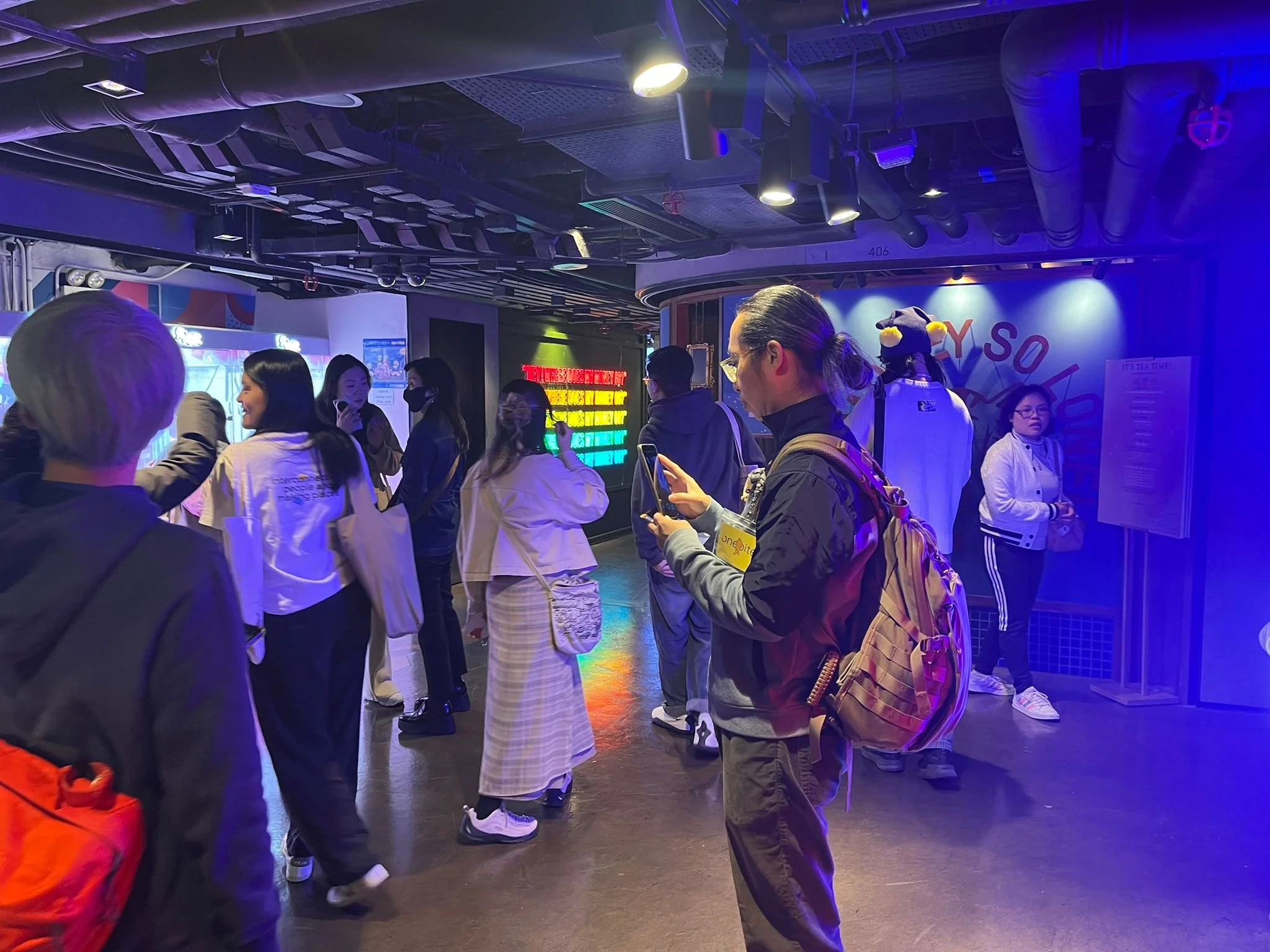
於2025年,GUTS 團隊帶領十二位「社區探索家」親身走進兩個不同的商場生態,展開了一場空間探索的城市盲盒遊戲。
我們已將這三篇商場專欄的核心內容與盲盒活動的完整紀錄,整理成了兩本小誌:
小誌 1《商場空間的公共性是...?》
包含前三篇的研究專欄,解剖香港商場的困局與破局潛力。
小誌 2《商場盲盒實驗是...?》
完整收錄了 4 個對於香港商場空間的提問與解答,以及這場盲盒活動的總結。
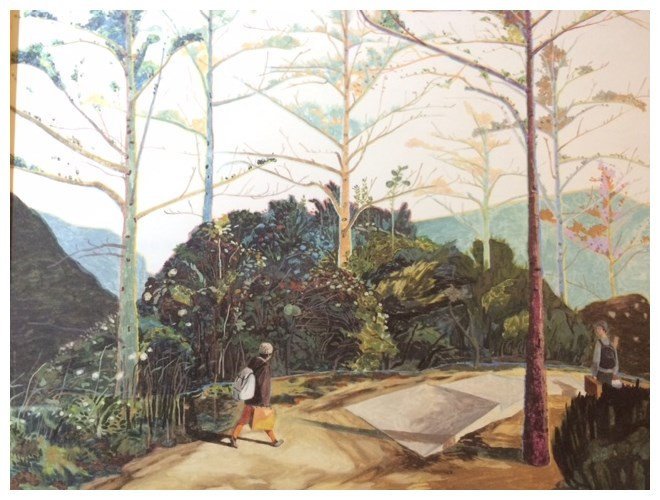
以下是小誌的彩蛋—我們將公開展示探索家們的手稿,他們帶著我們設計的工具卡,帶回了商場第一手的現場情報!
(閱讀時間:10分鐘)
盲盒活動地點:兩個商場
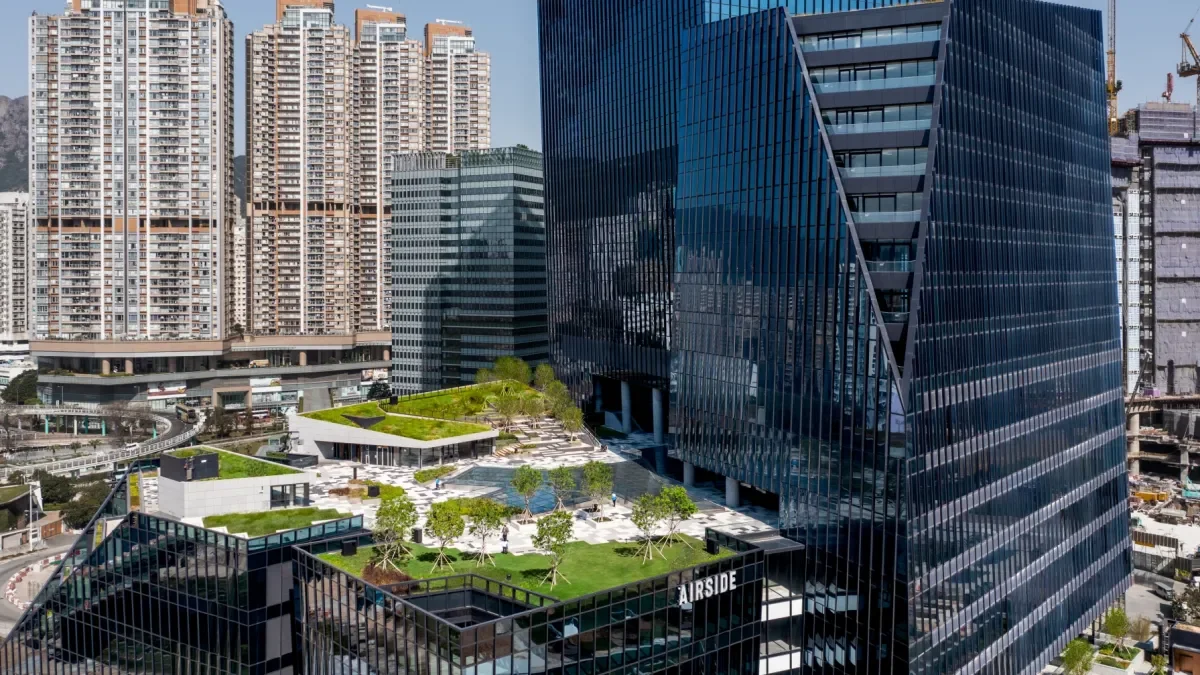
T.O.P. (This Is Our Place) (圖左)
新型綜合商場 | 發展商管理 | 交通樞紐 |人流量高
這裡是擁有貼心設計、連接旺角港鐵站與街角的高效通道。我們想知道,在高度商業化與密集人流之下,人們駐足的理由是什麼?
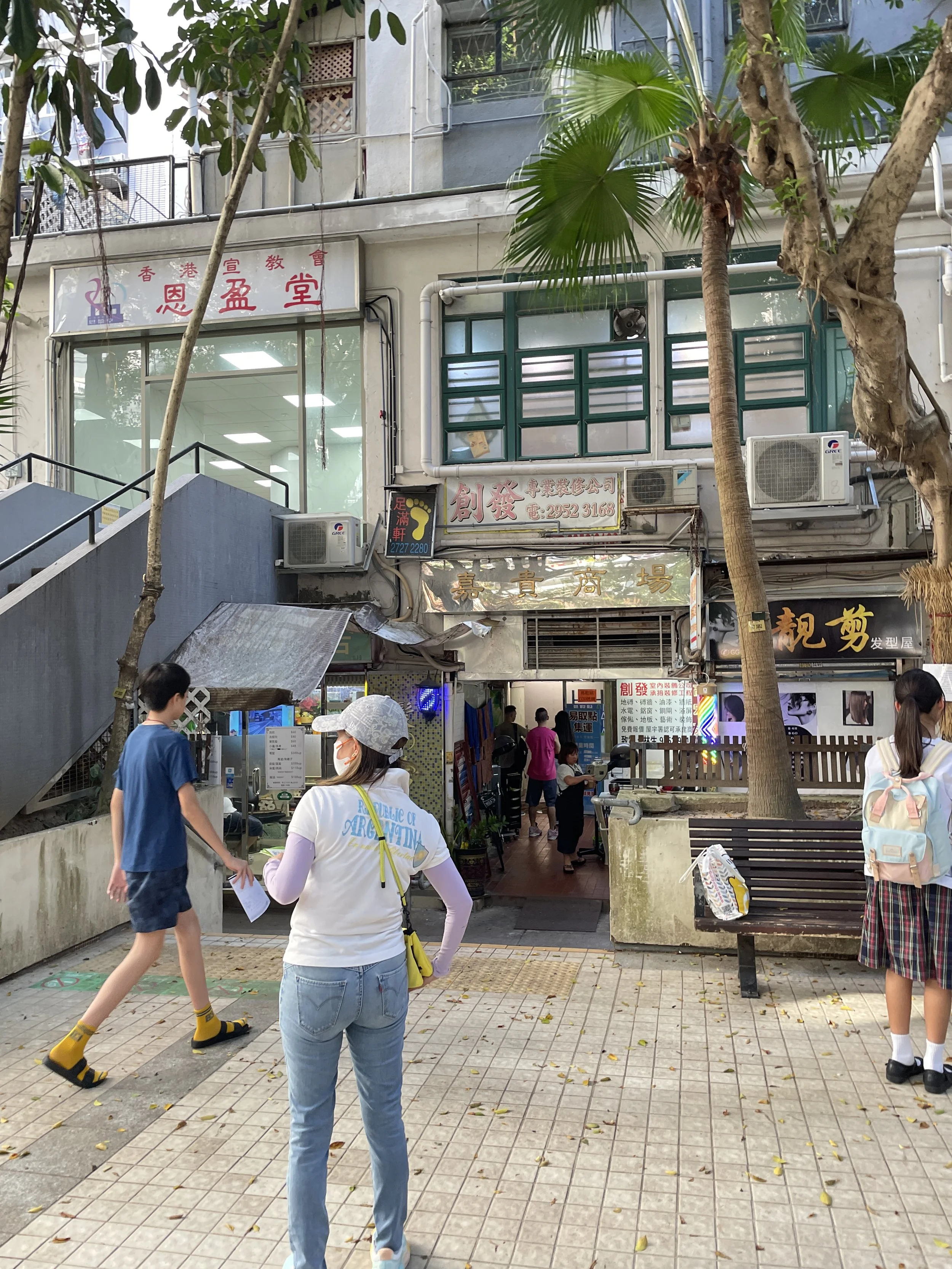
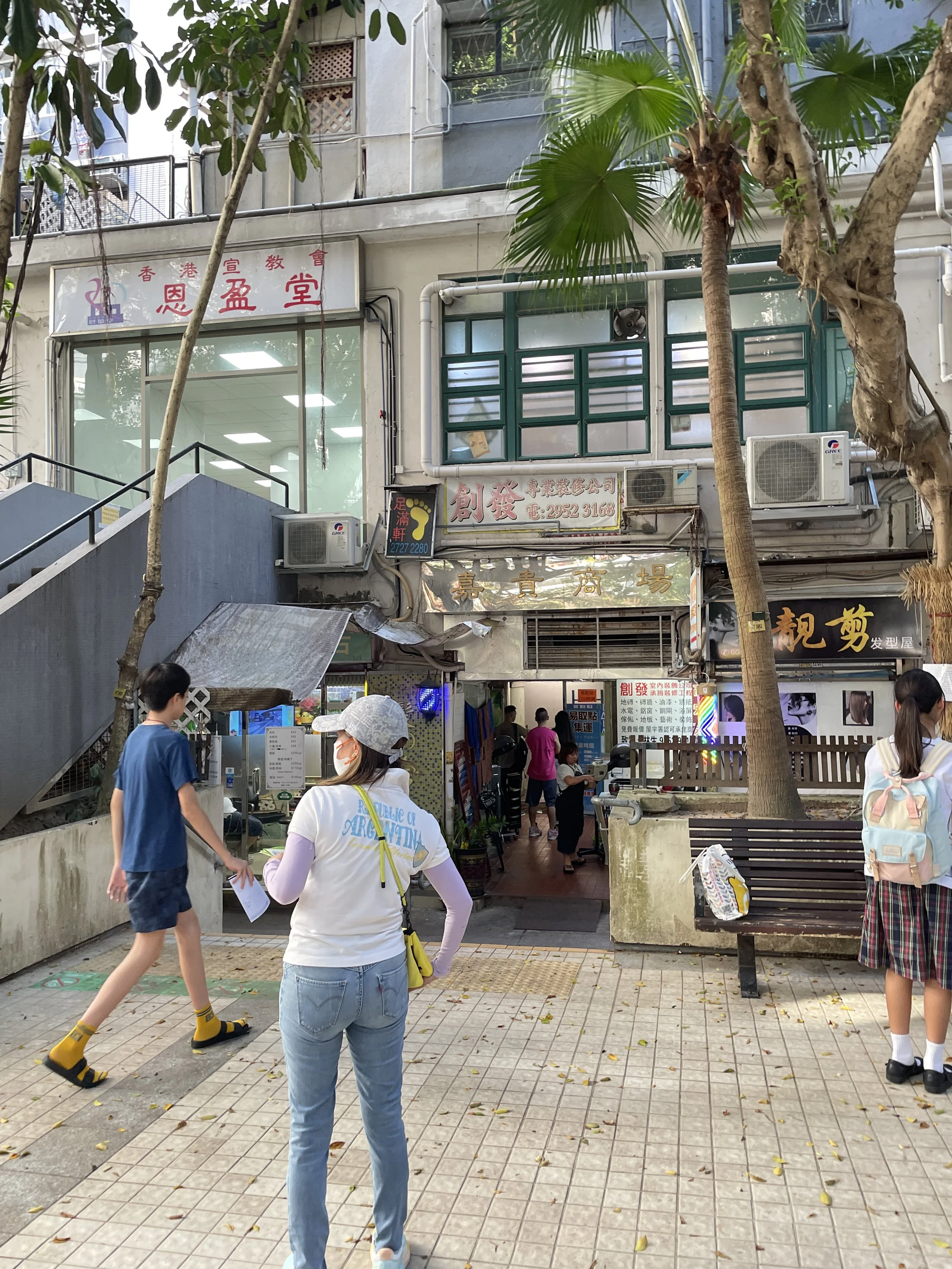
油塘中心附屬商場 (嘉貴/嘉富/嘉發)(圖右)
業權分散舊商場 | 分散業權 | 社區型 | 人流適中
這裡是香港舊式街坊商場, 更像是由當地居民與民生小店交織而成的微型村落。沒有光鮮亮麗的連鎖店,卻擁有戶外中庭與乘涼的老樹。我們想探討,在缺乏統一管理的舊商場,這裏的歸屬感可以是什麼?
探索主題1: 商場吸引人的方式
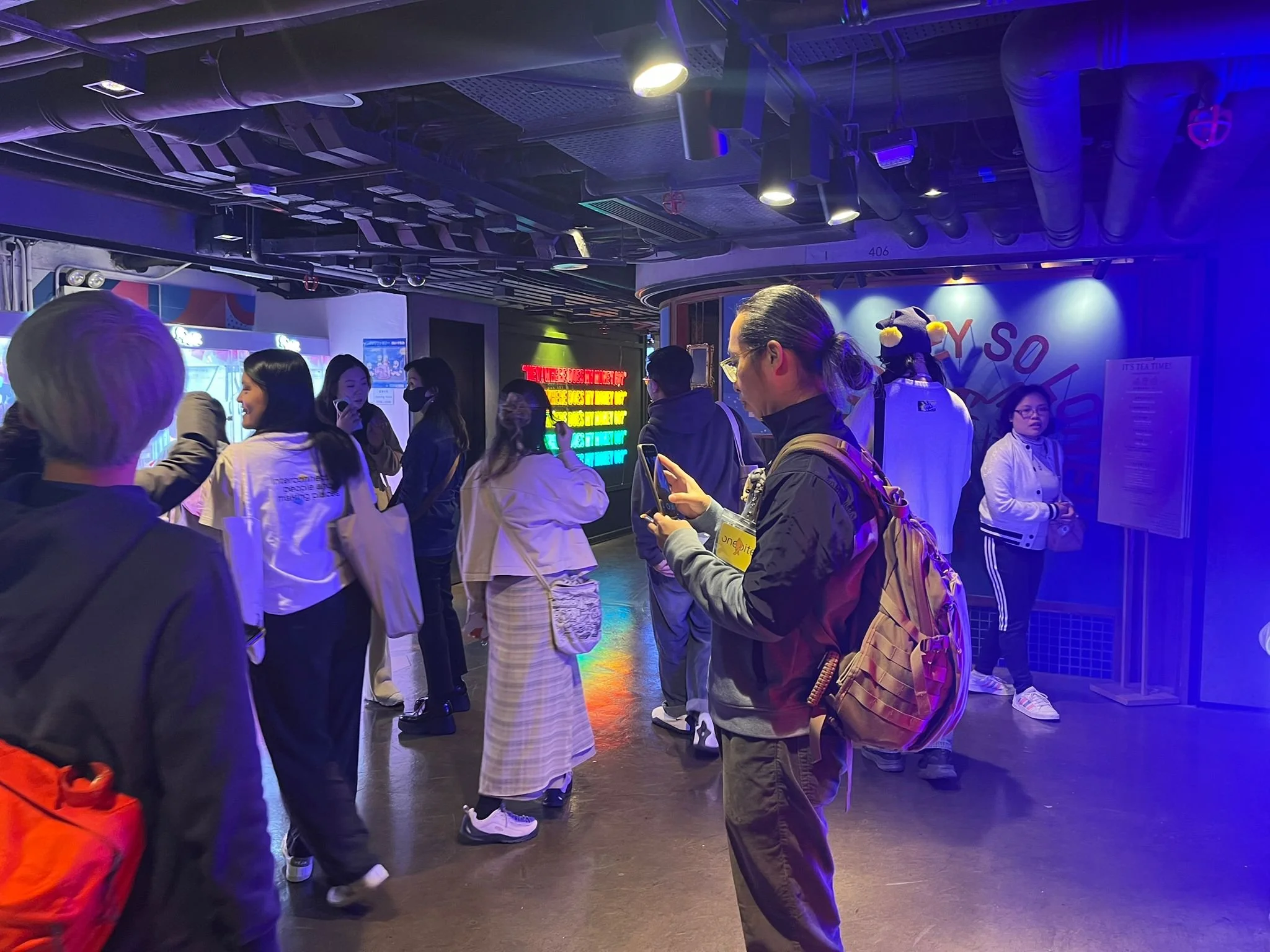
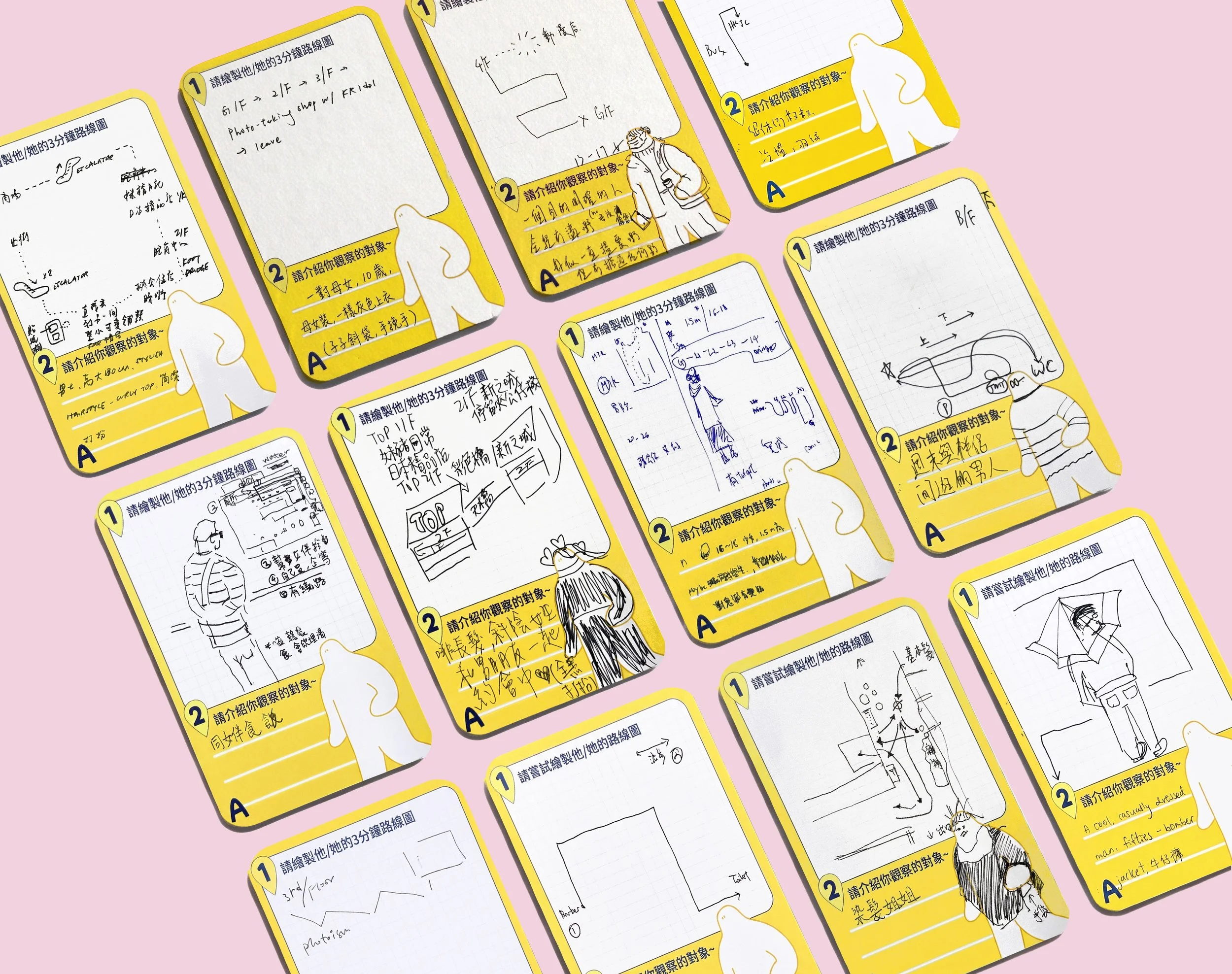
這張任務卡邀請探索家隨機鎖定一位商場用家,進行 5-8 分鐘的隱藏觀察,並記錄下他們的移動路線與行為。我們希望藉此揭開商場人流的真實動線,並發掘究竟是哪些空間細節,在無形中牽引著人們的腳步。
探索家筆記總結
T.O.P.
根據我們探索家的現場觀察,這裡的用家往往帶著非常清晰的目的前來:吃飯、買衣服、購買動漫商品、充電或等人;亦有不少人,僅將此地視為通往旺中的便利通道。而在追蹤這些人流動向的過程中,他們進一步注意到,商場內那些能安放外賣飲品和隨身物品的加寬扶手、或是讓人倚靠的角落,正是最吸引人停下腳步的空間元素,讓商場自然生成了明顯的流動區與聚集區。
油塘中心附屬商場
在探索家的眼中,這裡的用家類型充滿了街坊氣息:有準備接小孩放學的媽媽、悠閒的退休阿叔、稍微打扮過的街坊男士,以及正在髮廊理髮的女顧客。這裡功能多樣的店舖成為了街坊日常閒逛與消費特定產品的據點。最讓大家驚奇的畫面,莫過於一位女街坊竟然在等待染髮上色的期間,悠閒地穿梭在周邊小店之間——聊天、上廁所、閒逛,完全把商場當成了自家客廳!
探索主題2: 去商場會做的事
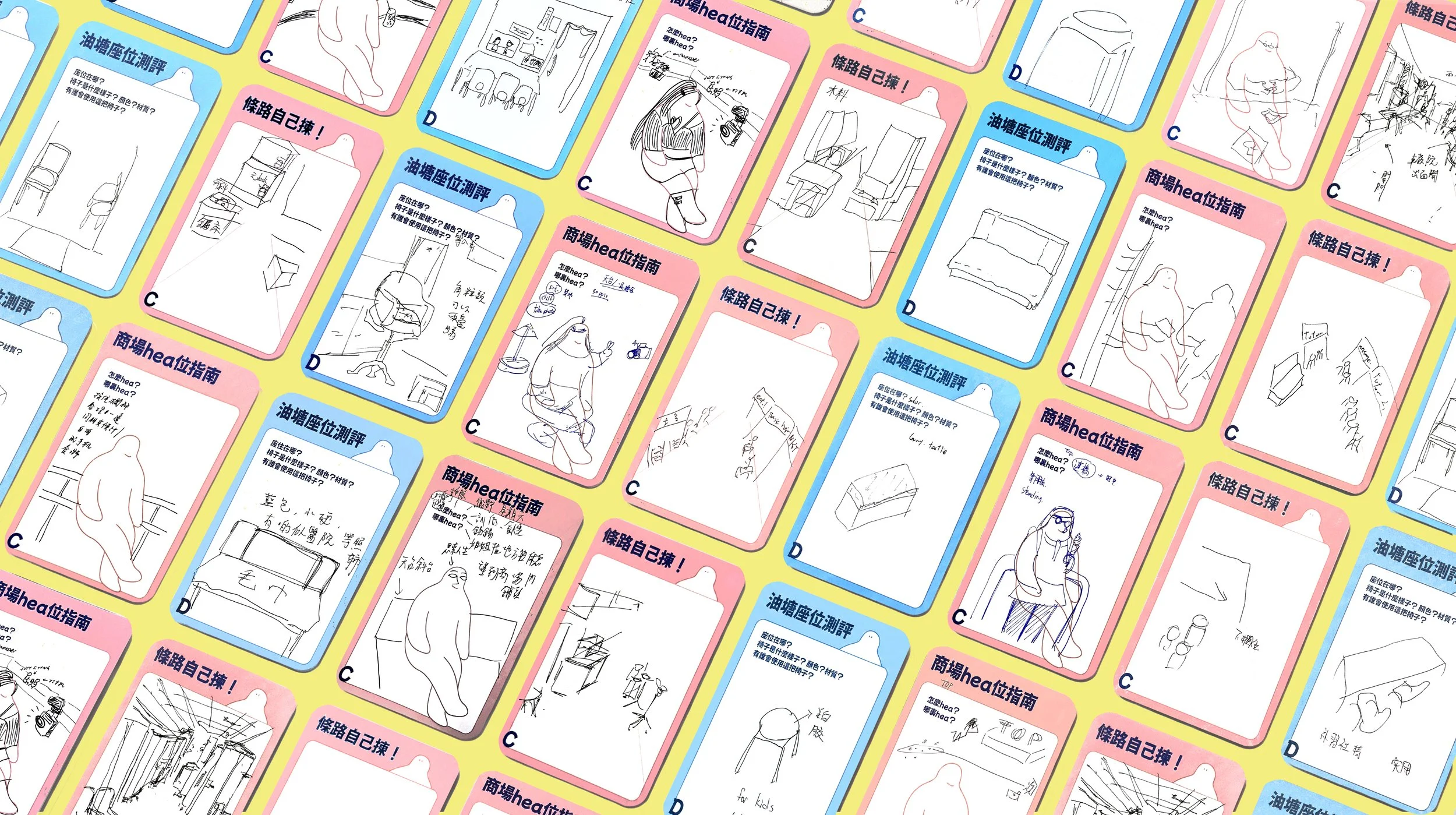
這些任務卡引導探索家去挖掘空間的多元用途,尋找究竟是哪些意想不到的角落,默默支持著人們在此放空與閒晃。我們希望藉此鼓勵大家重新思考:除了純粹的消費,商場還能承載什麼樣的公共功能?
探索家筆記總結
T.O.P.
我們的探索家發現,加寬的扶手、通往旺中的天橋與5樓天台,是人潮最愛停留的地方。他們觀察到,不少人會把外賣飲品放在欄杆上,停下來等人、看風景或聊天;天台上,則塞滿了各種節奏的日常——有人在拍照,也有人使用手機、曬太陽、享受專屬的 Me-time。
油塘中心附屬商場
探索家們發現,這裡的店家早已把走廊視為自家空間的延伸,而整個商場似乎也默許了這件事,彷彿形成了一種無聲的共識。最讓他們驚訝的,是木工師傅竟把商場走廊當作自由創作的「後巷」!此外,補習社也將書櫃與各式各樣的座椅搬到店外,宛如在公共通道上打造了一座「走廊圖書館」。原來商場除了純粹的消費之外,它還能是一個充滿生命力、容納街坊日常的共享社區!
在尋找最想坐的座椅任務當中,探索家們親自試坐了那些擺放在走廊的座位。他們發現,儘管公共通道上擺放著款式各異的椅子——小沙發、靠背椅、單張硬質椅、甚至是軟墊電腦椅,但當大家坐下時,總會感到一絲猶豫,擔心誤佔了店家的座位而感到不自在。探索家們形容,這個商場散發著一種「社區邊界感」;對於首次到訪的外人而言,走進這裡就像是不小心誤入了別人的私人客廳。
探索主題3: 商場的部落文化
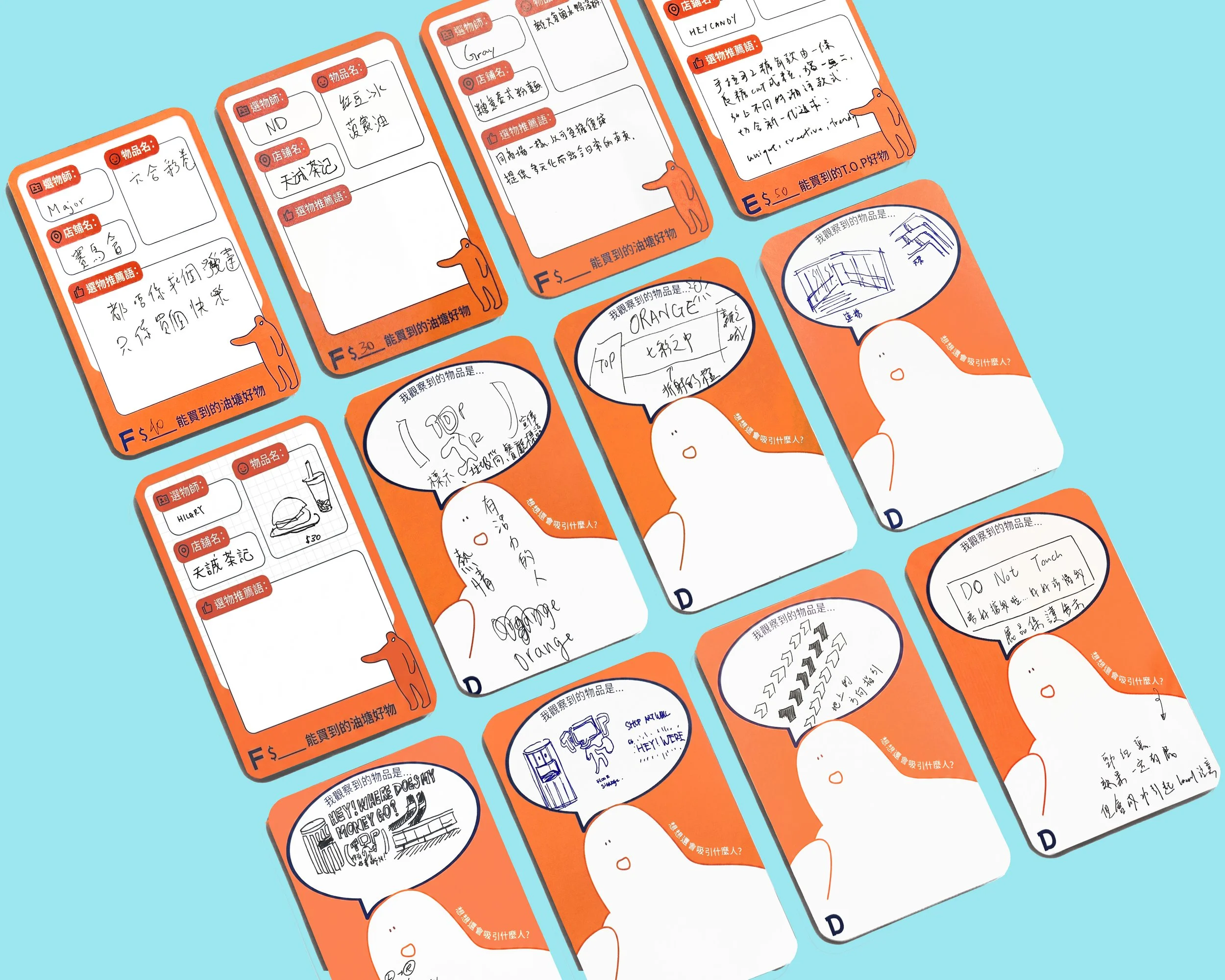
這張任務卡邀請探索家深入感受商場的獨特氛圍,並挑戰在50港元的預算內,在店舖中尋找最能代表商場靈魂的物品。
探索家筆記總結
T.O.P.
從探索家們的原稿發現,他們認為 T.O.P 的文化定位是「新潮與獨特」,而這種 DNA 具體散落於各種充滿態度的空間細節裡。商場巧妙地利用地上的箭頭指引以及霓虹燈光,營造出極具辨識度、充滿熱情與活力的年輕氣場。在這種氛圍下,連探索家的選物也與在地文化產生了強烈共鳴,例如探索家特別推薦了印有香港 Z 世代潮語的手工糖,這些獨一無二的小玩意,切合了新一代對 Unique、Creative 與 Trendy 的追求。
油塘中心附屬商場
探索家們觀察到,這個商場內匯聚了超過十種截然不同的業態。從琴行、補習社、學車中心,到理髮店、按摩店與美容院;更有釣魚用品、五金雜貨、電子維修店、木工坊、改衣店、中醫診所、寵物店,甚至還藏著一間教會!他們表示,這種店舖的多樣性,滿足了周邊社區的日常所需;但對於外人而言,走進去確實會有一種缺乏駐足目的的感覺。
或許正因如此,當探索家們接下另一項任務——運用 50 港元預算,挑選最能代表這裡的物品時,幾乎所有人都將這筆錢用來購買日常小食,認為價格十分親民。不過,最讓大家會心一笑的,是一位探索家走進商場地舖的馬會買了一張六合彩,並笑著說:「都唔係求發達,買個開心啫!」這位探索家更敏銳地指出,這份隨性豁達的心態,正是商場裡這些經營不同業態的小店老闆們共同的生活哲學。
盲盒實驗總結
本文展示的手稿僅是空間考察的初步紀錄。完整的研究內容——包含從商場流線、空間所有權、消費目的與空間包容性來探討香港商場的多樣生態——皆收錄於即將發售的小誌中,歡迎關注出版資訊。
Spatial Observation: Decoding Everyday Local Life in Hong Kong Malls
In our first three articles, we reviewed the historical evolution of Hong Kong shopping malls, examined global cases, and discussed the ownership and regulatory barriers limiting local malls. Since these are spaces we visit daily, we want to explore whether their public value can be reclaimed. For the final part of this research series, we visited the sites in person. Our aim is to highlight overlooked day-to-day interactions in malls, showcase the diverse ecosystems of Hong Kong malls, and explore whether the public's everyday wisdom can inspire future spatial design.
The GUTS team led twelve "community explorers" into two different mall environments for an Urban Blind Box activity focused on spatial exploration. We have compiled the core insights from the three articles and the full records of this activity into two publications:
Zine 1: Publicness in Retail Space Is...?
Includes the core insights from the first three research articles, analysing the challenges and potential breakthroughs for Hong Kong malls.
Zine 2: The Urban Blind Box Is...?
Contains four questions and answers regarding Hong Kong mall spaces, along with a summary of the activity.
As a special bonus for the zine, we are revealing the explorers' original sketches and notes. Using the tool cards we designed, they gathered first-hand, on-the-ground insights from the malls!
Urban Blind Box Sites: Two Malls
T.O.P. (This Is Our Place) (Left)
New Integrated Malls | Single Developer Management | Transport Hub | High Foot Traffic
This is a well-designed, efficient corridor connecting Mong Kok MTR Station to the surrounding streets. We want to find out: Amidst such hyper-commercialisation and heavy foot traffic, what makes people pause and linger?
Yau Tong Centre’s Malls (Ka Kwai/Ka Fu/Ka Fat) (Right)
Strata-Title Old Malls | Fragmented Strata-Title | Traditional Neighbourhood | Moderate Foot Traffic
This is a traditional Hong Kong neighbourhood mall, resembling a micro-village woven together by long-time residents and independent stores. Lacking glamorous chain stores, it instead features an outdoor square shaded by old trees. We want to explore: How does a sense of belonging manifest in an old mall without unified management?
Exploration Theme 1: How Malls Attract People
This task card asks explorers to randomly select a mall visitor, observe them for 5 to 8 minutes, and record their movement paths and behaviours. Through this, we aim to uncover the flow of foot traffic and identify the specific spatial elements that naturally draw people in.
Summary of Explorers' Notes
T.O.P.
According to our explorers' on-site observations, visitors here usually arrive with specific purposes: eating, shopping for clothes, purchasing anime merchandise, charging devices, or waiting for friends. Many others simply use the space as a convenient passageway to other parts of Mong Kok. While tracking these movement patterns, the explorers noted that spatial features such as widened handrails—which provide a surface for drinks and personal items—and corners where people can lean are the elements that most effectively encourage people to linger. This naturally divides the mall into distinct transit zones and gathering areas.
Yau Tong Centre’s Malls
The explorers observed a strong neighbourhood atmosphere among the mall's users. The demographic includes mothers preparing to pick up their children from school, retired men, dressed-up local residents, and female customers getting haircuts at the salon. The functionally diverse shops serve as daily hubs for residents to stroll and purchase specific goods. The most surprising observation was a woman who, while waiting for her hair dye to set, leisurely wandered between neighbouring shops—chatting, using the washroom, and window shopping—treating the mall entirely like her own living room!
Exploration Theme 2: What People Do in Malls
These task cards guide the explorers to uncover the diverse uses of the space, identifying which unexpected areas accommodate people relaxing or wandering. Through this, we hope to encourage everyone to consider: beyond consumption, what kind of public functions can a mall serve?
Summary of Explorers' Notes
T.O.P.
Our explorers found that the widened handrails, the footbridge leading to other parts of Mong Kok, and the 5th-floor rooftop are the most popular places for people to gather. They observed that many people place their drinks on the railings, pausing to wait for friends, enjoy the view, or chat. The rooftop, meanwhile, is filled with everyday activities—some people take photos, while others use their phones, bask in the sun, or enjoy some personal "me time".
Yau Tong Centre’s Malls
The explorers discovered that the shop owners here treat the corridors as extensions of their own premises. This practice seems to be accepted throughout the mall, forming a mutual, unspoken understanding. What surprised them most was a carpenter using the mall's corridor as a "back alley" for his woodworking! Additionally, a tutorial centre has moved bookshelves and various chairs outside its storefront, creating a "corridor library" in the public passageway. It turns out that beyond consumption, a mall can also function as a vibrant, shared community space that accommodates the daily routines of local residents.
During the task of finding their preferred seating, the explorers tested the various chairs placed along the corridors. They found that although the public passageways featured an array of seating—small sofas, standard chairs with backrests, simple hard chairs, and even padded office chairs—they always felt a slight hesitation when sitting down. They felt uneasy, worried they might accidentally be occupying seating that belonged to the shops. The explorers described the mall as exuding a strong "sense of community boundaries". For first-time visitors or outsiders, walking in feels like accidentally stepping into someone else's private living room.
Exploration Theme 3: Tribal Culture of Malls
This task card invites explorers to immerse themselves in the mall's unique atmosphere and challenges them to find an item within a budget of HK$50 that best represents the mall's soul.
Summary of Explorers' Notes
T.O.P.
According to the explorers' notes, they concluded that T.O.P.'s cultural positioning is "trendy and unique", and this DNA is embedded in various spatial details that convey a strong sense of character. The mall uses dynamic arrows on the floor and neon lighting to create a highly recognisable, passionate, and vibrant aura. Within this atmosphere, the explorers' chosen items strongly resonated with the local culture. For instance, one explorer recommended handmade sweets printed with Hong Kong Gen Z slang. These unique items perfectly align with the new generation's pursuit of being "unique, creative, and trendy".
Yau Tong Centre’s Malls
The explorers observed that this mall houses over ten different types of retail businesses. These range from music schools, tutorial centres, and driving schools, to hair salons, massage parlours, and beauty salons; there are also fishing supplies shops, hardware stores, electronics repair shops, a carpentry workshop, clothing alteration shops, Chinese medicine clinics, pet shops, and even a church! They noted that this diversity of shops meets the daily needs of the surrounding neighbourhood. However, for outsiders, visiting this mall indeed leaves them with no clear reason to linger.
Perhaps because of this, when the explorers took on the next task—using a HK$50 budget to select an item that best represents the place—almost everyone spent the money on everyday local snacks, noting that the prices were very affordable. What brought a smile to everyone's face, however, was an explorer who bought a Mark Six lottery ticket, joking, "It's not about getting rich, just buying a bit of happiness!" As the explorer pointed out, this relaxed approach to life perfectly mirrors the mindset of the small business owners within the mall.
Experiment Summary
The field notes displayed here are preliminary records of this spatial observation. The complete research—which explores the diverse ecosystems of Hong Kong malls through circulation, space ownership, consumption purposes, and spatial inclusivity—is featured in the upcoming zine. Please stay tuned for publication details.
你可能對以下吉人吉事有興趣:
You may also be interested in these GUTS Stories: