
Inclusive Design for Colour Blindness:
Rethinking Visual Accessibility in Cities
The Fountain for
Technicolour Beads
- Clerkenwell
Design Week 2026
-
Category: Public Space & Architecture, Placemaking, Art & Cutlure
Type: Architectural Installation, Exhibition, Curation
Client: Clerkenwell Design Week 2026
Material Partner: Leigei Stone
Location: Clerkenwell Green, London, United Kingdom
Area: 35 sqm.
Completion: 2026
While over three million people in the UK navigate life with CVD—including 8% of men and 1 in 200 women—our urban spaces remain heavily reliant on colour-coded infrastructure, such as transport maps, safety signage, and public zoning. For these individuals, the greatest urban challenge is the isolation caused by these systems. "The Fountain of Technicolour Beads" at Clerkenwell Design Week 2026 directly addresses this by demonstrating a multi-sensory approach to urban design, validating the neurodivergent experience by using colour blindness as a creative blueprint rather than a deficit.
As wide-spectrum palettes continue to dazzle the design industry, "The Fountain of Technicolour Beads" by onebite DESIGN and Leigei Stone serves as a soft yet powerful nudge against the invisible barriers these choices create for the neurodiverse community.
While over three million people in the UK navigate life with CVD—including 8% of men and 1 in 200 women—our urban spaces remain heavily reliant on colour-coded infrastructure, such as transport maps, safety signage, and public zoning. For these individuals, the greatest urban challenge is the isolation caused by these systems. "The Fountain of Technicolour Beads" directly addresses this by demonstrating a multi-sensory approach to urban design, validating the neurodivergent experience by using colour blindness as a creative blueprint rather than a deficit.
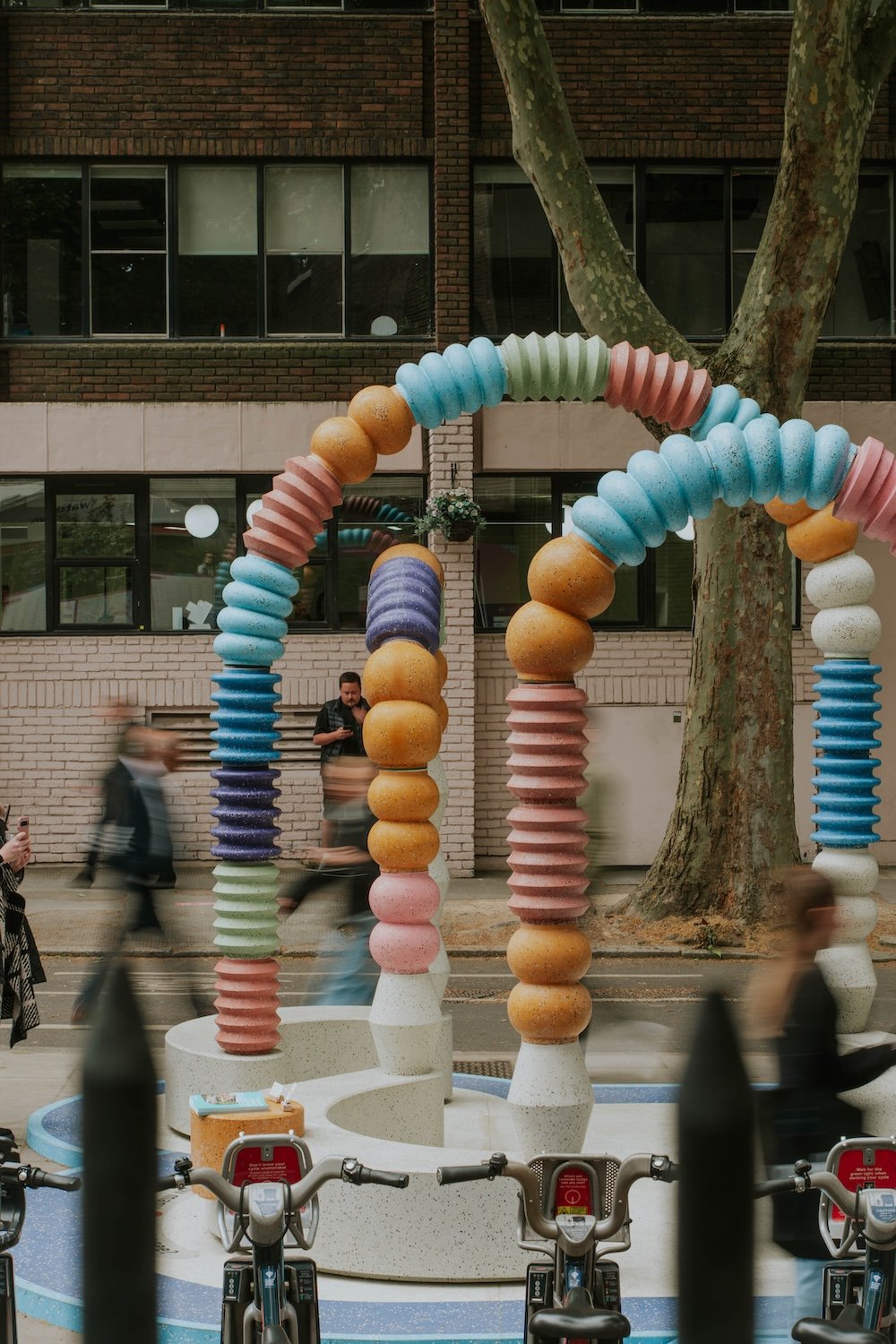
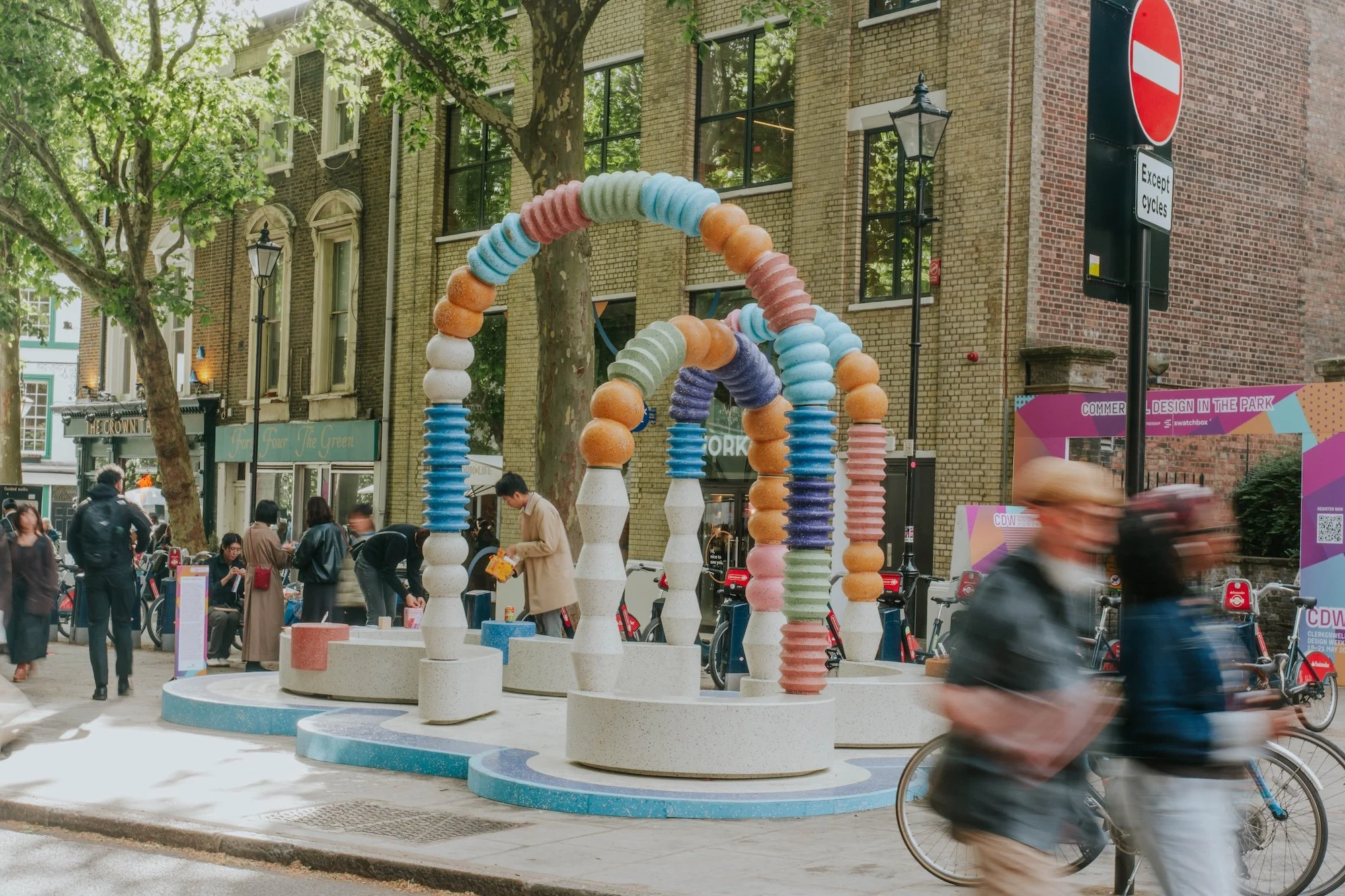
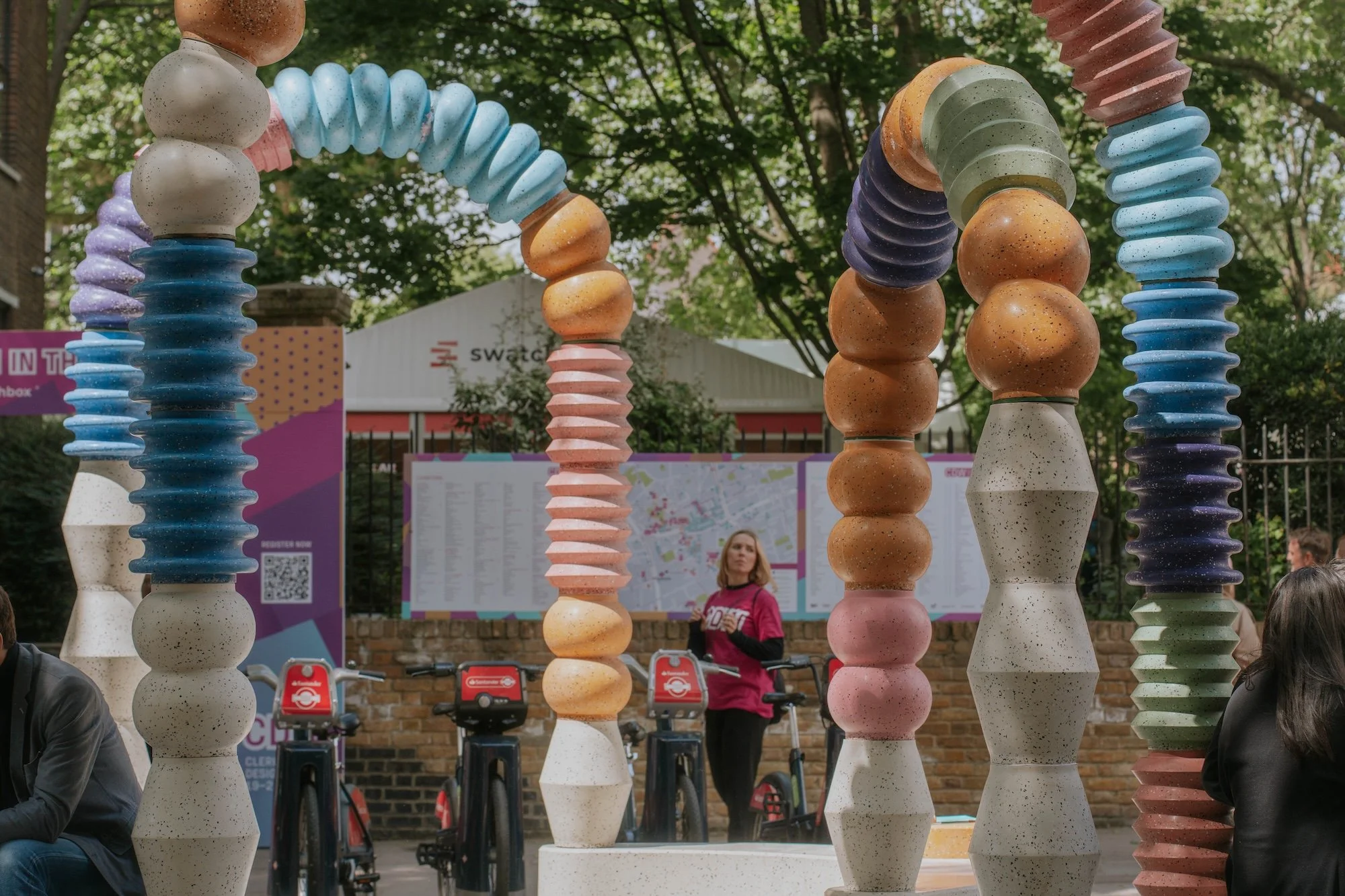
Sited at Clerkenwell Green for Clerkenwell Design Week 2026, the installation materialises the abstract challenges of Colour Vision Deficiency (CVD), commonly known as colour blindness. It playfully reimagines a traditional public fountain as a towering, phygital sculpture of candy-coloured stone beads, transforming an optical accessibility test into an interactive public monument.
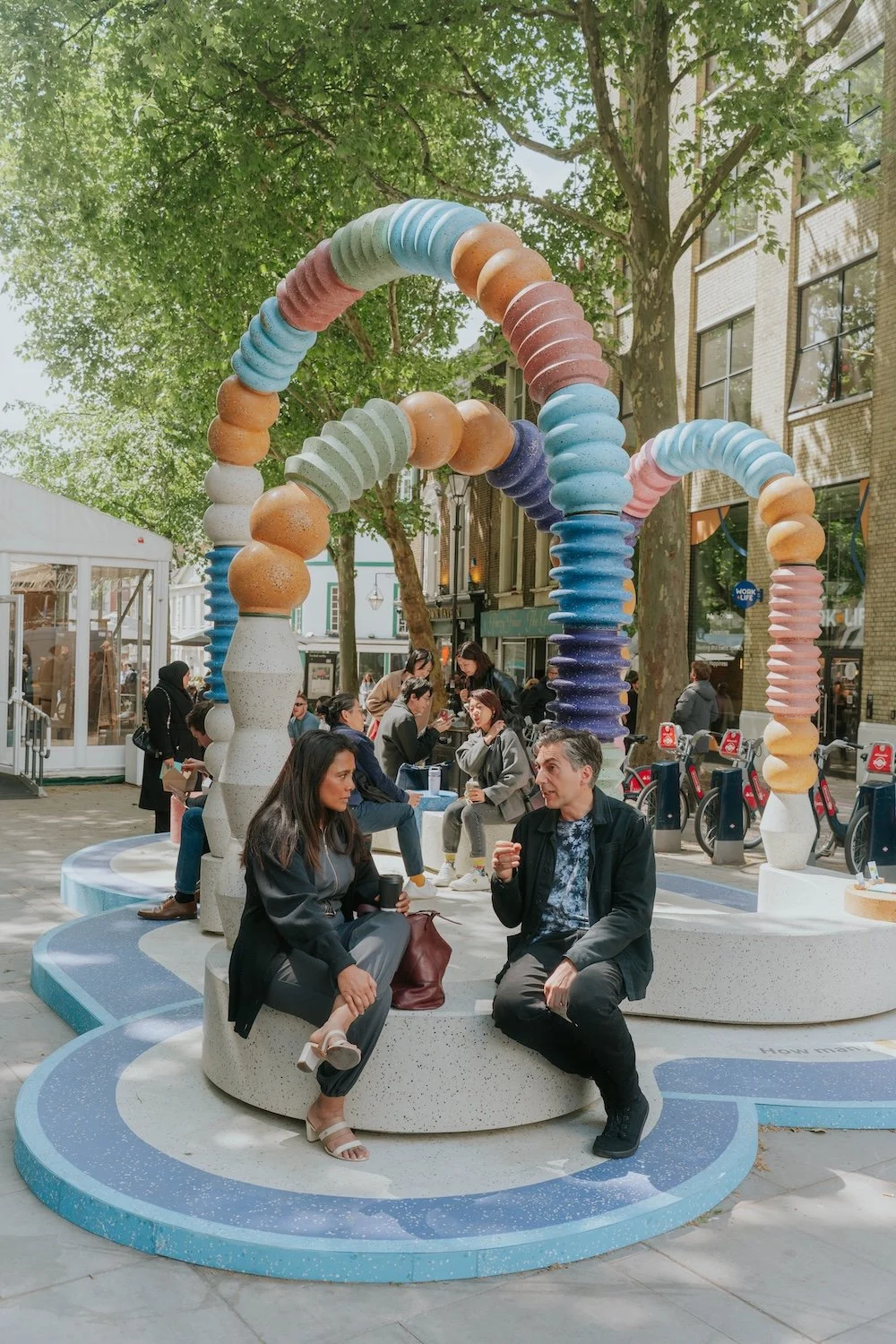
The spatial layout is anchored by gigantic, sculptural stacks of beads arranged to double as a vibrant public bench and a communal meet-up point, seamlessly integrating into the urban fabric of London. While the vibrant colours deliberately blur or merge for visitors with red, green, or blue-yellow vision deficiencies, the physical forms feature varied tactile surfaces. This ensures that if colour fails, texture steps in as a universal language. This physical encounter is paired with a digital loop through a dedicated web app, allowing non-CVD users to experience the installation through different visual filters, matching the physical encounter with digital empathy and closing the visual reality gap.
Phygital Fountain in London
Engineered Materiality For Accessibility
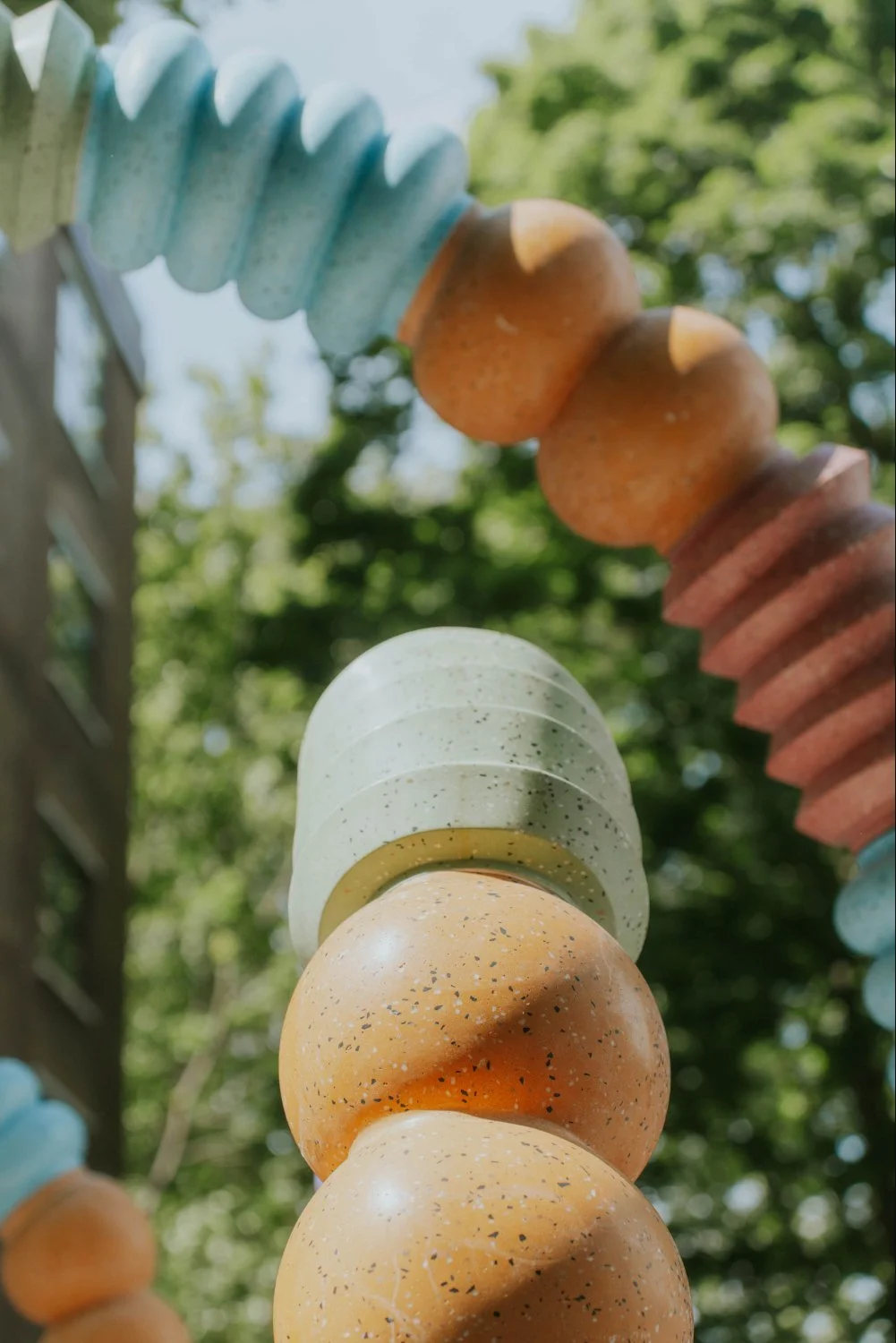
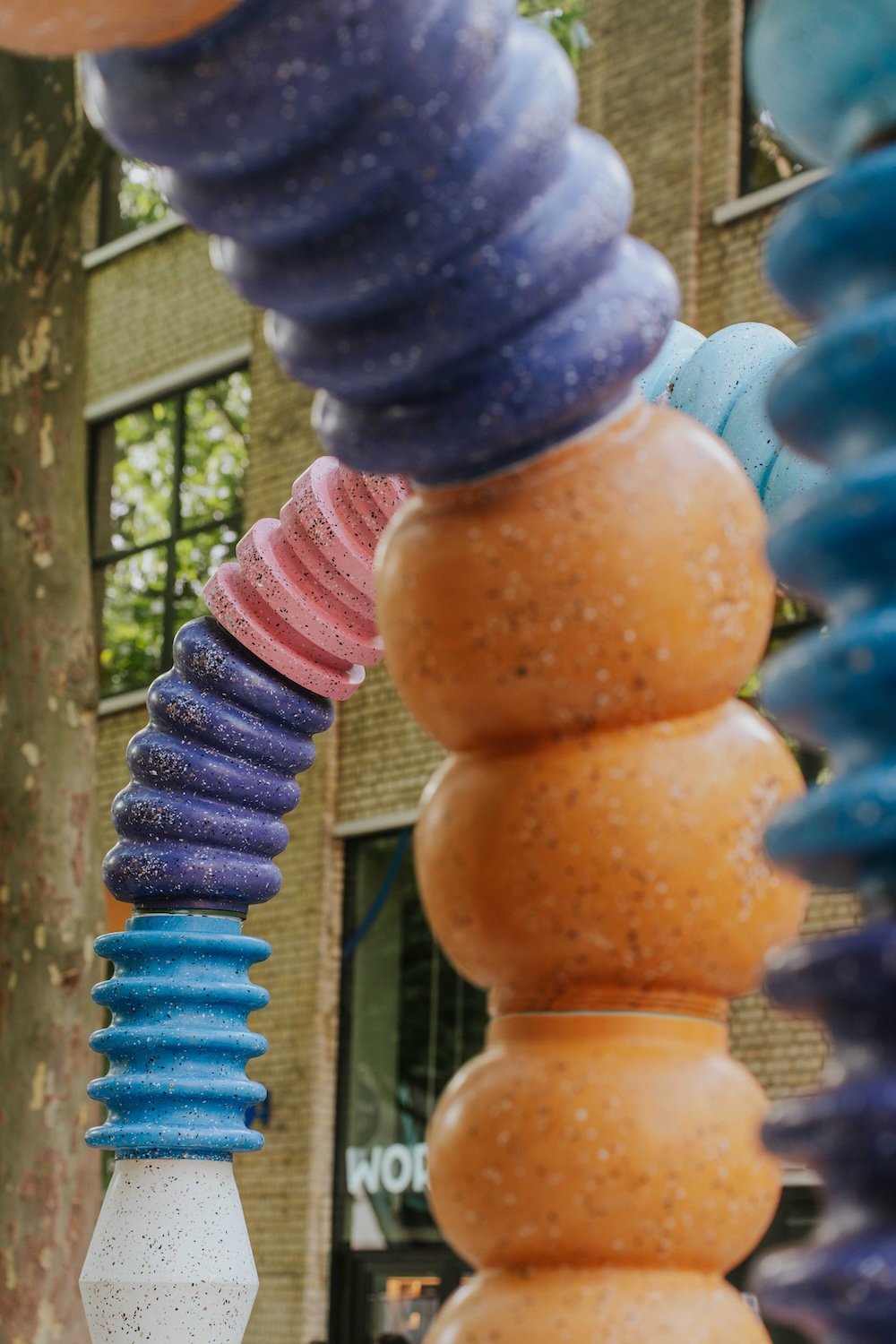
To function as an accurate optical test, the project demanded absolute chromatic precision—something natural stone cannot inherently guarantee due to organic variations. Through a cross-disciplinary collaboration, onebite bypassed this limitation by utilising Leigei Stone’s signature engineered stone. Composed of over 90% reprocessed natural minerals, the aggregates were meticulously fine-tuned to precise chromatic values, ensuring the installation strictly adhered to WCAG guidelines for enhanced accessibility, aiming for a 7:1 contrast ratio.
An additional ramp was seamlessly integrated to ensure the public asset remains entirely welcoming to wheelchair users.
Bridging the Empathy Gap:
From Global Festival to Local Streetscape
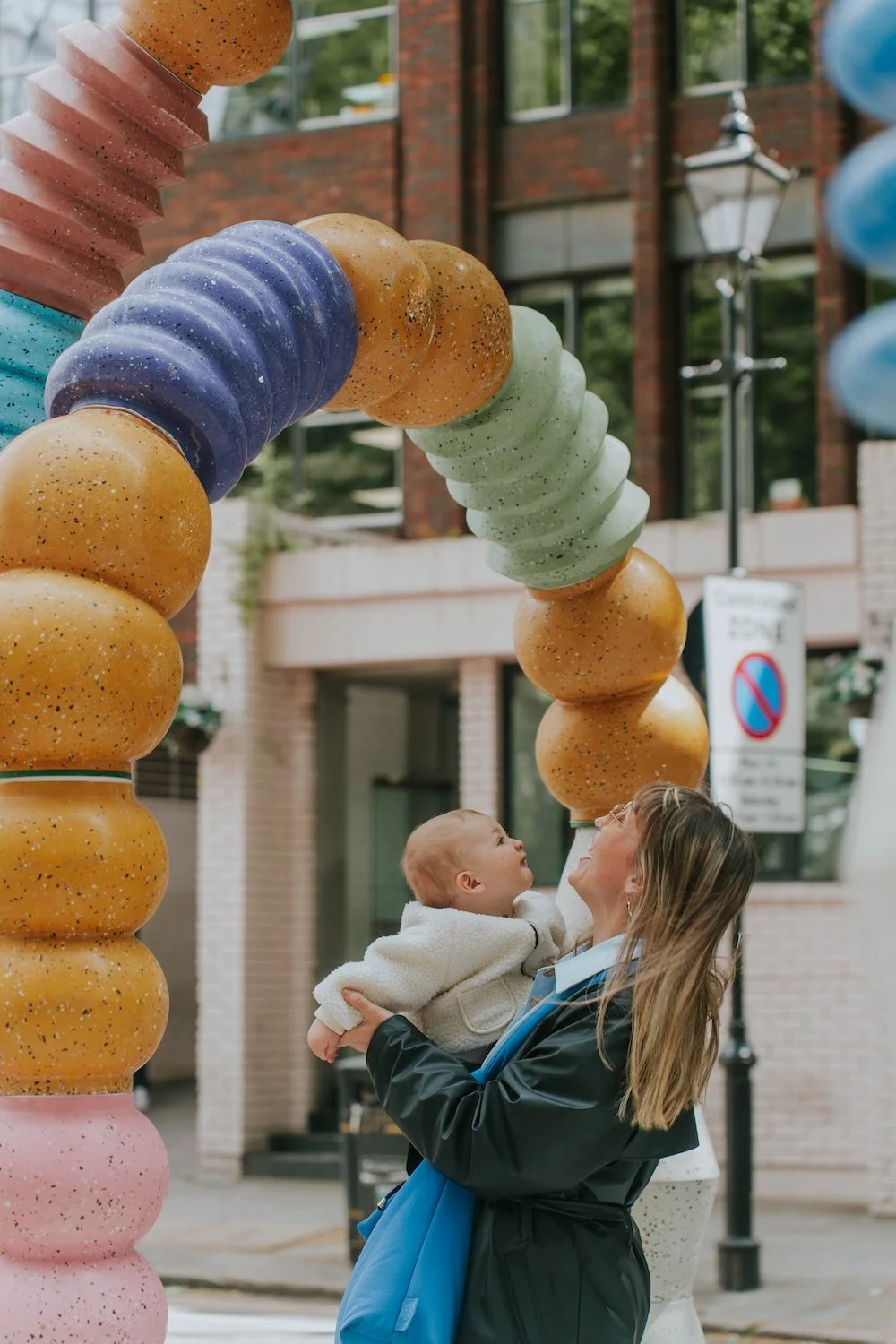
Large-scale design festivals are notorious for temporarily alienating the local communities that host them, often feeling like exclusive, disruptive trade shows. The Fountain of Technicolour Beads consciously pushes back against this trend, focusing heavily on community-centred placemaking.
The project balances the grand scale of a major design festival with the daily routines of local residents. Rather than introducing a disruptive exhibition, the Fountain is consciously designed as a joyful addition to the street ambiance—an inviting civic asset that weaves seamlessly into daily local life. Visitors derive immediate educational value, while neighbours gain a functional rest stop.
Rather than standing as a passive, "look-but-don't-touch" exhibition, the fountain weaves organically into the daily routines of Clerkenwell's residents. It functions as a free, accessible public rest stop, breathing new life into the street ambiance.
The Phygital Loop
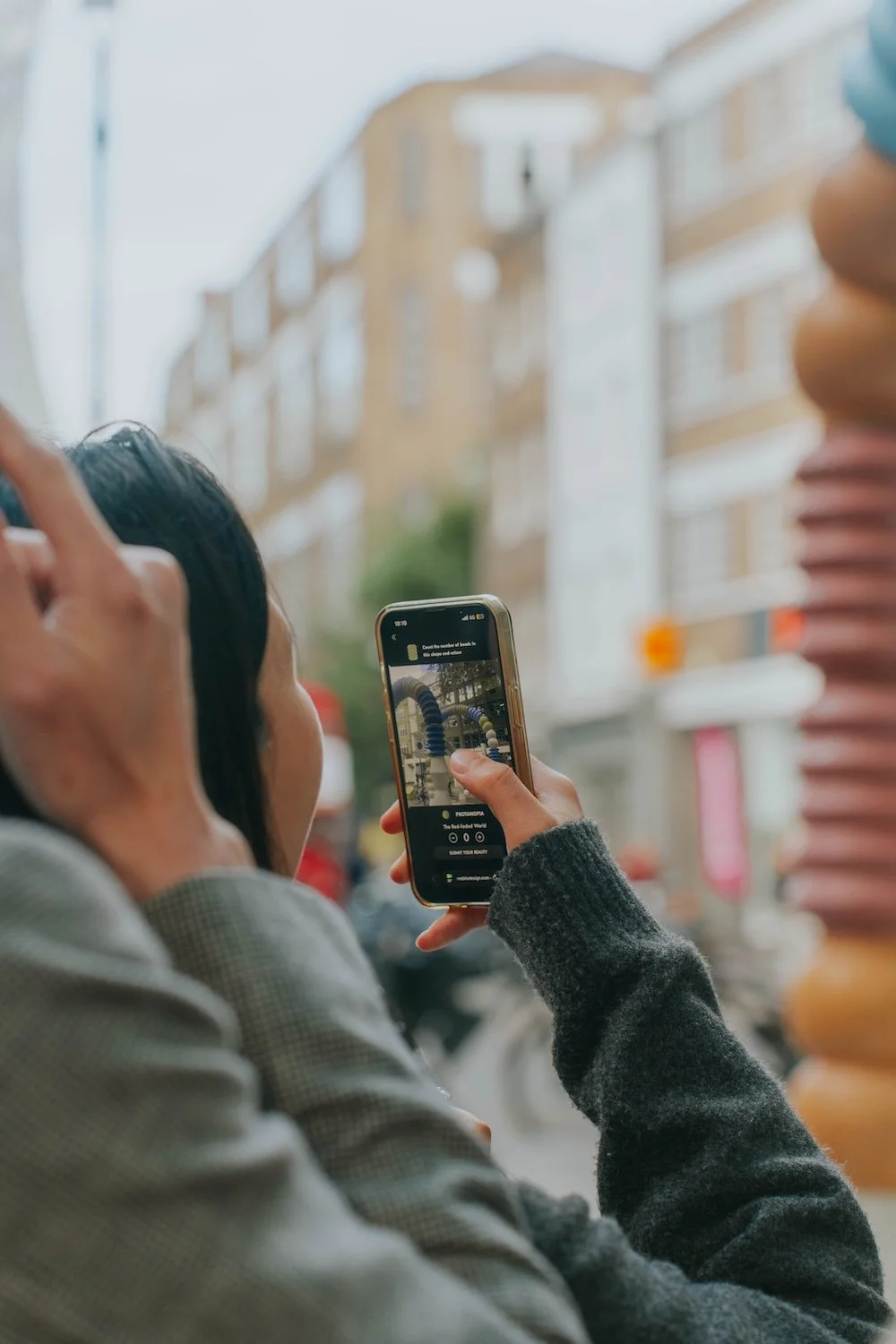
To foster deeper empathy among non-CVD creative professionals visiting the festival, the physical installation is paired with a dedicated web app. By scanning a QR code at the site, visitors can view the fountain through their smartphone cameras using various visual filters that simulate different types of colour blindness. This simple digital loop successfully closes the empathy gap, prompting viewers to question who our cities are truly built for.
The digital journey concludes with an open-source CVD-inclusive design toolkit compiled by onebite’s architectural team for designers, architects, and urban planners to download.
The Technicolour Beadmark
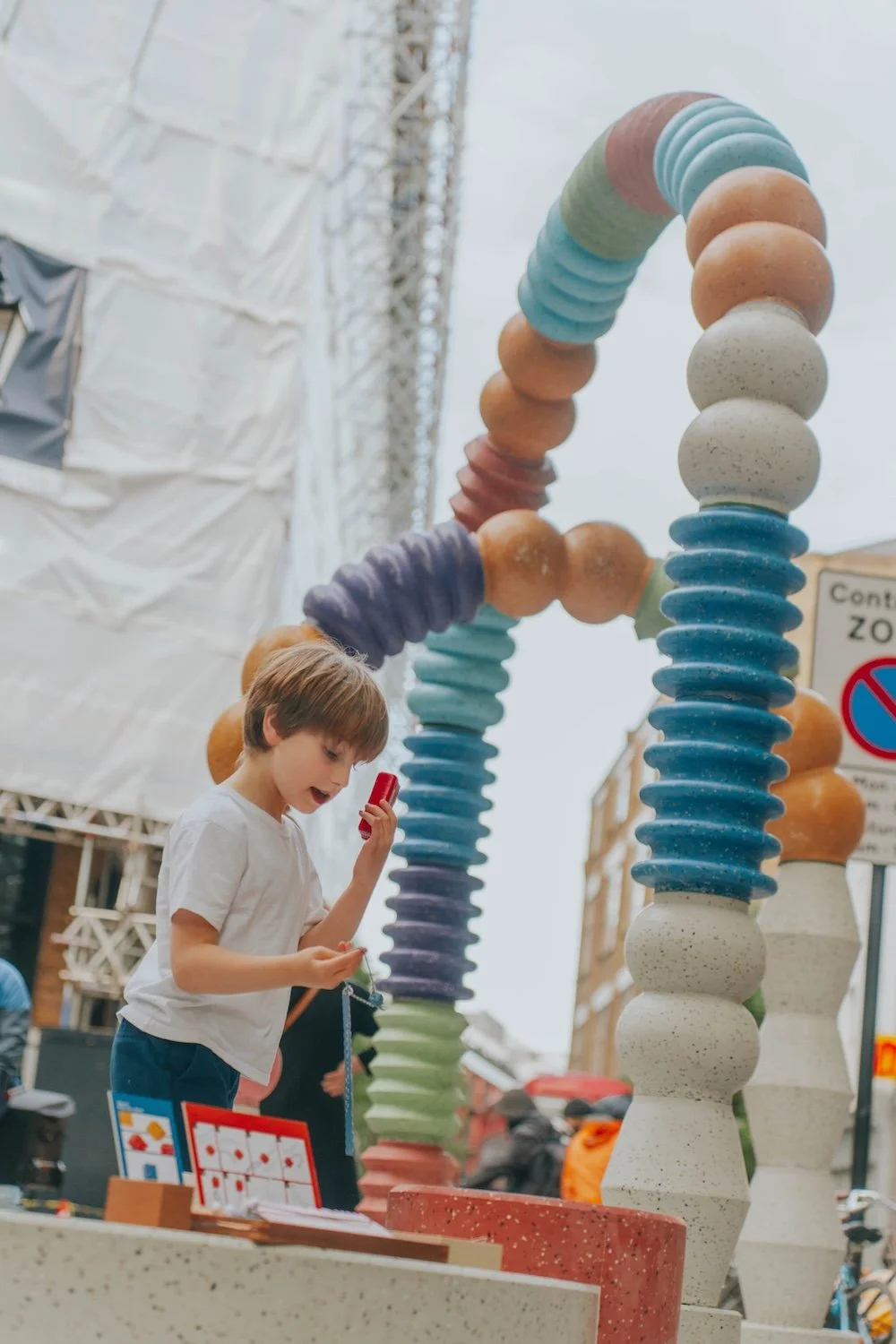
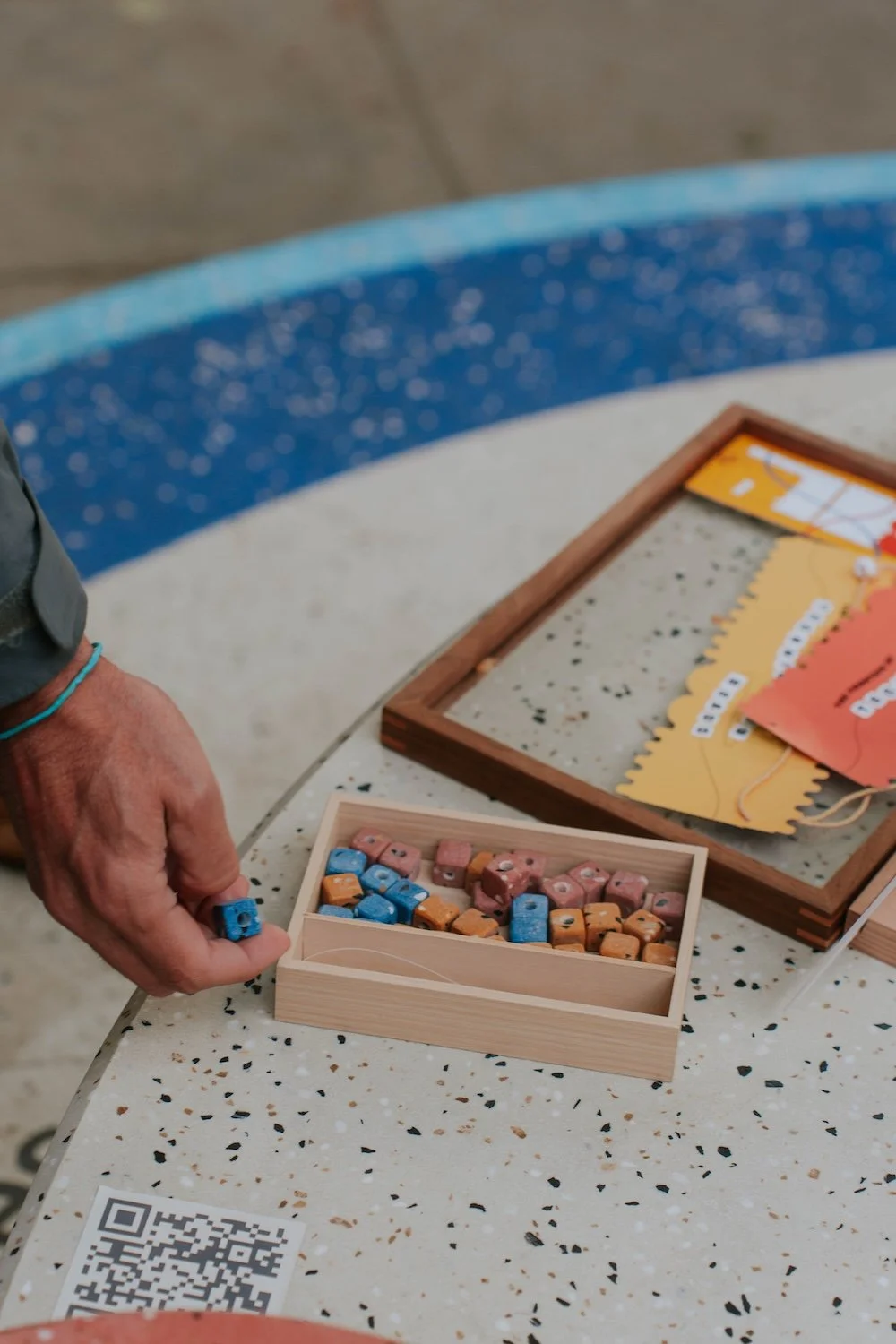
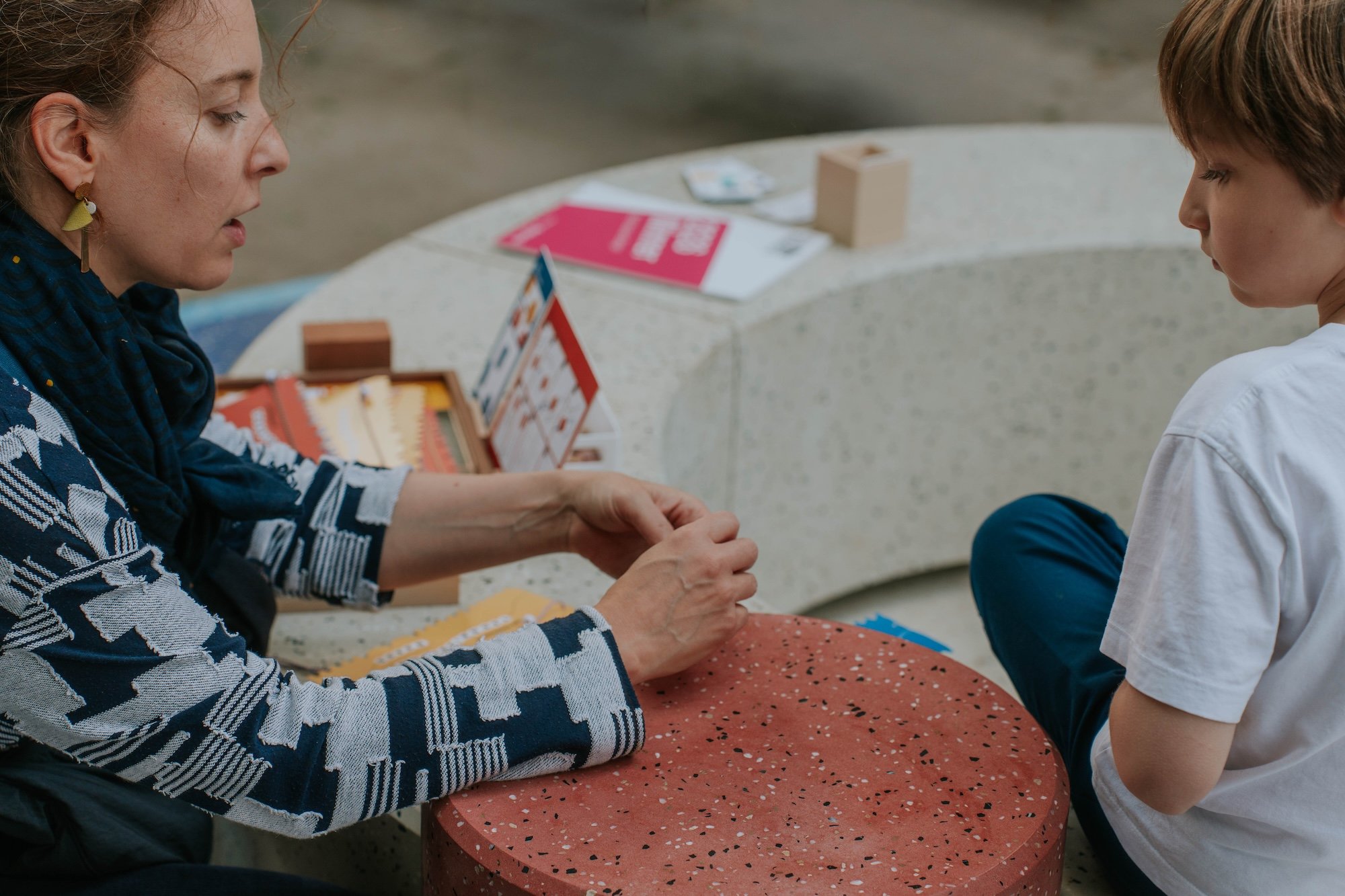
The physical journey culminates in a do‑it‑yourself station, where visitors select a reconstituted stone bead and assemble their own souvenir bookmark. This hands‑on moment adds an extra layer of interaction and quiet delight to the rhapsodic piece.

-
Resource Conservation: Utilises reconstituted material containing over 90% reprocessed natural minerals, diverting waste from landfills and significantly lowering the carbon footprint compared to quarrying virgin stone.
Customers & Community: Reactivates Clerkenwell Green as an inclusive civic space, providing free public seating and acting as a social catalyst that bridges global festival-goers with local neighbours.
Accessibility & Wellbeing: Implements WCAG-compliant 7:1 contrast ratios, multi-sensory tactile substitution for visual deficits, and an integrated wheelchair ramp to ensure autonomous use for all.
-
Team: Melody Siu, Karen Yeung, Clarisse Leung, Joanne Wong, Sarah Mui, Alan Cheung
Photography: Vanessa Ma
Videography: Steph Smith
-
Installation, Neurodiversity, Inclusive, Placemaking, PublicSpace, EngineeredStone, Accessibility, London, ClerkwenwellDesignWeek