
Flavours
- Shared Language of Participatory Urbanism
The Flavour Library
-
Category: Placemaking, Art & Culture, Storytelling & Communications, Research & Urban Analysis
Type: Installation, Exhibition, Curation
Client: London Design Festival 2025 (London), Hong Kong Federation of Youth Groups (Hong Kong)
Locations: London & Hong KongCompletion: 2025
What began during onebite’s 10th-anniversary retrospective exhibition—where we mapped the impact of a decade of work through sensory descriptors like "Citrusy", "Roasty", "Sour", and "Earthy"—has grown into a transformative framework.
Grounded in the belief that flavour is a universal language capable of making design outcomes instantly relatable, this initial concept evolved and expanded into The Flavour Library: a multi-layered sensory installation that reimagines how we perceive, evaluate, and shape urban data insights.
Iteration 1:
London Design Festival 2025
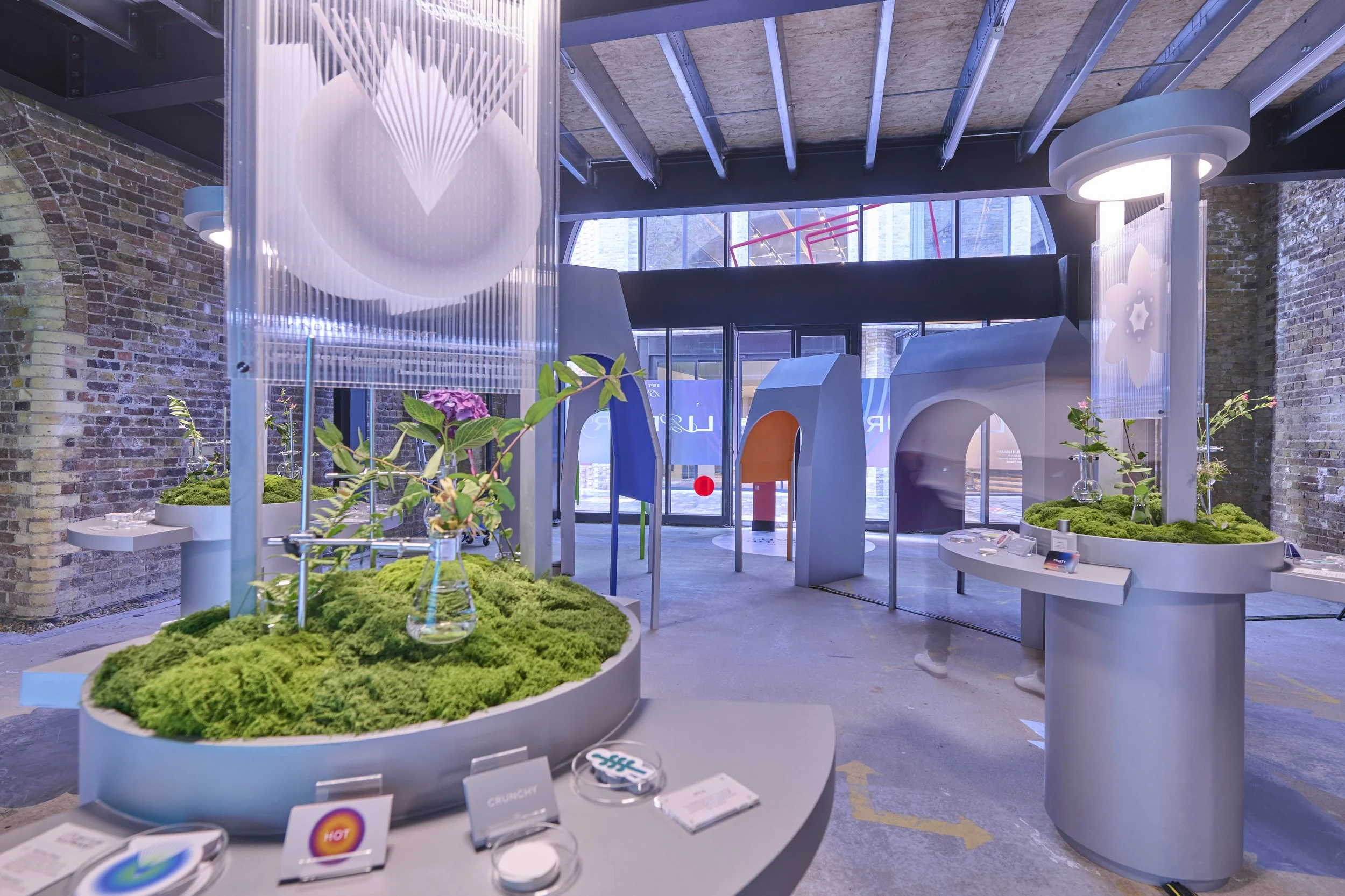
In 2025, onebite debuted at the London Design Festival (LDF25) with an interactive exhibition entitled “The Flavour Library”. As our inaugural exhibition in the United Kingdom, the concept stemmed from our curiosity and enthusiasm to explore the distinct character of London and its diverse neighbourhoods. Recognising LDF25 as a major global gathering, the exhibition invited local residents and international visitors to share the essence of their home districts through the universal language of flavours.
Flavour is a universal language. So much—though unspoken—can be revealed when we translate the experiences and emotions inspired by urban spaces into flavours. Beyond their physical attributes, a city’s ‘flavours’ are encountered in the ways people perceive, appreciate, and navigate their surroundings. We each unconsciously carry unique impressions and feelings about shared spaces, resulting in varied interpretations of urban life. Connecting flavours with the experience of place, we create a Flavour Map that encourages visitors to rediscover cities through a multi-sensory lens.
The Journey:
A Four-Stage Immersive Narrative
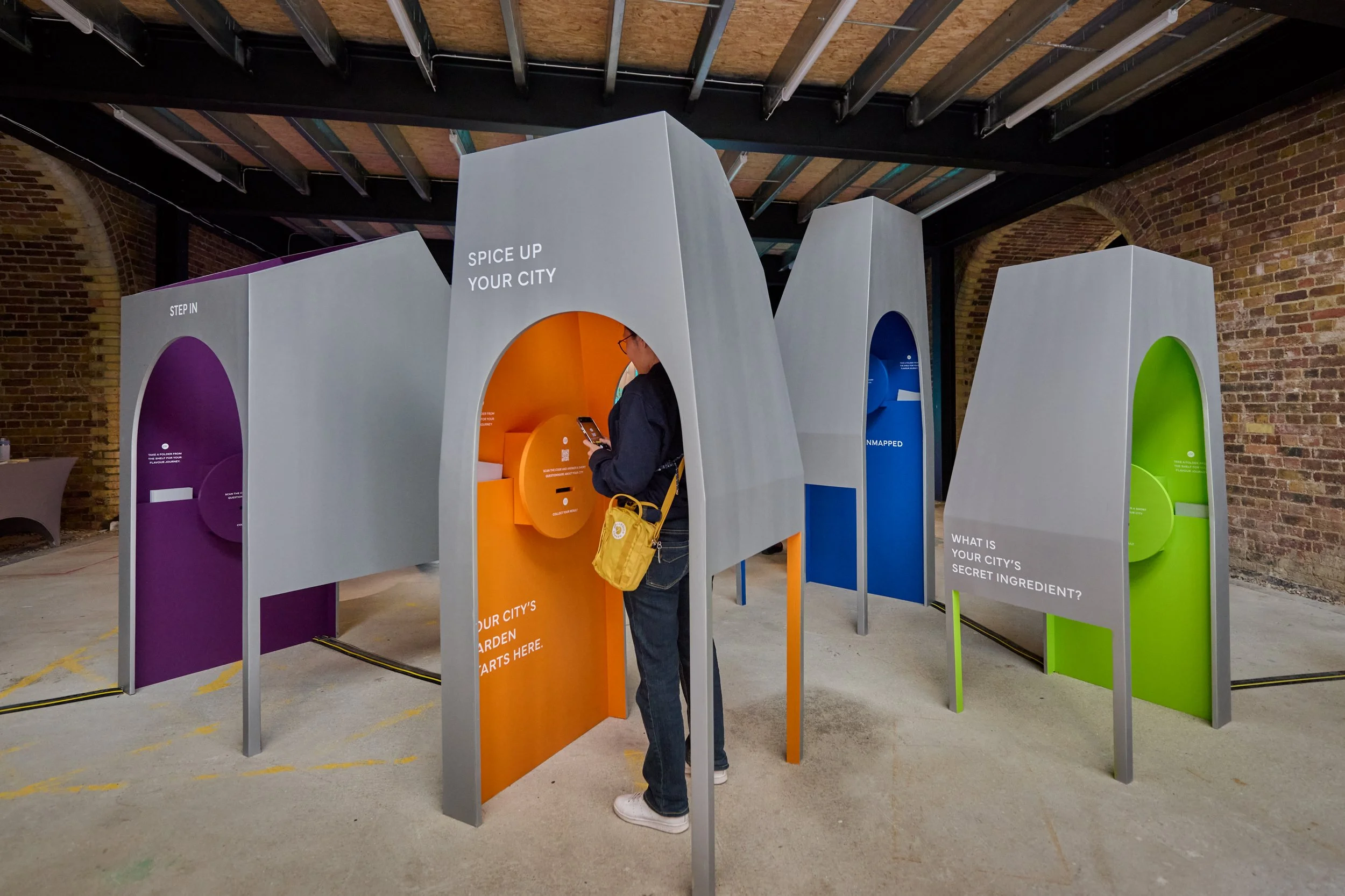
Zone 1: The Flavour Cabins
Arranged across the space are four geometrically striking Flavour Cabins. Built with sleek, futuristic finishes, these semi-private pods offer a tranquil space for quiet introspection. Adhering strictly to universal and inclusive design principles, each cabin is carefully adjusted in height, width, and structural clearance to comfortably accommodate children, standing adults, and wheelchair users, ensuring that every member of the public can participate equally. Inside the pods, visitors scan a QR code using their personal mobile devices to complete an intuitive digital questionnaire that prompts deep reflection on their subjective memories, sensory impressions, and emotional attachments to their local neighbourhoods.
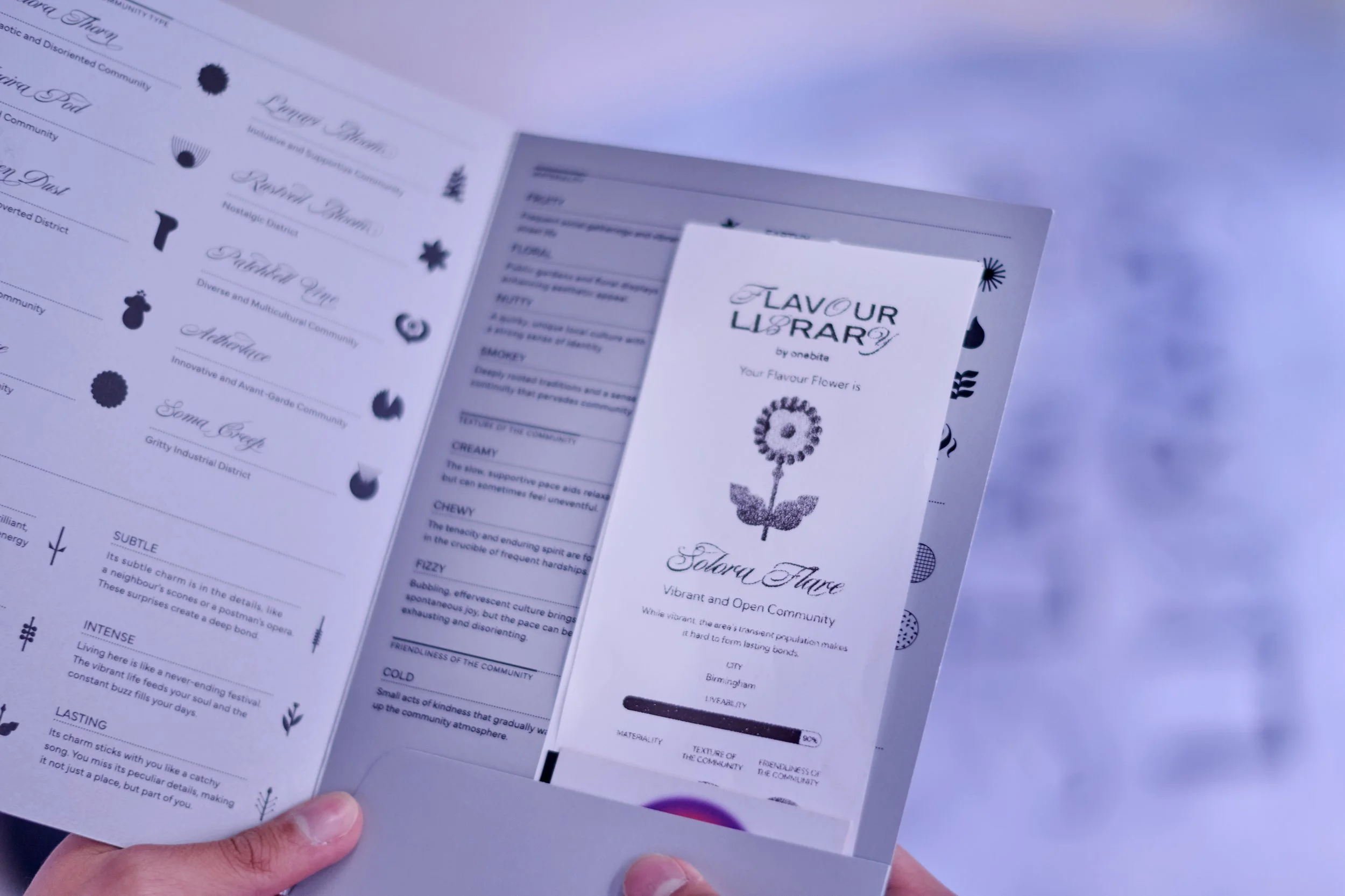
Zone 2: The Data Bloom
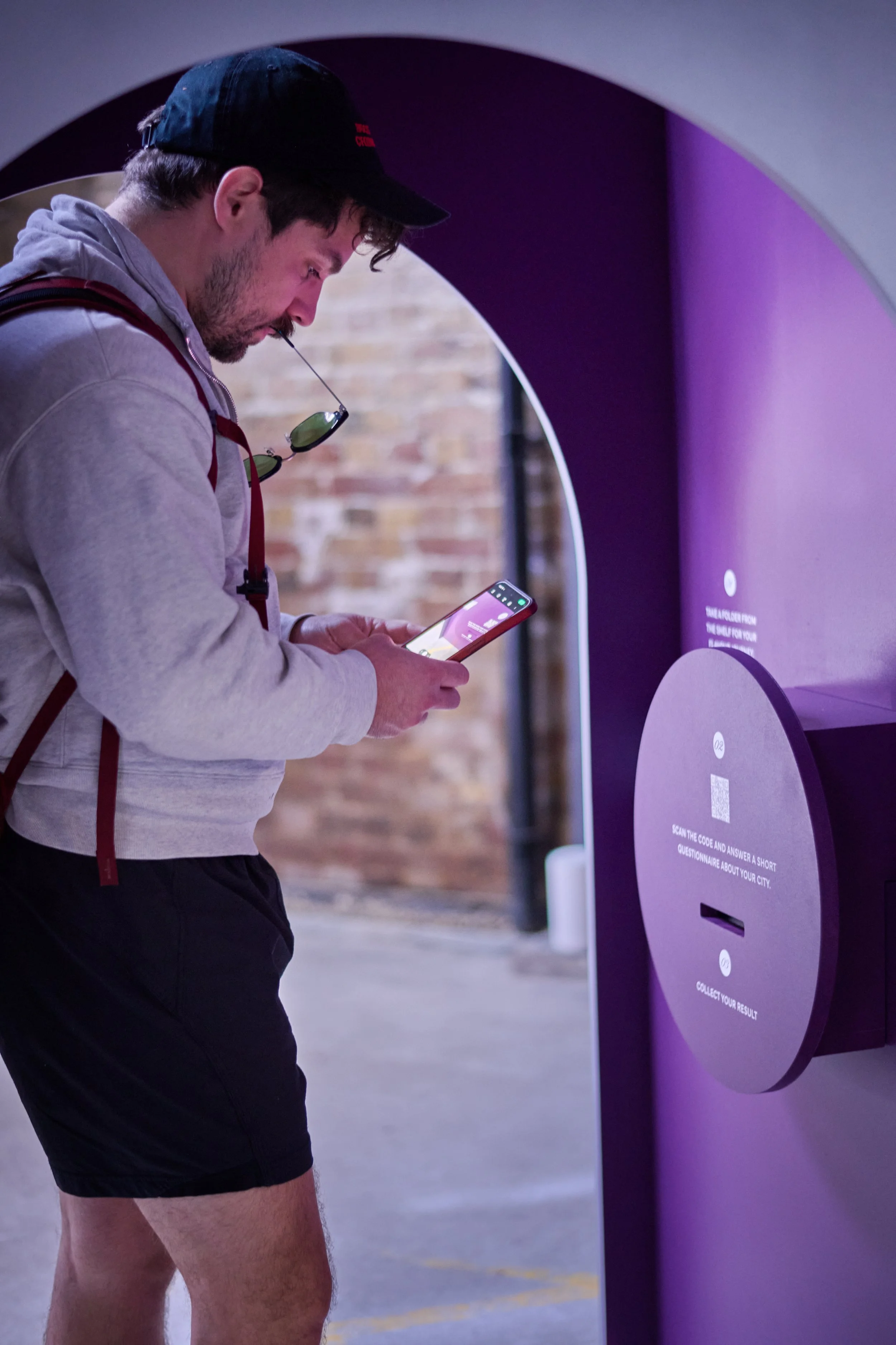
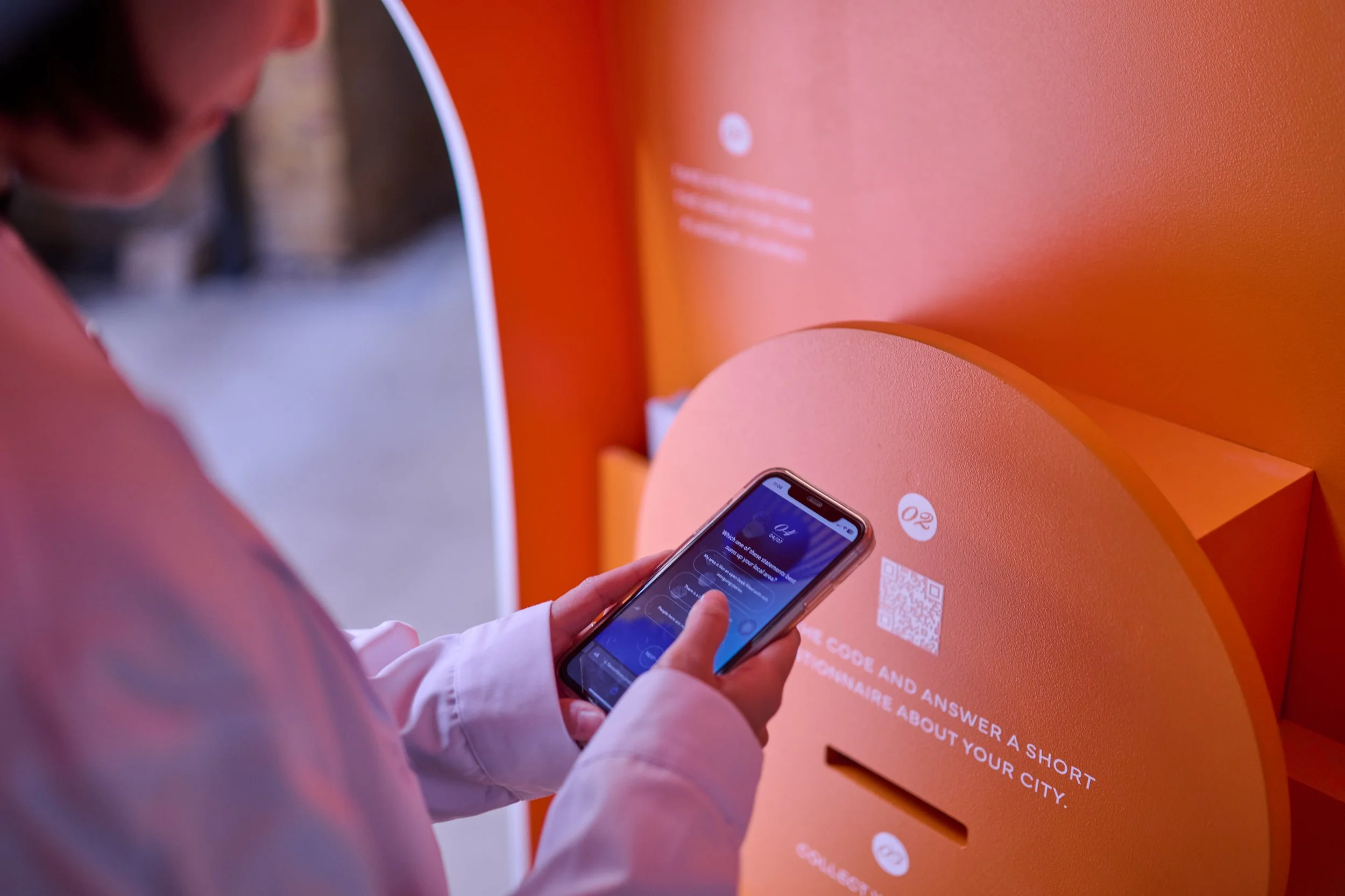
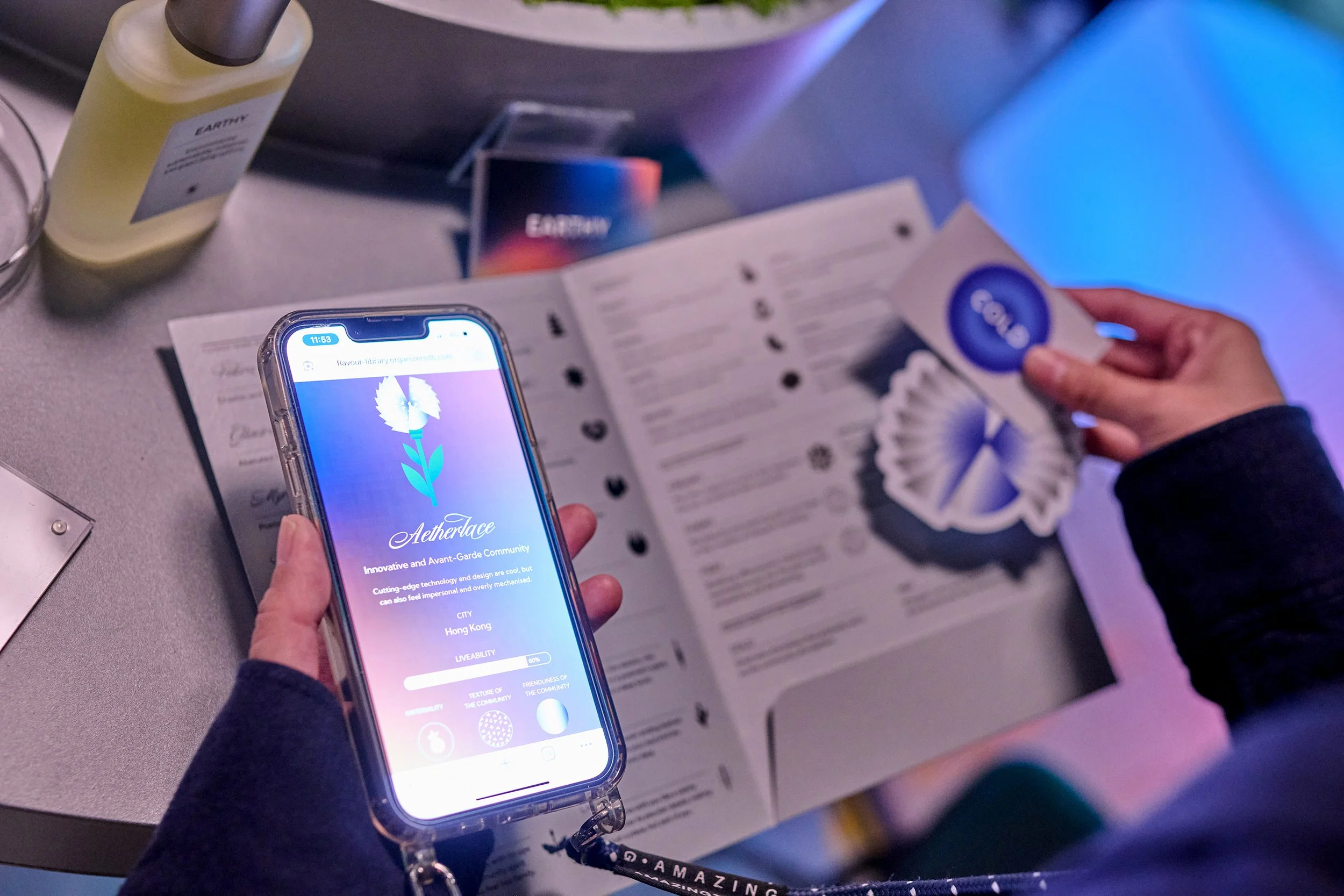
As visitors complete the questionnaire, a custom algorithmic engine processes the unique combination of answers in real time to generate a bespoke piece of digital artwork known as a Flavour Flower. Every visual parameter directly corresponds to user input: the hue of the petals reflects emotional tone, the morphology and geometry of the flower dictate community energy, and the stem structure represents social connectivity. The system instantly prints a Flavour Receipt—a personalised infographic ticket that breaks down the user’s sensory profile and serves as their guide for the remainder of the exhibition.
Zone 3: The Sensory Lab
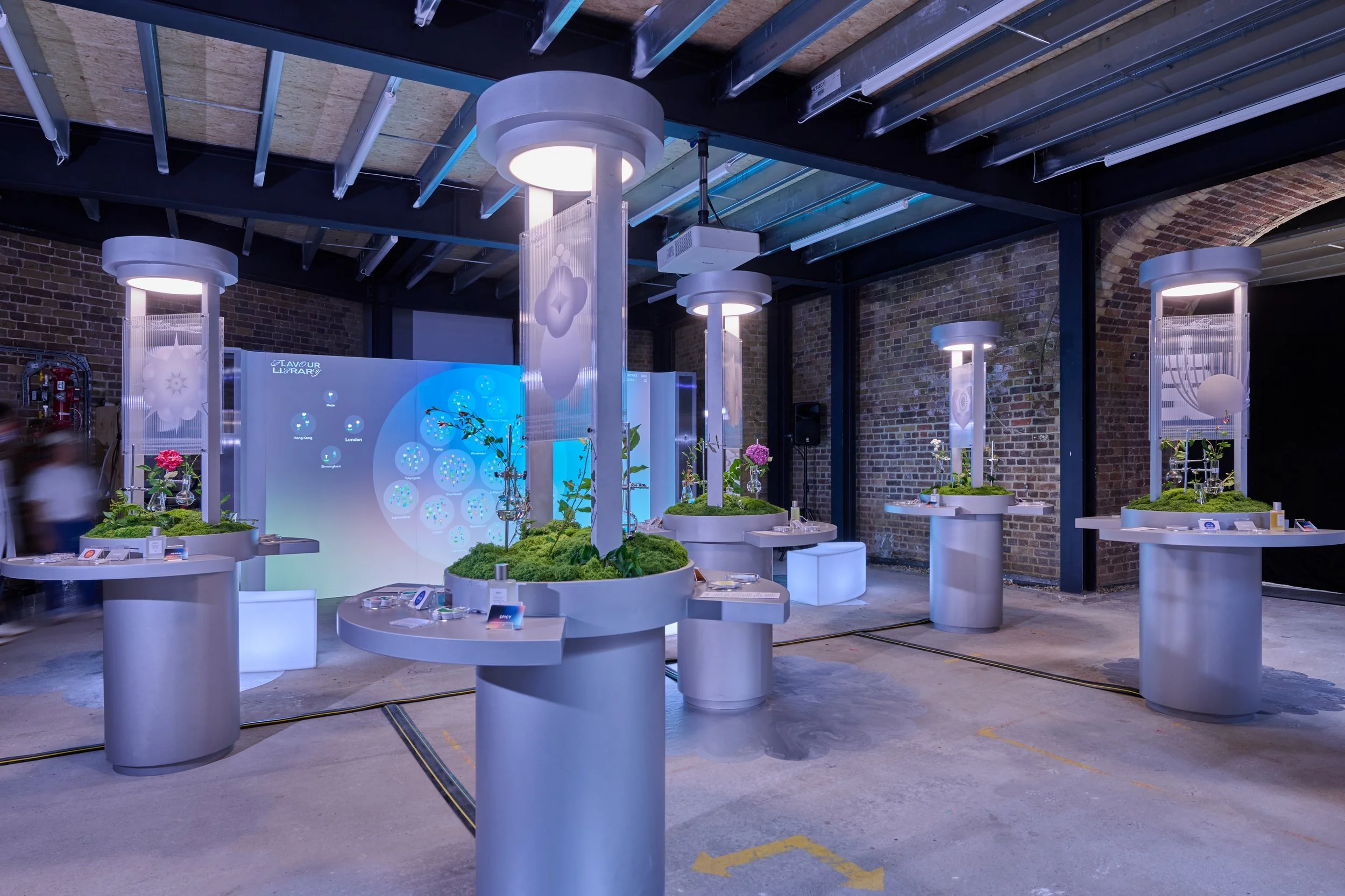
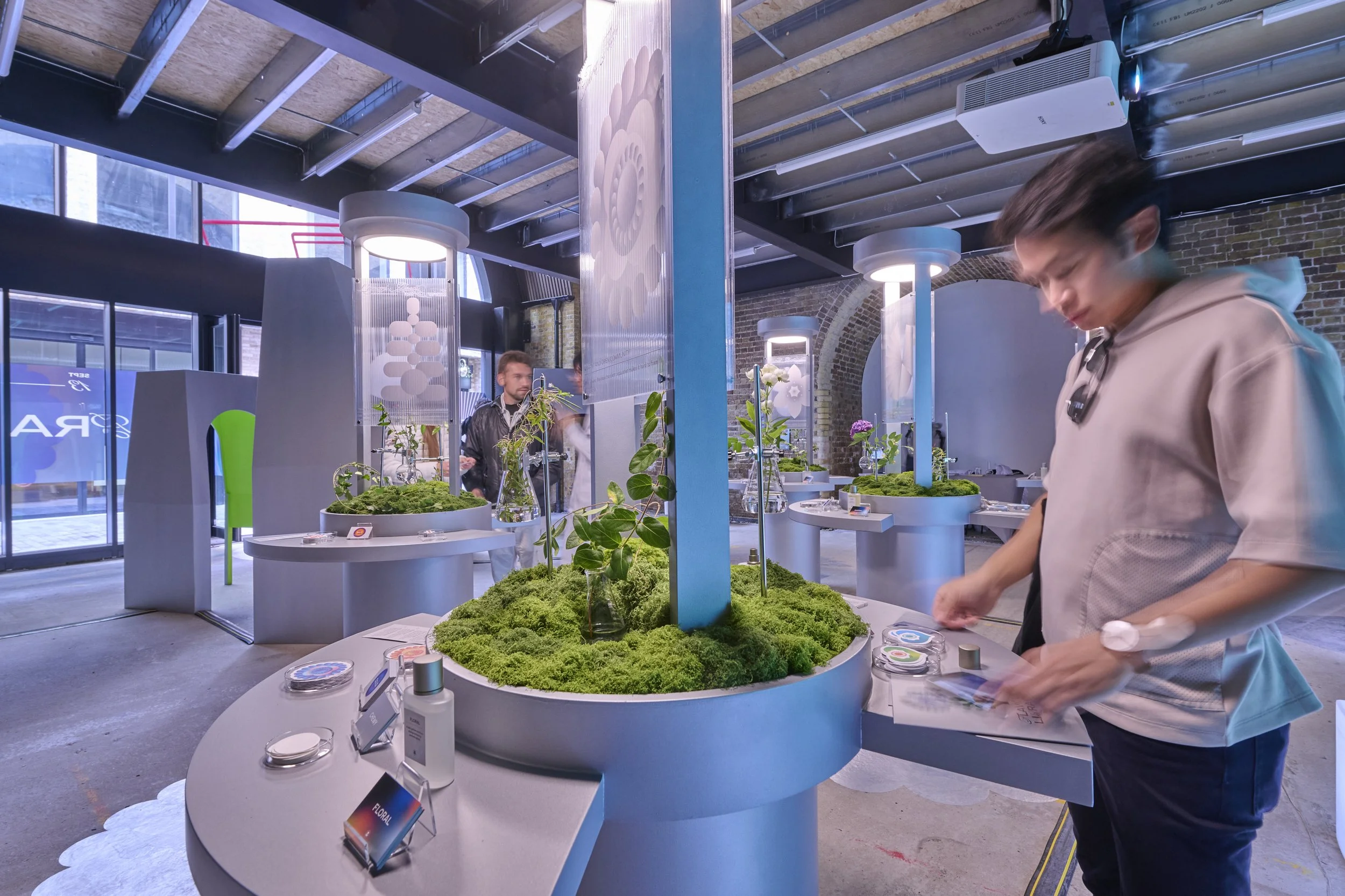
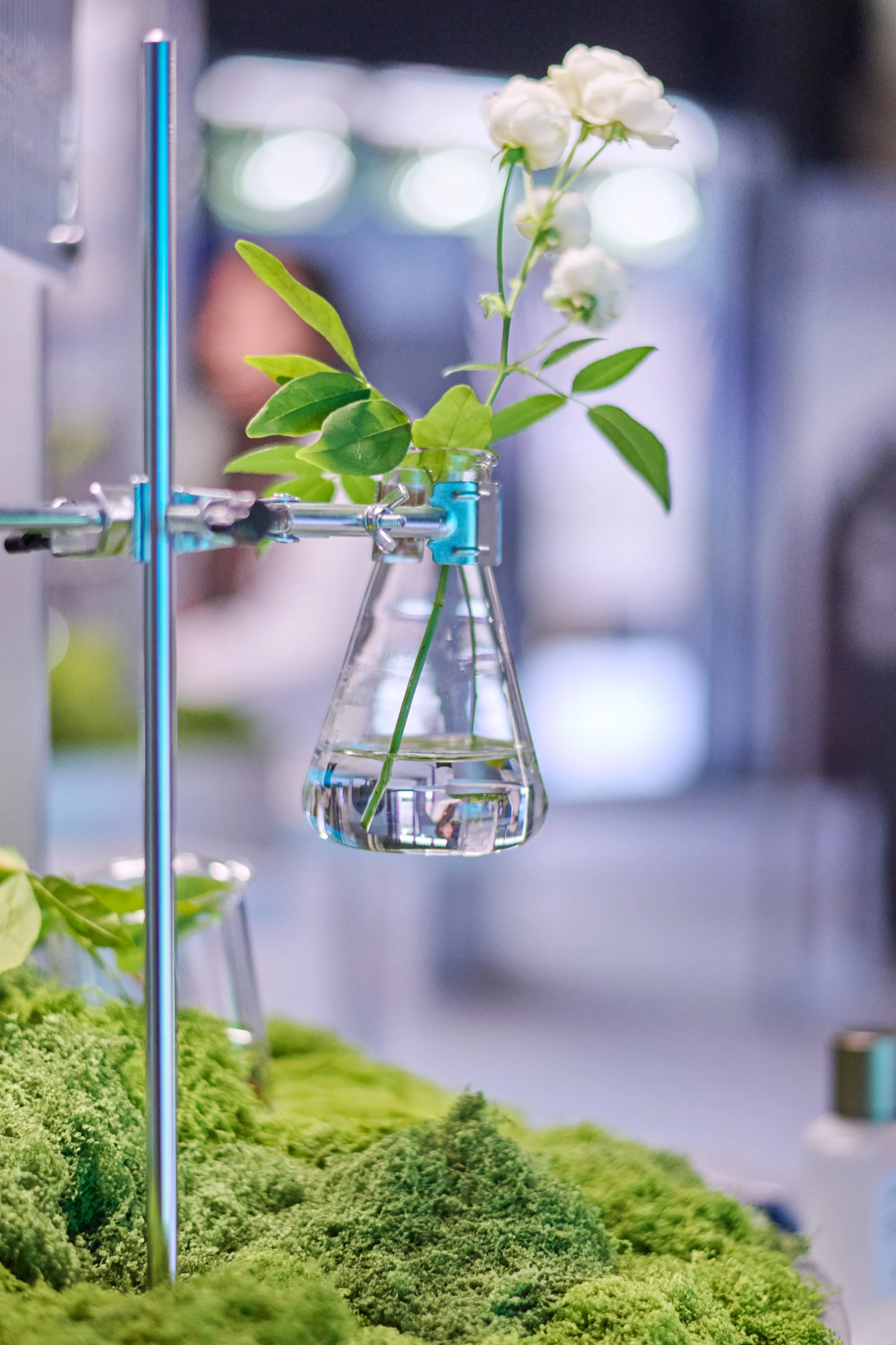
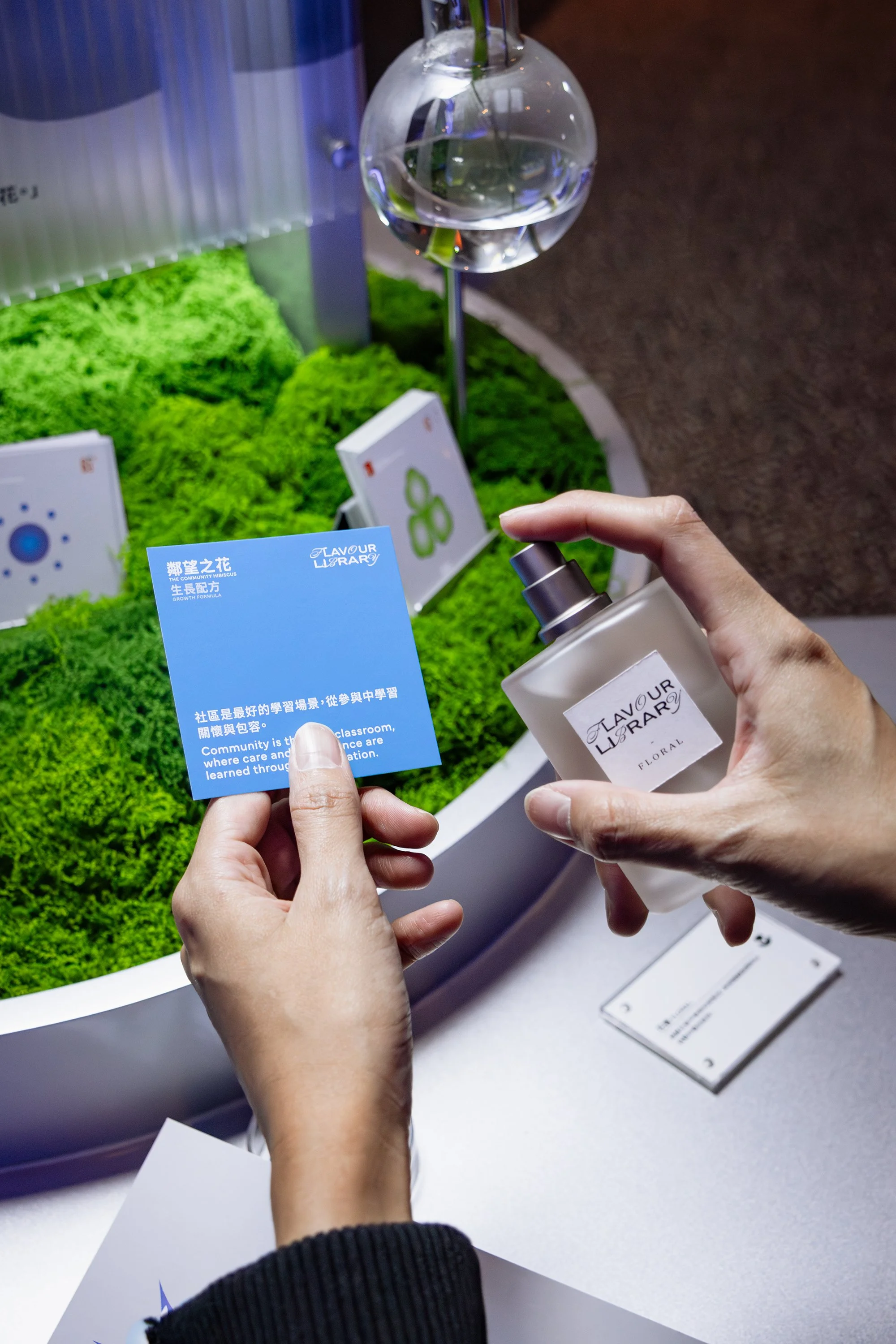
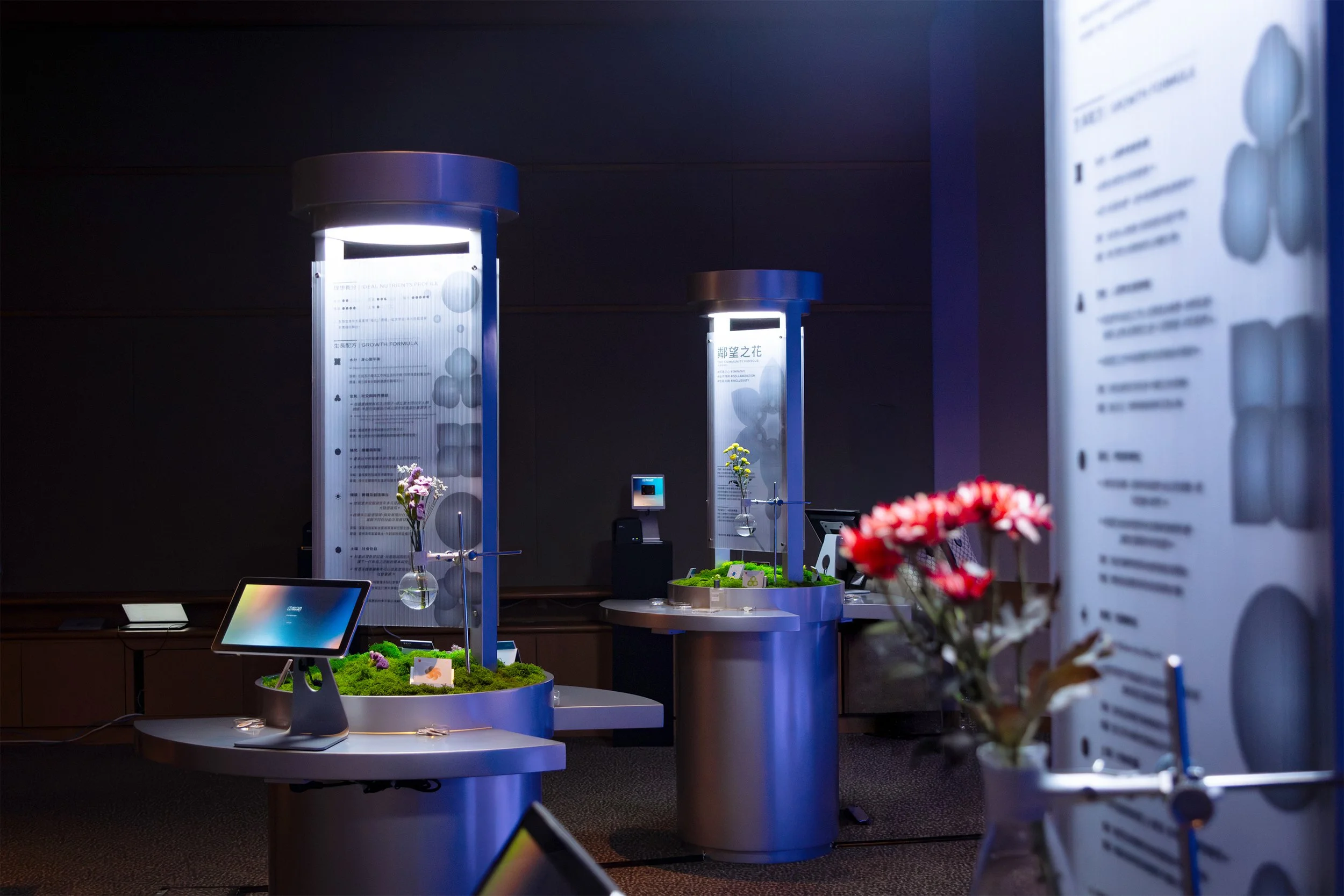
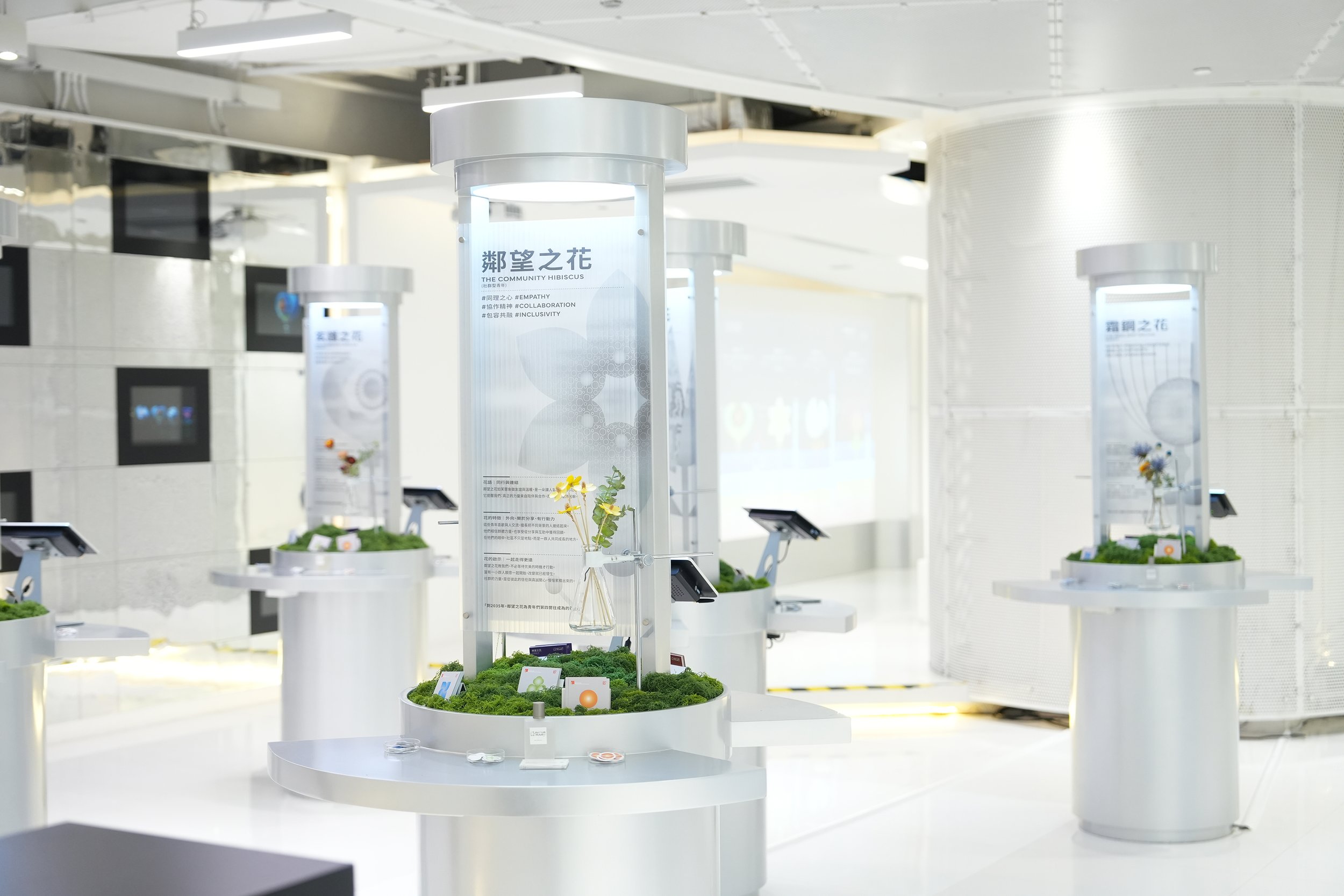
Exiting the introspective cabins, visitors emerge into the Sensory Lab. Guided by their printed Flavour Receipt, visitors explore four distinct material stations to collect corresponding custom floral stickers, physically collaging their unique Flavour Flower onto an exhibition folder. Specially blended fragrances infused into each station introduce a rich olfactory layer, associating specific scent profiles such as Earthy, Roasty, Spicy, and Floral with personal community traits. Care Note cards set across the lab tables offer creative strategies for "seasoning" urban space, prompting visitors to consider what their neighbourhoods need.
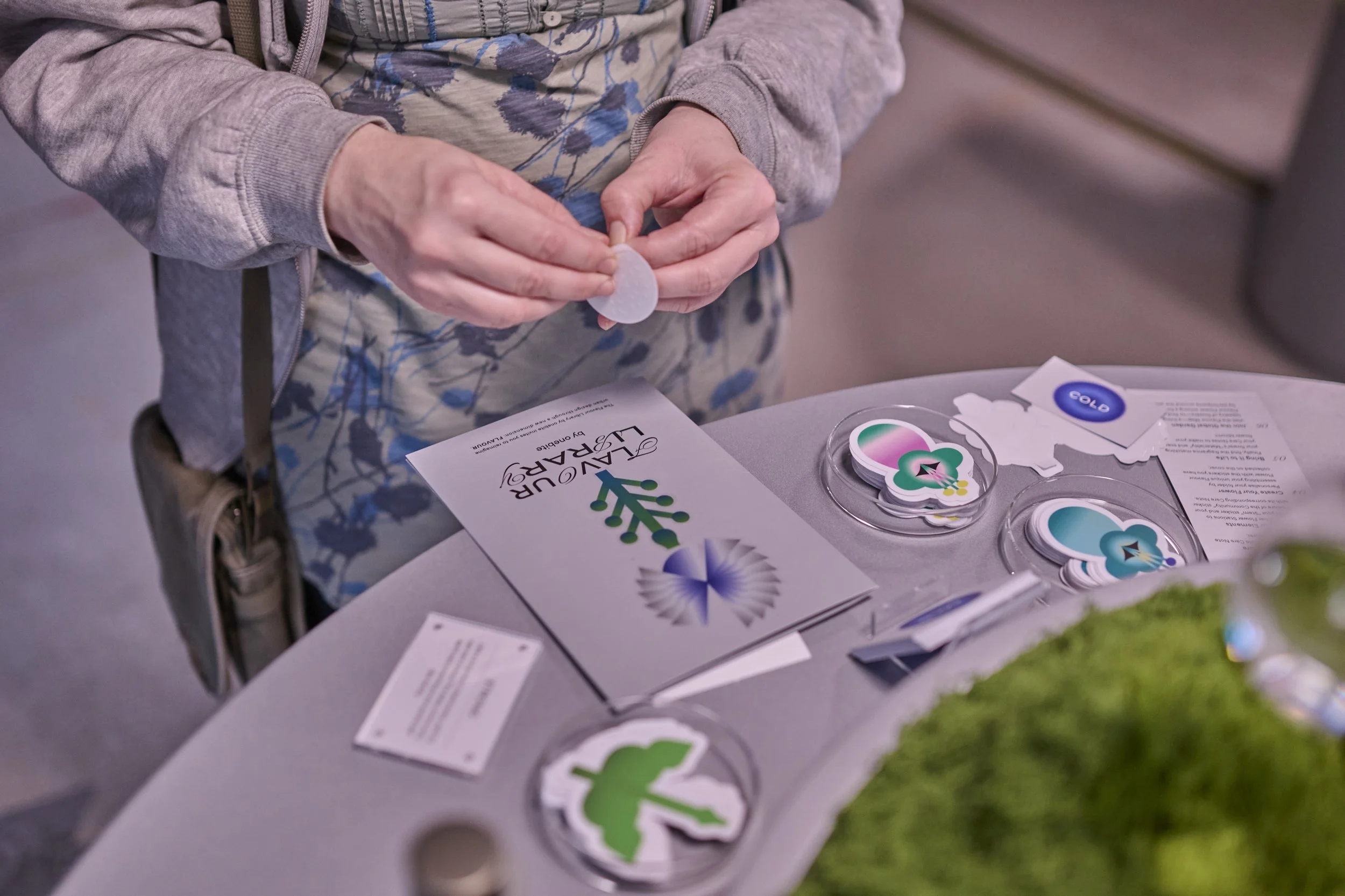
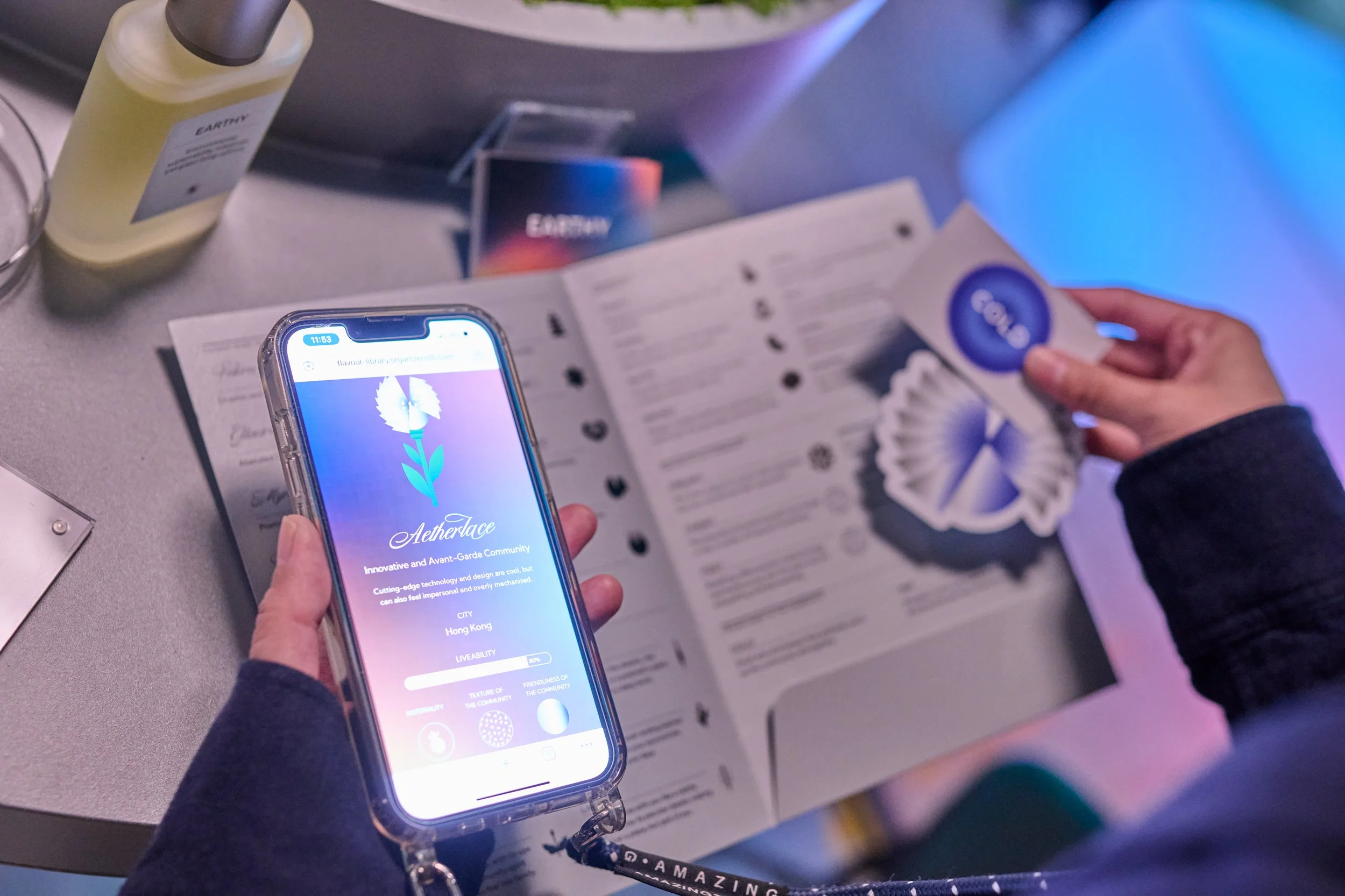
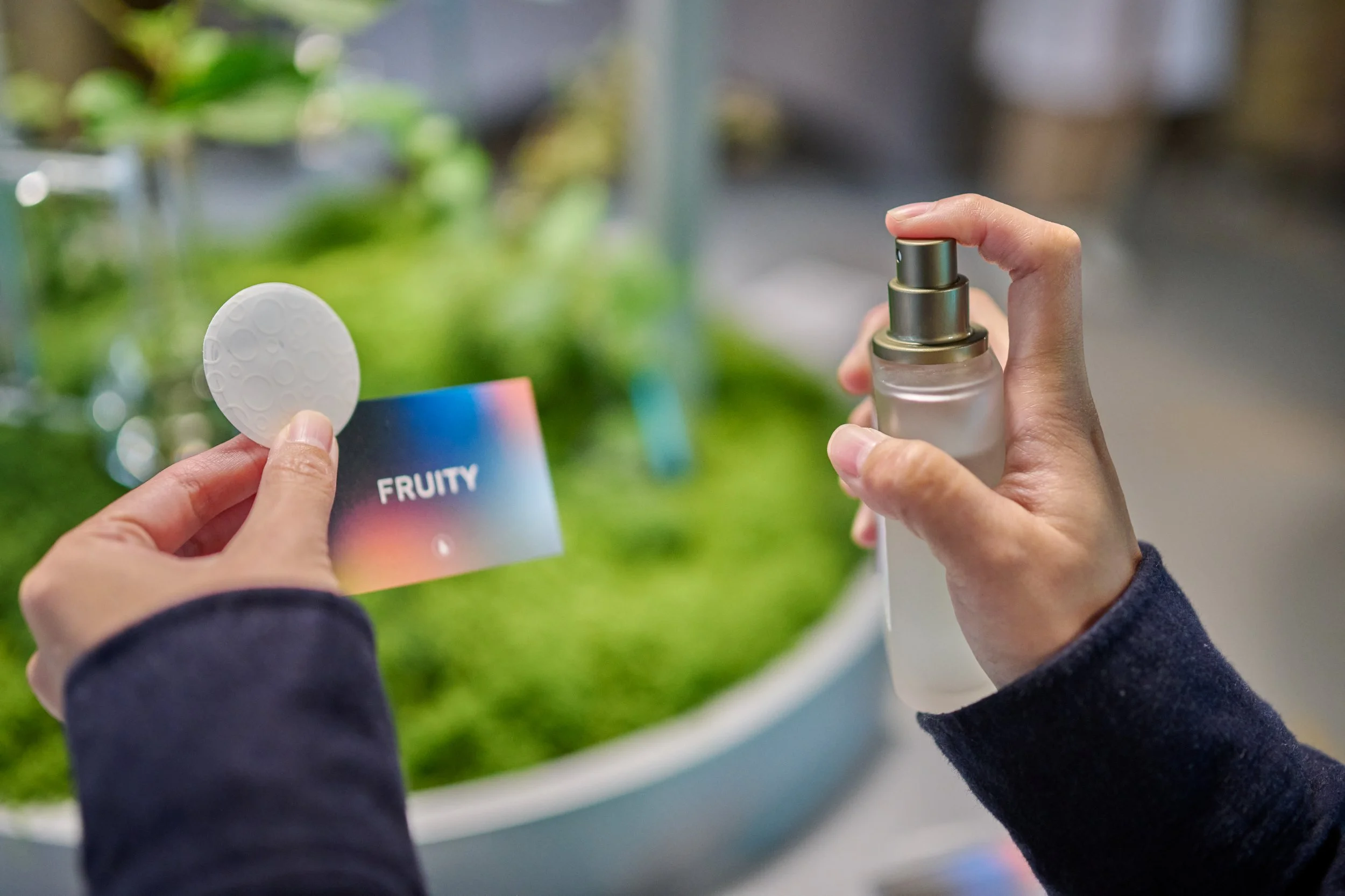
Zone 4: The Flavour Map
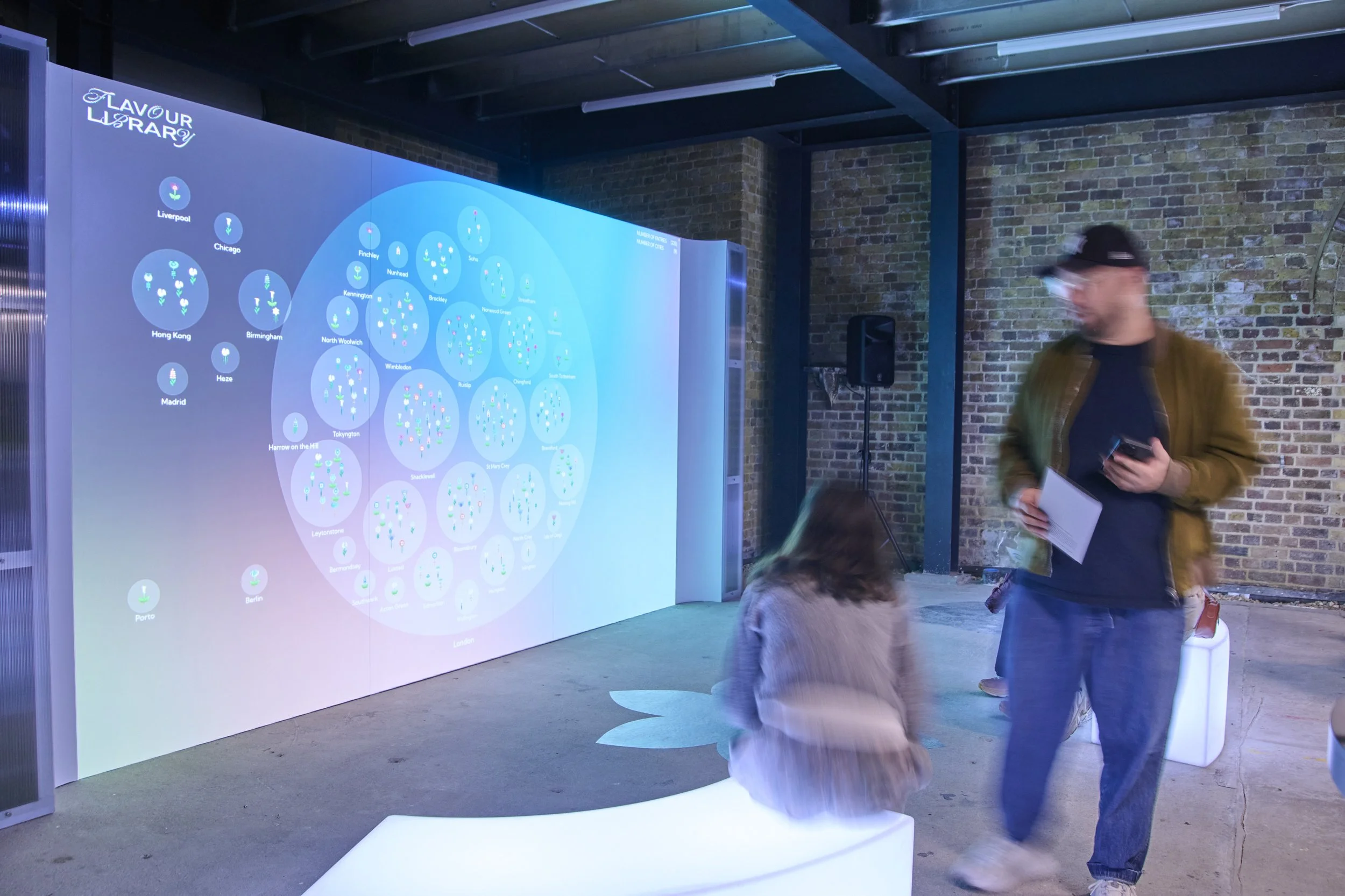
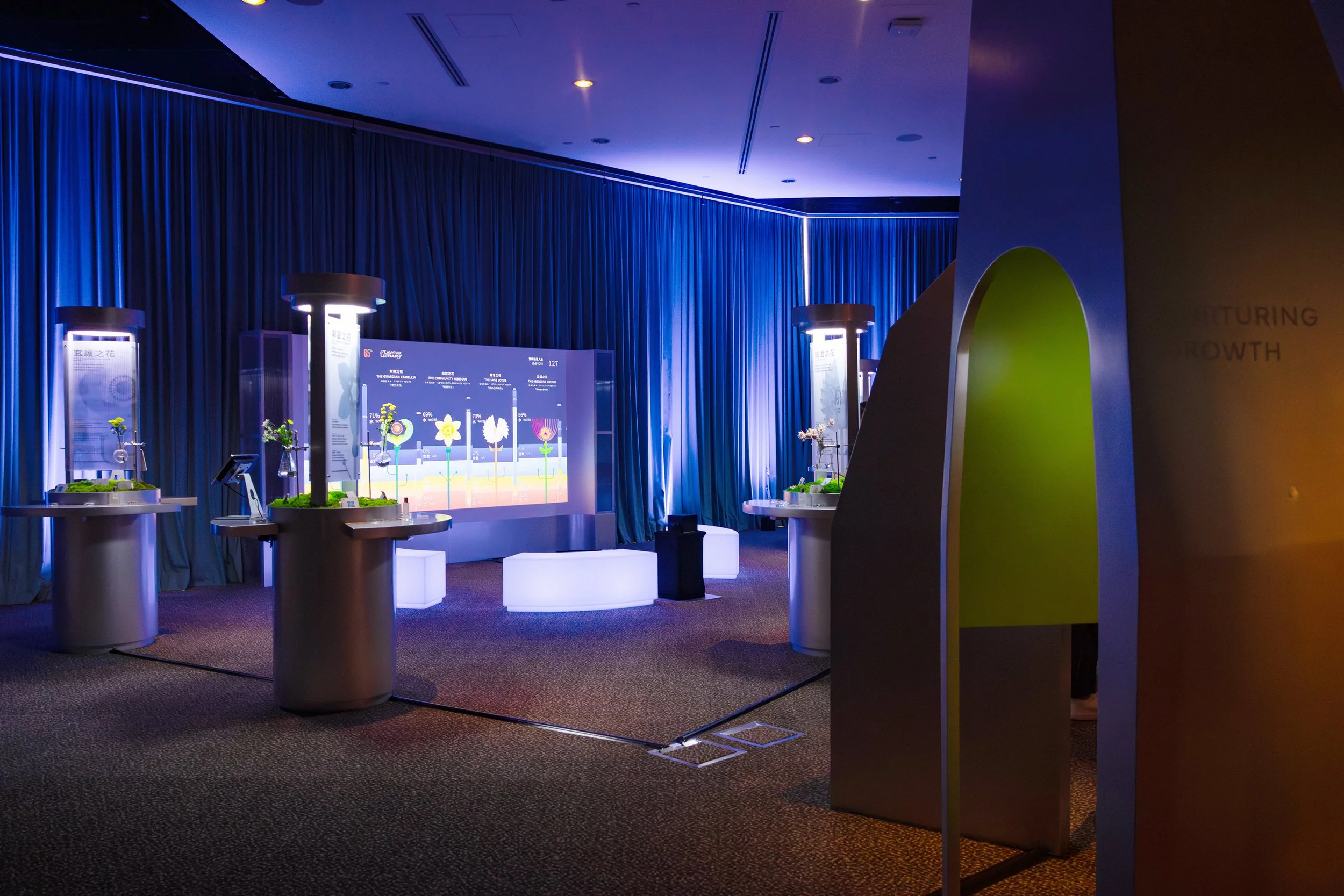
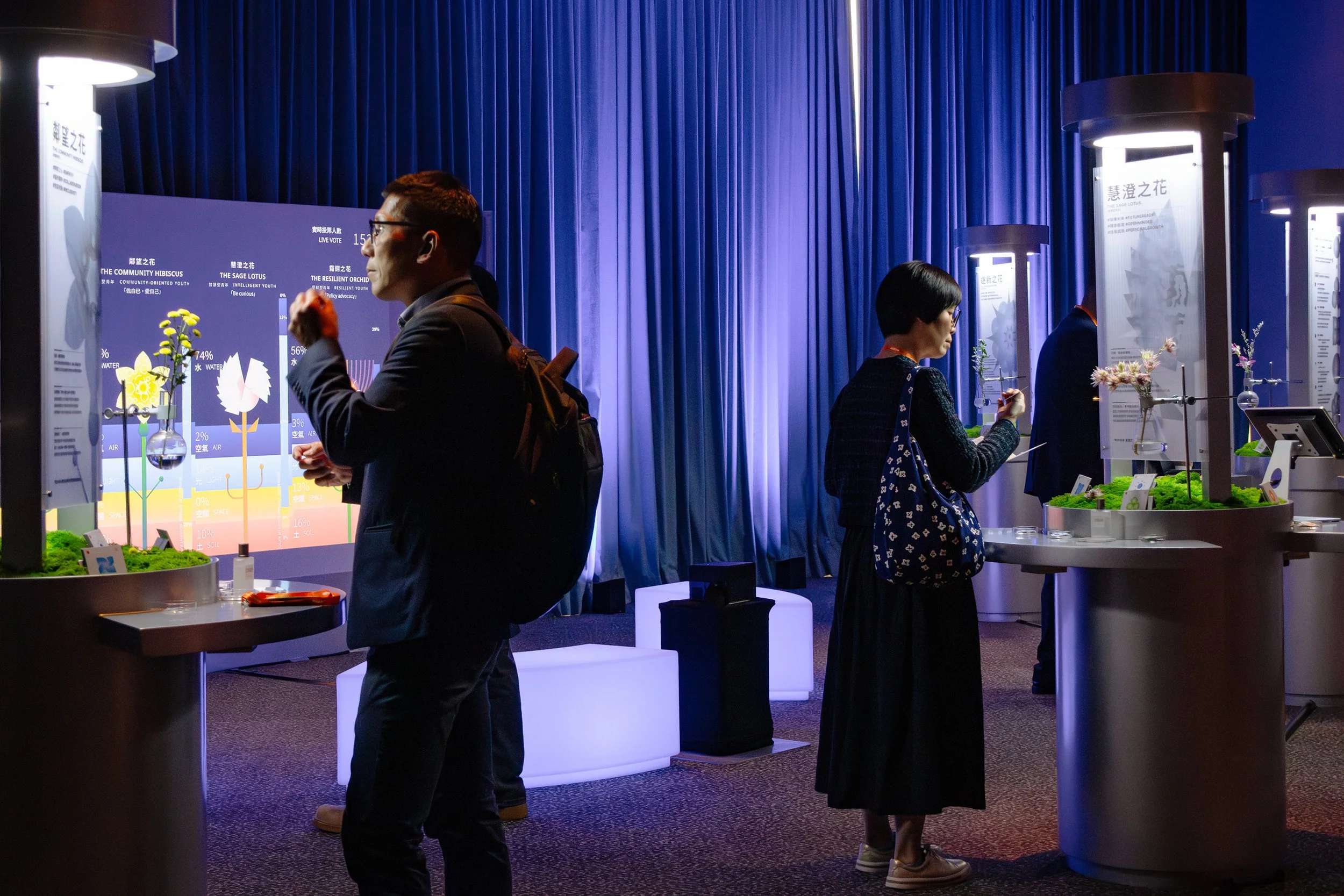
The journey reaches its culmination at the Flavour Map - a massive digital projection where each visitor’s custom Flavour Flower blooms in real time alongside entries from previous participants. Visitors can observe how their personal story integrates into a wider, living landscape of collective memory, showcasing the diverse "flavours" radiating from local districts and cities around the world.
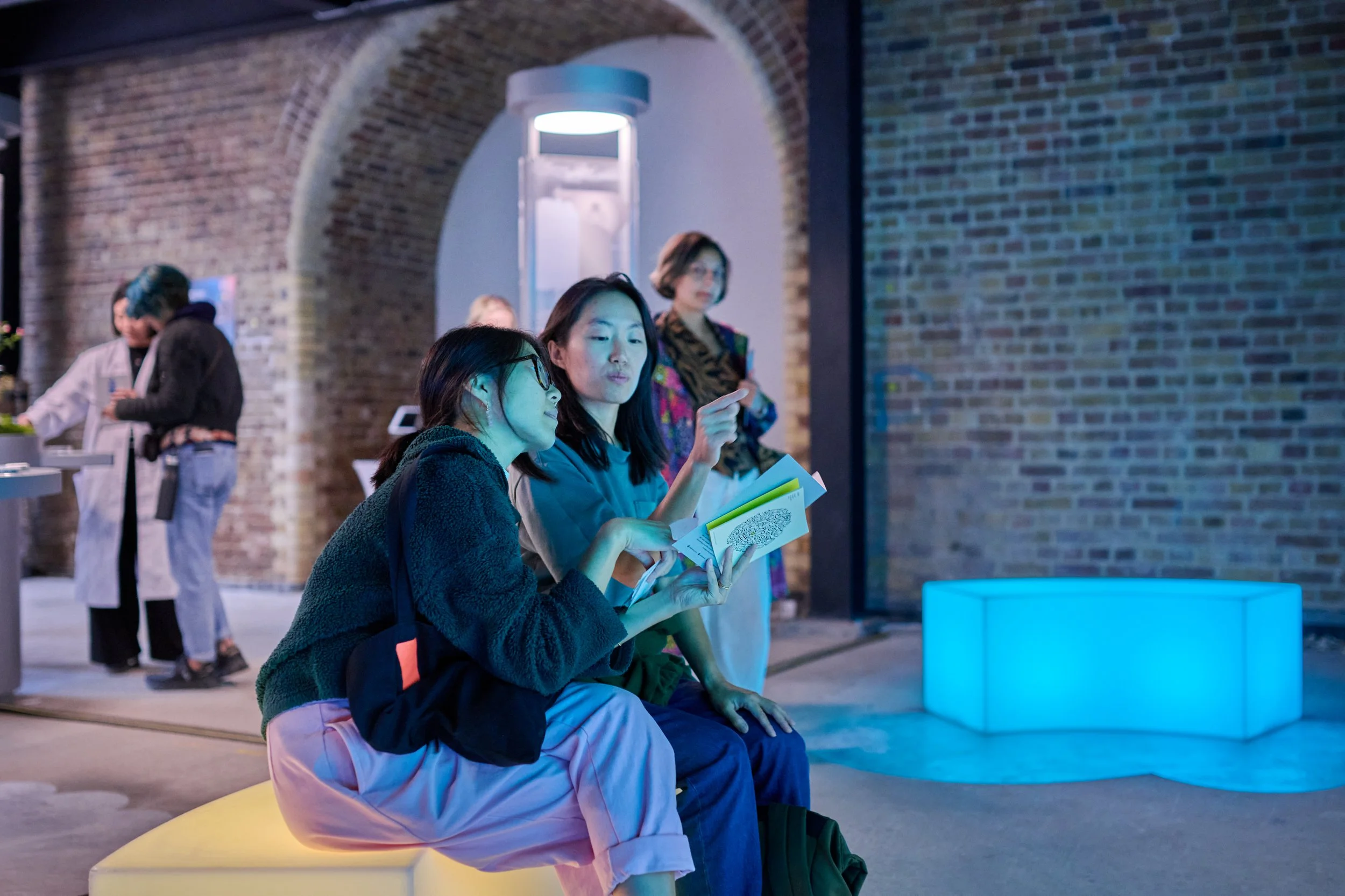
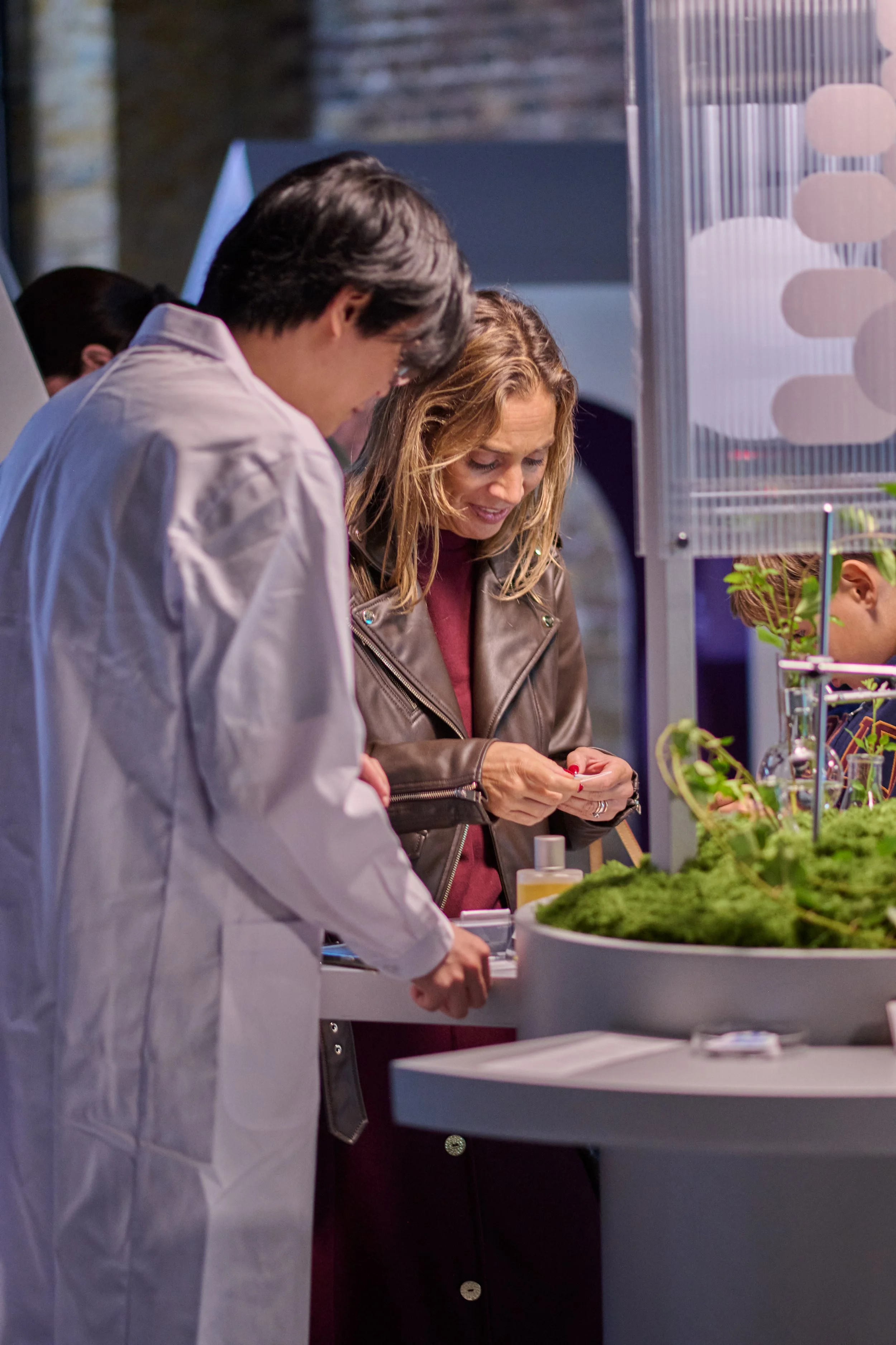
Dao by Dorsett West London Hotel
In collaboration with Dao West London, The Flavour Library transformed the hotel lobby into a multi-sensory placemaking experience that reimagines urban design through taste and scent.
We designed a hybrid journey, where guests translate their city memories into tactile, scented "Flavour Flowers." This interactive process gave international travellers a creative, mindful pause during their stay, complemented by community-oriented prompts and local hospitality perks. By pinning their creations to a live digital Flavour Map, guests from around the globe wove their individual stories into a collective installation, bridging London, Hong Kong, and beyond through shared urban experiences.
Tying directly into HKFYG’s commitment to the next generation, this iteration became even more digitally-savvy and multi-dimensional. The team recalibrated the questionnaire, visual outputs, and sensory lab components around young people and the essential conditions needed to cultivate a bright future. The installation provided a meaningful platform for both youth participants and forum guests—including policymakers, social leaders, and key figures across the youth development sector—to gain deeper, empathetic insights into youth perspectives and discover actionable pathways to support future youth development.
Building upon the framework established in London, our Hong Kong team evolved the project for The Hong Kong Federation of Youth Groups (HKFYG) as the organisation celebrated its 65th anniversary. Presented at the HKFYG 65th Anniversary Youth Forum, titled Navigating Change Together, the installation transitioned from a high-concept showcase into an active community-building engine focused on youth empowerment.
Iteration 2: HKFYG Evolution (Youth Empowerment)
Strategic Value & Methodology for Civic Clients
The Flavour Library represents a field-tested Participatory Design Methodology for municipal bodies, property developers, cultural institutions, and civic organisations.
Through human-centric data capture, the experience translates intangible community feelings into clear visual and spatial metrics, helping clients identify specific urban areas requiring social or physical intervention. It replaces intimidating public town halls and dry surveys with an accessible, sensory-driven activation that naturally attracts diverse demographics, including youth and underrepresented groups. Built as a scalable, modular spatial framework, the installation seamlessly bridges web-based UI, physical spatial design, tactile printmaking, and generative digital art into a unified experience.
-
The accessible design of the Flavour Cabins and the welcoming exhibition format lower barriers for children, wheelchair users, and those unfamiliar with planning processes, thereby widening participation in the conversations.
-
Team: Alan Cheung, Brenda Hui, Kaman Ip, Luana Kwok, Jason Lam, Sarah Mui, Katie Ng, Joyce Siu, Sherman Sun, Zita Szeto, Kevin Tang, Karen Yeung
Photographer: Tai Ngai Lung (Hong Kong), Francis Chen (London)
-
LondonDesignFestival2025, FlavourLibrary, Phygital, HKFYG, Exhibition, YouthEmpowerment